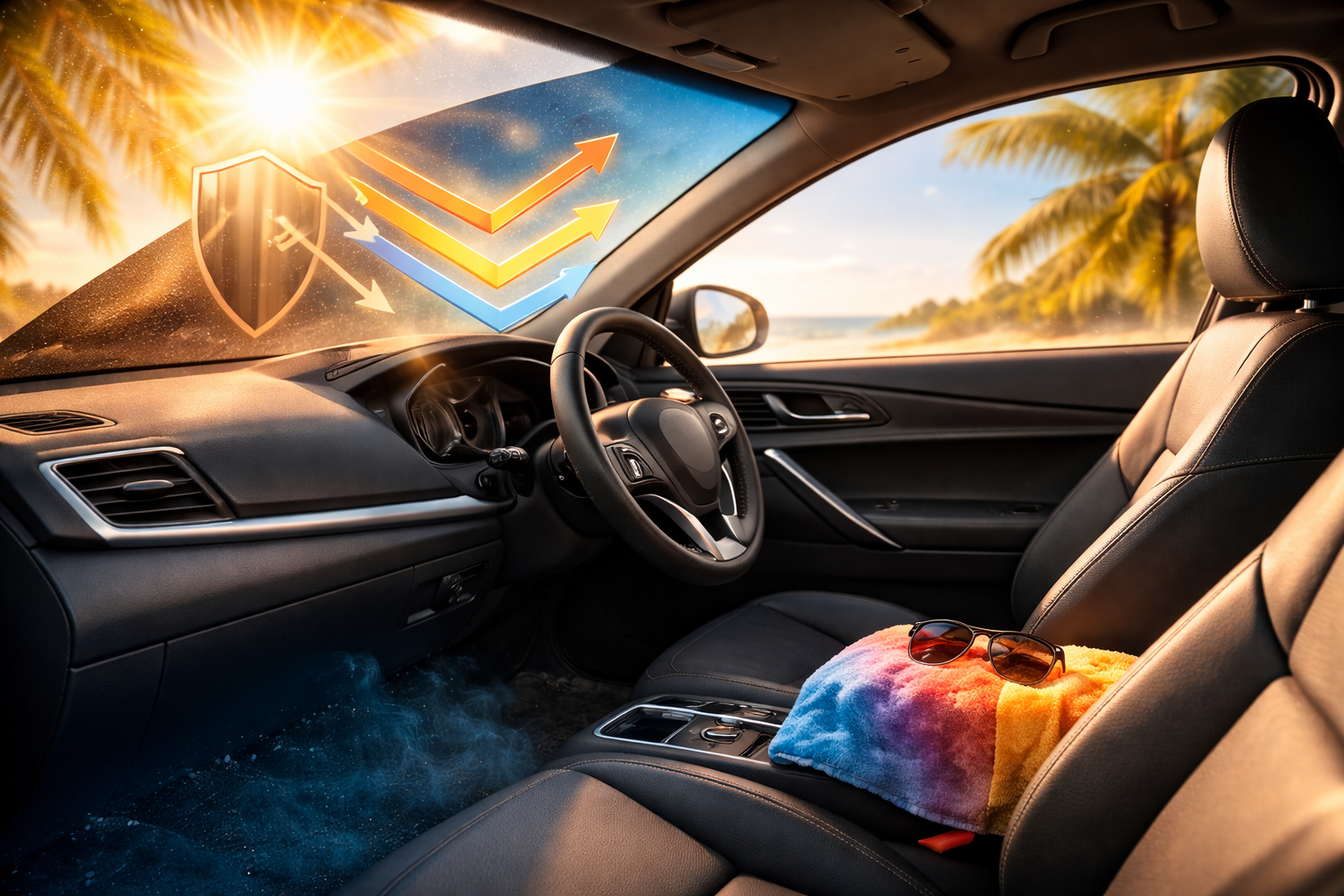
Your car’s interior is constantly exposed to sunlight, which can cause fading, cracking, and deterioration over time. Leather seats, dashboards, and other surfaces are particularly vulnerable to UV radiation, making protection essential for preserving your vehicle’s aesthetics and value. One of the most effective ways to combat sun damage is by applying window tint, which not only improves comfort but also shields your interior from harmful rays.
In this comprehensive guide, we’ll explore how window tint protects your car interior from fading, the science behind it, installation considerations, and tips for long-lasting protection.
Understanding the Impact of Sunlight on Your Car Interior
To understand how window tint works, it’s important to know how sunlight affects your car.
1. Ultraviolet (UV) Radiation
UV rays are a primary cause of fading in car interiors. Prolonged exposure can lead to:
Cracked leather seats
Faded dashboards and panels
Peeling of adhesives or trim
Even on cloudy days, UV rays penetrate windows and cause cumulative damage over time.
2. Infrared (IR) Heat
Besides UV, infrared radiation heats the surfaces inside your car, which accelerates:
Drying and cracking of leather
Warping of dashboards and trim
Degradation of plastic and vinyl components
Managing both UV and IR exposure is key to protecting your interior.
3. Visible Light Damage
While less harmful than UV, prolonged exposure to sunlight can still fade colors and materials over time. A combination of UV, IR, and visible light contributes to interior deterioration, emphasizing the need for comprehensive protection.
How Window Tint Protects Your Car Interior
Window tinting is not just for privacy or aesthetics; it provides a functional barrier that protects your vehicle’s interior from sun-related damage.
1. UV Ray Blockage
Modern window tints can block up to 99% of harmful UV rays, significantly reducing fading and cracking. By preventing UV penetration, tinted windows maintain the vibrancy of leather, fabric, and dashboard surfaces for years.
2. Heat Reduction
Window tint also reflects infrared heat, lowering interior temperatures by several degrees. Cooler interiors mean less stress on leather and vinyl surfaces, preventing drying and cracking caused by excessive heat.
3. Glare Reduction
Tinted windows reduce glare from the sun, making driving safer while also protecting interior surfaces from concentrated light that can accelerate fading.
4. Long-Term Value Preservation
By minimizing UV and heat exposure, window tint helps maintain the aesthetic and resale value of your car. Interior surfaces remain in better condition, reducing the need for expensive repairs or replacements.
Types of Window Tint
Not all window tints offer the same level of protection. Choosing the right type ensures maximum benefits for your interior.
1. Dyed Window Tint
Absorbs solar heat
Reduces glare
Blocks some UV rays
Affordable but less effective over time
2. Metalized Window Tint
Contains microscopic metal particles
Reflects heat and UV rays efficiently
Can interfere with electronic signals (GPS, radio)
3. Ceramic Window Tint
High-end option with advanced UV and IR protection
Does not interfere with electronics
Provides superior heat rejection and long-lasting durability
4. Carbon Window Tint
Combines heat reduction with aesthetic appeal
Blocks a high percentage of UV rays
Maintains clarity without metallic particles
Choosing a high-quality film is crucial to maximizing UV and heat protection.
Installation Considerations for Window Tint
Proper installation is essential to ensure your tint provides maximum protection.
1. Professional Installation
While DIY kits are available, professional installers ensure:
Correct film application without bubbles or creases
Uniform coverage of all windows
Optimal UV and heat protection
Professional installation reduces the risk of errors that could compromise protection.
2. Avoid Common Mistakes
Errors during installation can reduce effectiveness or cause damage. Some common mistakes include:
Improper cleaning of glass before application
Misaligned film leading to gaps or peeling
Using low-quality film that fades quickly
Being aware of PPF Installation Mistakes can help you avoid similar errors with window tint, as both protective films require precision and expertise for optimal results.
3. Legal Considerations
Window tint regulations vary by region and may dictate:
Maximum allowable darkness or visible light transmission (VLT)
Restrictions for front or windshield tinting
Ensure your tint complies with local laws to avoid fines and legal issues.
Additional Tips to Protect Your Interior
While window tint is highly effective, combining it with other measures enhances interior protection.
1. Use Sunshades
Reflective sunshades on the windshield and side windows reduce heat buildup and protect the dashboard from direct sunlight.
2. Parking in Shade
Whenever possible, park under trees, carports, or shaded areas to minimize exposure.
3. Leather and Vinyl Conditioning
Regular conditioning keeps leather and vinyl supple, reducing the risk of cracks and fading.
4. Window Tint Maintenance
Clean tinted windows with non-abrasive cleaners
Avoid ammonia-based products that can degrade the film
Inspect for peeling or bubbles regularly
Proper maintenance ensures long-lasting protection and performance.
Benefits of Window Tint for Interior Protection
Investing in window tinting offers numerous advantages:
Prevents Fading: Shields leather, fabric, and dashboard surfaces from UV damage
Reduces Heat: Keeps interiors cooler, minimizing stress on materials
Improves Comfort: Less glare and lower cabin temperatures improve driving experience
Maintains Value: Preserved interiors contribute to higher resale value
Overall, tinted windows are a cost-effective solution for long-term interior protection.
Common Misconceptions About Window Tint
Understanding the limitations and benefits of window tint helps set realistic expectations.
1. Tint Doesn’t Make Cars “Bulletproof”
Window tint is meant for UV and heat protection, not structural protection. It cannot stop break-ins or accidents.
2. All Tints Are Equal
Not all films offer the same level of UV and IR blockage. High-quality ceramic or carbon films provide the best protection.
3. DIY Tinting Is Always Sufficient
Improper installation can reduce effectiveness. Professional installation ensures correct application, longevity, and warranty coverage.
Conclusion
Window tint is a highly effective solution for protecting your car’s interior from fading and heat damage. By blocking UV rays, reducing glare, and lowering interior temperatures, tinted windows preserve leather, fabric, and dashboard surfaces while enhancing driver comfort. Combining high-quality tint with proper installation, maintenance, and additional protective measures ensures your vehicle’s interior remains vibrant and durable for years.
Investing in window tint not only improves aesthetics and comfort but also protects your long-term vehicle value, making it a smart choice for any car owner.
Tags : .....