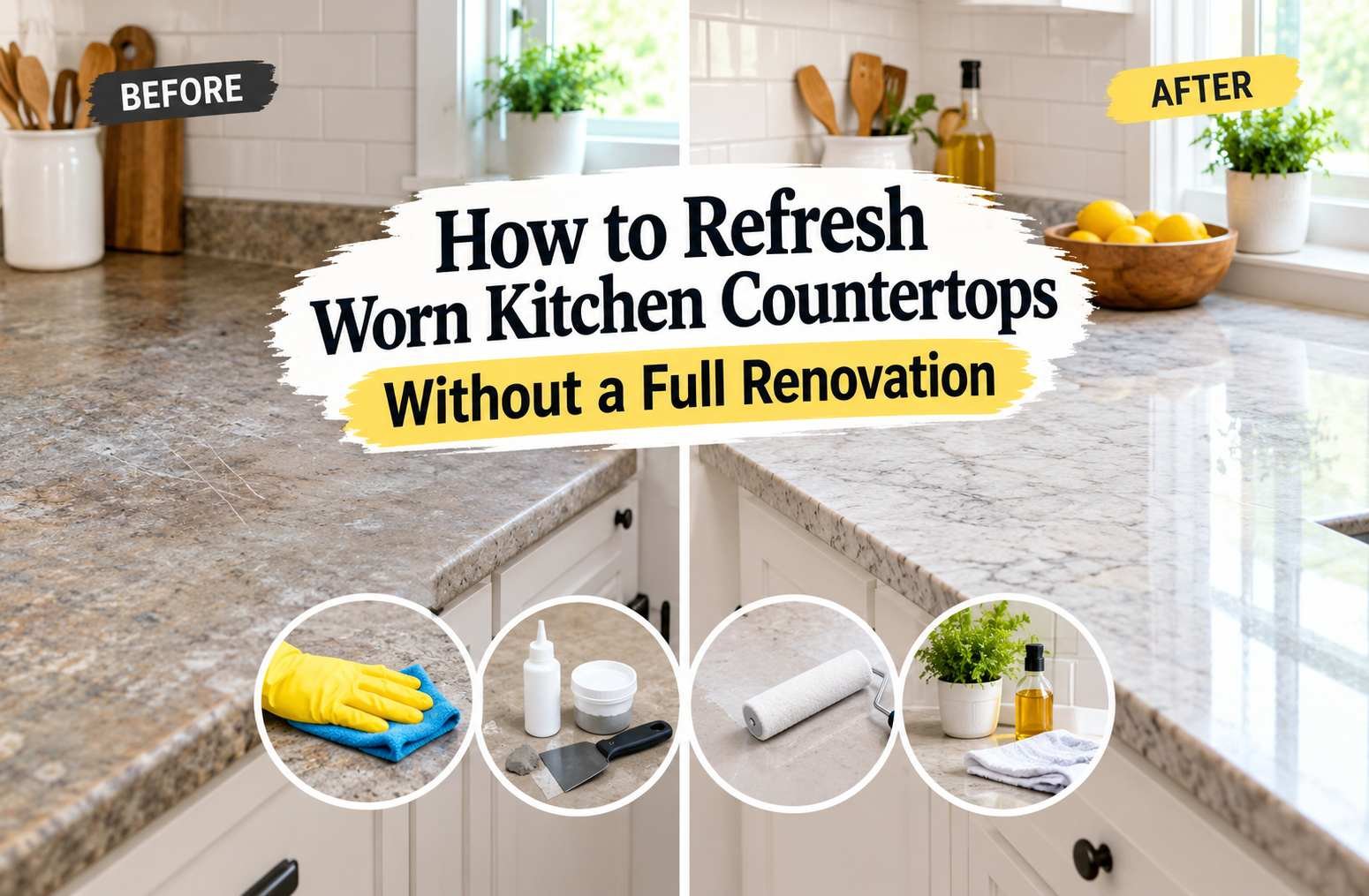
Kitchen countertops absorb more daily wear than almost any other surface in a home. Hot pots land on them, knives slip past cutting boards, spilled coffee and tomato sauce sit for longer than they should before getting wiped up, and years of that routine abuse eventually show. For homeowners who notice their countertops looking dated or worn but aren't ready to gut the kitchen, there are more options available than most people realize.
Recognizing When a Countertop Has Reached Its Limit
Not every worn countertop needs to be replaced, but it helps to know what kind of wear is present before deciding on a fix. Surface dullness and a general loss of shine usually point to years of cleaning product buildup and micro scratching from everyday use rather than any structural problem. This kind of wear is almost always cosmetic and responds well to resurfacing.
Staining that will not lift no matter how much scrubbing goes into it is another common complaint, particularly on laminate and older tile countertops where grout lines and porous surfaces trap pigment from coffee, wine, and cooking oil over time. Chips and cracks, especially around the sink cutout or at counter edges where heavy items tend to get set down, are typically isolated damage rather than a sign that the whole countertop has failed.
Then there is the simpler issue of a dated look. A countertop in a color or pattern that was popular decades ago can make an otherwise updated kitchen feel stuck in the past, even when the surface itself is in perfectly functional condition.
Weighing Replacement Against Resurfacing
Full countertop replacement is often the first option homeowners consider, and it makes sense in some situations, particularly when a layout is changing or the existing material has failed structurally. But replacement carries real costs beyond the material itself. Appliances and the sink typically need to be disconnected and sometimes removed, plumbing has to be capped or rerouted temporarily, the old countertop needs to be demolished and hauled away, and the kitchen is generally unusable for cooking during at least part of the process.
Resurfacing takes a different approach. Rather than removing the existing countertop, the surface is cleaned, repaired where needed, and coated with a new durable finish that restores both appearance and function. Because the underlying structure and cabinetry stay in place, the disruption is dramatically smaller, and the kitchen is typically back in use within a day or two rather than a week or more.
What Professional Countertop Refinishing Involves
Refinishing is more involved than a homeowner might assume, which is part of why it is usually best handled by a licensed contractor rather than attempted as a weekend project. The process generally starts with thorough cleaning to remove grease, soap film, and any residue that would prevent a new coating from bonding properly. Chips and cracks are filled and leveled, and the entire surface is then prepared so a specialized bonding primer will adhere correctly. Once the primer cures, a durable topcoat is applied in careful, even layers to create a smooth, sealed finish.
Homeowners exploring this option, including those in the Baltimore, Nottingham, and Washington, D.C. area, often look into professional kitchen countertop refinishing as a way to update the look of a kitchen and extend the life of the existing countertop without the cost and disruption of a full replacement.
Making a Refreshed Countertop Last
Once a countertop has been resurfaced, a bit of routine care keeps it looking good for years. Cutting boards should still be used for chopping, since a refinished surface, like the original material underneath it, can be scratched by direct knife contact. Trivets or hot pads protect the finish from the kind of heat damage that no coating is designed to withstand indefinitely. Sticking with non-abrasive cleaners, rather than scouring powders or heavy duty degreasers, preserves the sealed finish rather than slowly wearing through it.
A dated or worn countertop is one of the most common reasons homeowners start dreaming about a full kitchen renovation, but it is rarely a reason on its own to justify one. In many kitchens, the countertop is the single easiest surface to refresh, and doing so can change the entire feel of the room without touching the cabinets, layout, or budget required for a complete remodel.
Tags : .....