Shipping nowadays transports goods globally daily. You depend on safe delivery. Customers anticipate goods to come in good condition. Broken packages are time and money-consuming. They also harm your brand.
Retailers report that shipping damage is a common cause of returns. Many businesses experience wasted products and higher costs due to poor packaging. Preventing damage saves money. It also improves customer trust.
In this guide, you will know how to protect packages from damage. Whether you want to store or ship your products, this guide is enough to ensure the safety of your products.
How to Protect Packages from Damage
Choose the Right Box Size
Select a box that will fit with protection. Excessive boxes allow the movement of items. Overly small boxes are subject to crushing. Before choosing custom boxes, you need to measure the product and padding. Strong single-wall or double-wall boxes should be used for heavier items. A heavier box should be used when dealing with delicate objects. This measure minimizes the movements within custom boxes and minimizes the possibility of impact damage.
Use Proper Cushioning
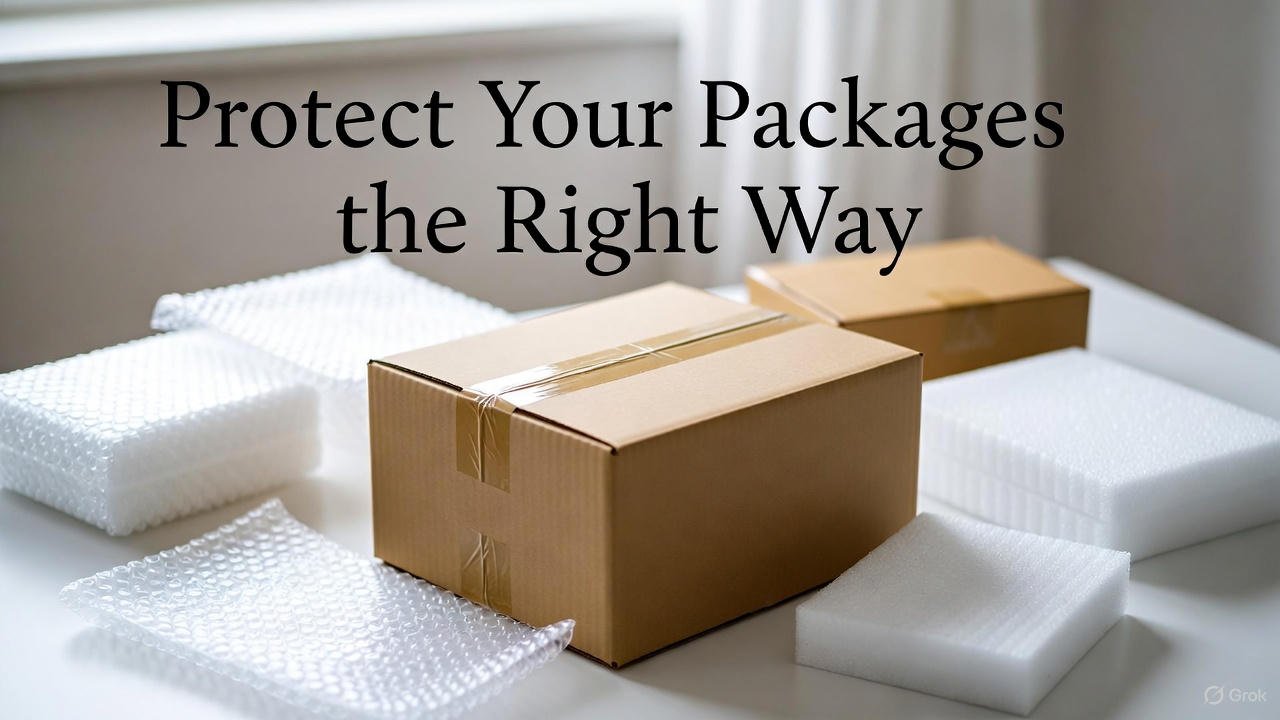
Cushioning absorbs shock. Select the material suitable in accordance with the weight and fragility of the object. Particularly delicate parts are covered with bubble wrap. Flat surfaces are covered by foam sheets. The empty space is occupied with crumpled papers. Air pillows are applicable to light items. Pad the item below and all around. Test by shaking the box. The object must not shift as much as an inch.
Secure Fragile Parts
Removable components require more attention. Wrap up each frail section individually. Frame and glass have corner protectors in use. Tape the lids and place the bottle seal upright. Put the delicate products in the middle of the box, not on the edges. Indicate in bold the box as fragile. This assists the handlers in treating the package with care.
Seal All Openings Well
Packing tape all seams with strong tape. Apply wrap tape over the length of the box and the width of the box. Heavy boxes should have additional tape at the bottom. Thin and decorative tapes cannot be used alone. It should be properly sealed to prevent the box from opening during rough handling.
Use the Right Label and Documentation
Put the shipping label on a flat. Tape the label with clear tape in case of necessity. Insert address and handling instructions. Including packing lists in the box. Labeling aids in scanning and delivering by the carriers.
Pick the Right Carrier and Service
Select a carrier that corresponds to the value and route of the goods. In case of high-value products, select tracked and insured services. To get deliveries fast, choose express options. Compare carrier damage rates and policies where possible. You minimize risk through product-to-service fit.
Test the Package
Perform a simple drop test before you ship. Drop the package from waist height on each side. Check for damage. Adjust padding and box strength if you see problems. Testing saves you real claims and unhappy customers.
How to Protect Items During Shipping?
You put safeguards on property by being careful with packing and the means of transportation. The first step is to choose a box depending on the item's size and weight. Then, cushioning is used to prevent movement. Package delicate products one by one. Odd shapes should be supported inside. Seal the box tightly. Include descriptive markings and working notes.
For expensive items, buy insurance and select tracked services. For routes with rough handling, use stronger boxes and more cushioning. Keep records of packing steps for quality checks. Small steps now reduce big problems later.
How to Get Packages Delivered Securely?
Secure delivery starts before pickup. Use a verified address and add delivery instructions. Choose delivery options that require a signature on arrival when the item is valuable. Use a carrier that provides photo proof of delivery. Offer pickup points if home theft is a risk.
On common issues, think about lockers or guarded points of collection.
In business-to-consumer shipping, provide the customers with tracking links and approximate delivery times. Effective communication will decrease missed orders and theft.
Mid content internal link: See our Custom boxes page for box options and build ideas.
How to Make a Package Secure?
You make a package secure with a few key protection items. These items cost little. They work well together.
- Bubble wrap the tuck top mailer boxes for fragile parts
- Foam inserts to stop movement
- Packing tape that is 2 inches wide or more
- Fragile labels and handling stickers
- Tamper-evident tape or security seals
- Cardboard corner protectors for edges
Wrap each piece and fill the space. Use tape on seams and edges. Add a tamper strip for high-value goods. Place a packing list inside the box. This helps when a label gets damaged. Use tracking and insurance for full protection.
Where can I Ship Packages to Avoid Theft?
To avoid theft, you send packages to safe addresses. For ship protect, provide business addresses where convenient. Take pick up points and locker facilities. A large number of carriers have parcel lockers at local hubs. For shipment protect, you may ship to a store where it will be collected by the customer. Provide delivery timeframes to decrease doorstep time. In high-risk areas, signature-required delivery should be taken. In case the buyer is not at home, request him to select an alternate address that is secure. The action can reduce theft to a great extent.
Cost View of Products Safety
Breakages of shipping have an impact on returns and profit. Repeat costs are seen by many sellers when they fail to enhance packaging. The better packing cost is usually more expensive than the replacement costs and returns. In the case of a small business, the cost of improved tape and padding is low.
In many of the operations, damage claims are reduced by switching to a stronger box and adequate cushioning. This minimizes refunds and reconstructions. Monitor your claim rate and include a minor expense on packing materials in your budget. That little expenditure secures orders and brand image.
Bottom Line
Packaging security does not necessarily have to be tough. Select the appropriate box and cushioning. Tape loose sections and close the box. Label correctly and select the appropriate carrier. Also, think about delivery methods that minimize theft. Check the packing and record it. Such measures will be cost-saving and will establish credibility among customers.