Candle business is a highly profitable business in the USA. It can easily get profit margins of 25-45%. Candle business profit depends on the pricing strategy. There are many growth strategies that help in competing candle pricing. How to calculate candle cost and then setting a price tag to your product. The amount left after covering the making cost will be your profit. So setting the right pricing is highly important. Lets start the blog and understand how to price your candle.
Why is it Important to Price Your Candles To Grow Your Business?
It is very important to price your candles to grow your business. This pricing strategy not only ensures maximizing candle profits but also sustains the overall business. Candle pricing should always coordinate with covering cost, market expectation while maintaining profit margins. A competitor's analysis helps you to understand their products’ market value and ranking. Competitive pricing strategy helps businesses to remain relevant and captivating to their target business.
Key Reasons to Compete with Candle Pricing
Understand Market Value
Competitive pricing strategy helps communicate the value of your candle. Tf you undervalue your candle products then the customer will too. So understanding the pricing strategy of a competitor's product ensure your prices reflect your product quality
Stay Competitive
If you price your candles too high, you can lose the customer to your competitor. Similarly, if you price it too low, you make your product look of poor quality.
Target the Right Customer
We can divide customers into different segments based on their buying power. So pricing plays a very decisive role in attracting the customer.
Keeping Profitability
Profits can only be achieved after the cost of labor and material is covered. So setting prices of your candle requires you to cover all the candle making cost and then leaving you with the profit.
To Improve Your Position
Place your candle in a premium packaging to justify its high price. Premium packaging boxes are used by many brands to make their product distinguishable over an overcrowded aisle. To further make your candles look prominent in retail shops, brands use custom counter display boxes. Customers get excited when they have the glimpse of the product through a small PVC window.
How to Compete with Candle Pricing?
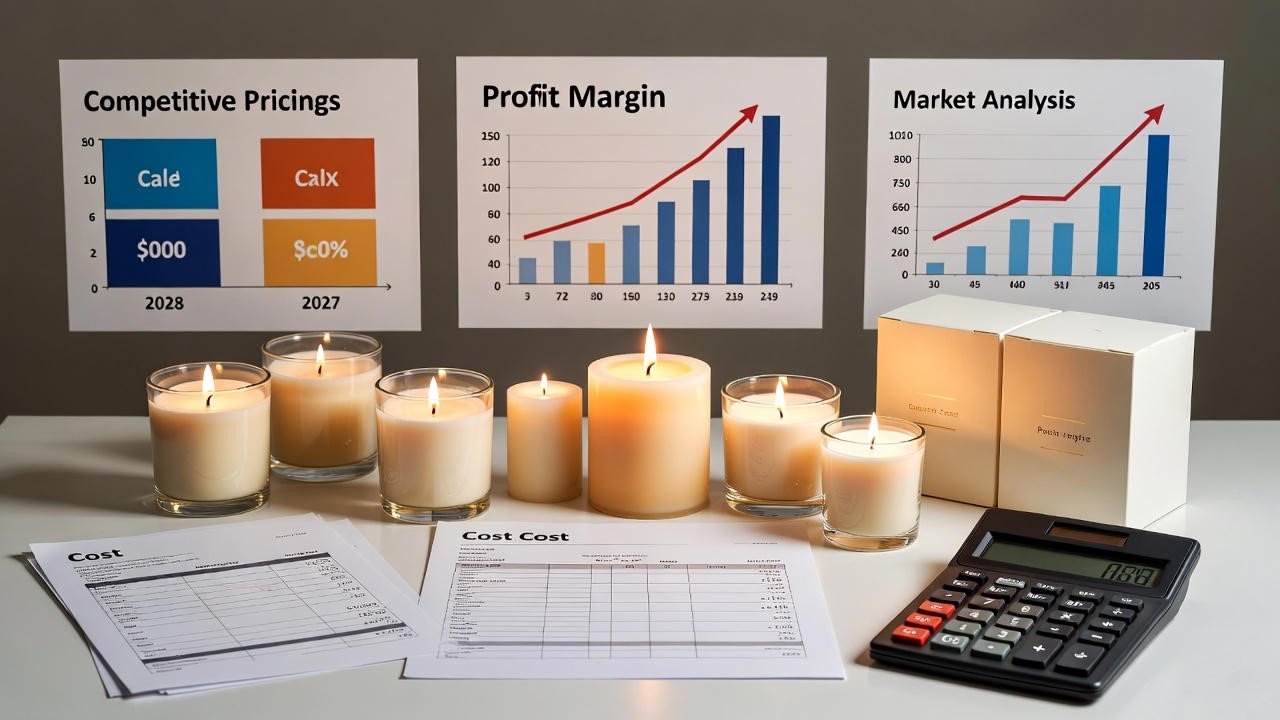
Candle pricing competes with a huge range of other similar products from other candle brands at different pricing points. It's very essential to compete with candle pricing. As this pricing strategy ensures a sustainable and profitable candle business. Further, it should align with market expectation while maintaining profit margin along with covering cost. The reason behind this pricing strategy lies in the consumer’s buying behavior. Consumers often compare the cost and value of candles with various other competitors’ candle products. To price candles for maximum profitability, you have to follow certain factors. Such as calculating your total cost, then multiplying it by two for wholesale and four for retail. Also, you have to regularly research the target market. In simple words, competitors’ analysis to adjust prices. Let's see how to calculate candle cost:
Calculate the Total Cost First
To calculate the complete cost of candle making, you need to calculate the individual cost of all material used. Other than this, the additional cost of labor and overhead. It's very simple, just calculate the cost per unit for each material based on the total purchase price and quantity. After adding the material costs, add the cost of your time and overheads. You can find the total cost of production for a single candle.
Set Your Prices Using Multiplier
A common candle business profit strategy is to multiply your total cost by two. Thus, allowing the retailer to set a profit margin. This strategy works well on a wholesale level. For retailers, a good starting point is to multiply your total cost by 4 for direct to consumer sales.
Optimise for Profitability
Build profit margin for candles that allows promotions that encourage customers to make larger purchases. Ordering in bulk will lower price per unit and increase the profit margins. Reassess your pricing after every few months for changes in the material costs, market demands and customer feedback.
How to Price Handmade Candles?
If you are a small candle business owner then you must be producing handmade candles. Mass-produced candles contain cheap paraffin wax. Handmade candles are usually made of high quality ingredients that impact their higher cost. It's a reflection of craftsmanship that depicts unique qualities. Handmade products are counted as luxury products. To calculate the handmade candles, it's almost the same as we learned in selling any massly produced candle. Calculate cost of all materials and your time invested. Then multiply it by three to four. It depends on the seller, they can increase the price to any number they want. All it takes is the correct pricing strategies marketing by justifying your product with higher pricing. Invest in custom boxes for candles with high quality material like rigid boxes with magnetic closure. This can help you justify the higher price of your premium candles. Sell your brand on instagram and other social media places. If you directly sell on platforms like Etsy, you may face paying an extra cost of 6.5% platform charges. So choose wisely the selling market.
Final Thoughts: Adapt and Grow
Before setting the price of your candles, always take into account your cost and target market. Try to compete on price alone Pricing is more than a formula. The higher your brand’s perceived value, the more you can charge. So try to invest in well designed packaging boxes. Also try to adjust the shipping cost inside the total pricing calculated. But remember the shipping costs are never fixed and changed due to the rise or fall of the fuel. It is better to calculate the shipping cost in the end. Above all, never stop reviewing and adjusting your prices according to the changing factors. Remember, consumers are always willing to pay for candles that offer a high quality and product value.