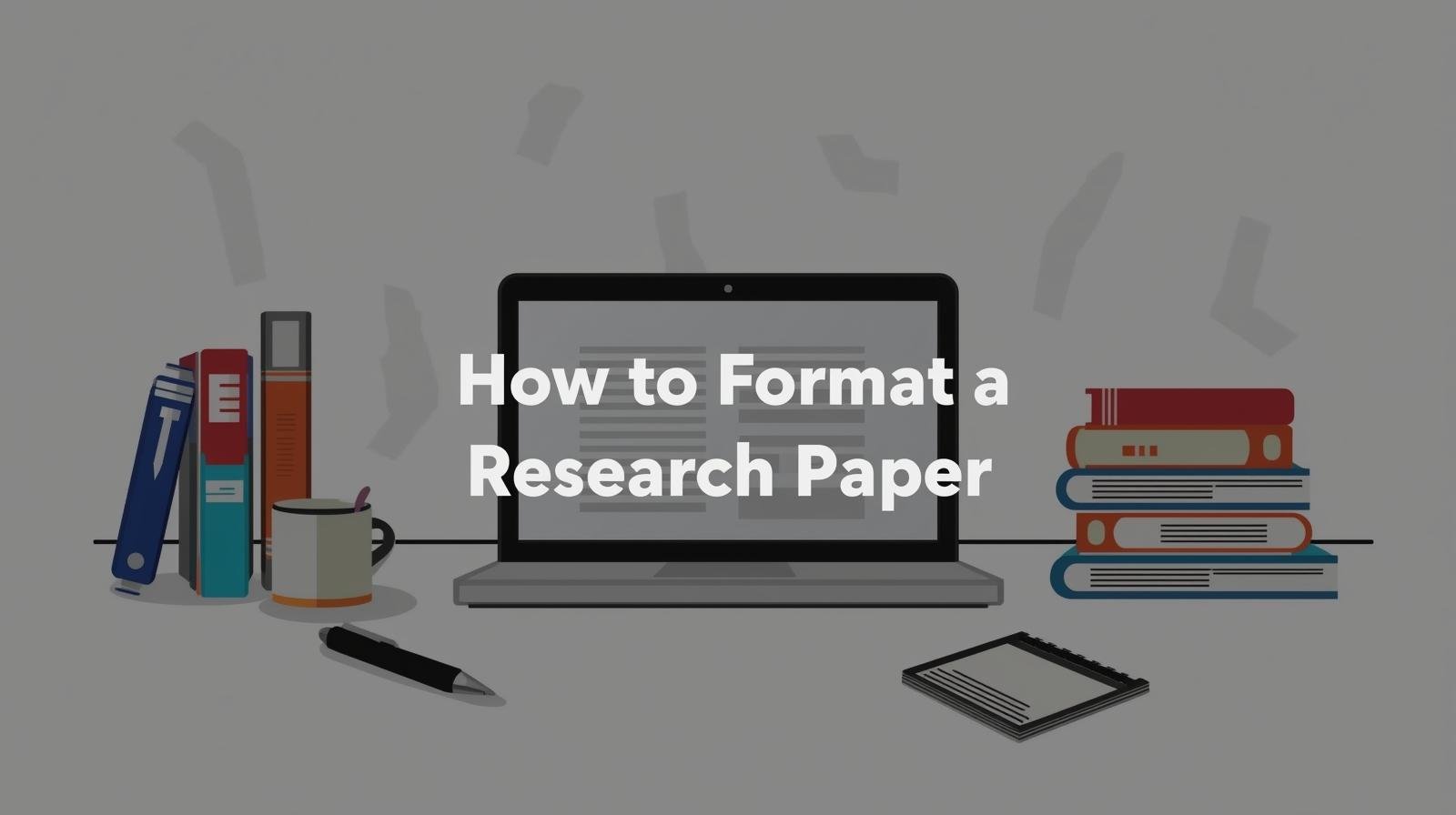
Ever opened a blank document and thought, "Where do I start?" Formatting a research paper can feel harder than writing one. Margins, headings, spacing. It is the little details that shape the first impression.
Even the best research looks weak on a messy page. Clean formatting makes your work look credible and professional.
So, How to Format a Research Paper? From title pages to citations, each piece matters. Let's break it down with simple steps to make your paper look sharp and ready.
The Importance Of Structure
Formatting is about neatness. Moreover, it is about guiding the reader. A clear structure helps your professor, reviewer, or even a casual reader follow your ideas without getting lost. When headings, citations, and paragraphs are in place, your paper flows like a well-paved road instead of a confusing maze.
Think of it as storytelling with rules. The content is your story, but the format is the framework that holds it together. Without structure, even brilliant ideas risk being overlooked. That is why learning the right way to format your paper is more than a formality. It is a tool that makes your research stand out.
Before starting, ensure you review sample research papers in the library or online by searching for how to write a research paper.
Setting Up The Basics
Select the appropriate style: APA, MLA, or Chicago, depending on your course or institution's requirements.
- Font matters: Stick with Times New Roman, size 12, or the style required.
- Spacing: Most formats use double-spacing throughout the paper.
- Margins: standard is one inch on all sides.
- Page numbers: place them in the correct position (top right for APA, for example)
- Title page: include name, course, instructor, and date.
- Headings: Follow the hierarchy suggested by your style guide.
- Citations: Use in-text citations correctly to avoid plagiarism.
- References page: always list your sources in the right format.
- Consistency is key: apply rules evenly across the entire paper.
Crafting A Professional Title Page
Your title page is the first thing your reader sees; it is the cover of the book. A clean, professional design instantly builds credibility. Depending on the style guide (APA, MLA, or Chicago), the details will vary, but the purpose remains the same, which is to present your work with clarity.
For APA, you will usually include the paper's title, your name, institution, course, instructor, and date. MLA often keeps it simpler, placing these details on the first page instead of a separate cover. Chicago, on the other hand, may require a centered title page with extra spacing.
So, how do you start formatting a research paper? The key is neatness and consistency. No fancy fonts or colors. Just clear, organized information. Think of it as a handshake before the conversation begins. Firm, confident, and inviting. A strong title page sets the tone for everything that follows.
Students can also seek help from professional PhD dissertation writing services.
Structuring the Main Body
The main body of your research paper is where your ideas live and breathe. This section usually includes the introduction, methodology, analysis, discussion, results, and conclusion.
Headings and subheadings are your best friends here. They act like road signs, guiding readers through your thought process. Without them, your paper can feel like a long, winding road, with no directions. Clear structure keeps your arguments sharp and your reader engaged.
Each paragraph should focus on a single main idea, supported by evidence or examples. Keep sentences clear and concise so your points don't get lost in long explanations.
References and Citations
Citations are the backbone of any research paper. They show where your ideas come from and give credit to the authors who inspired your work. Without them, your paper risks looking like opinion rather than research. As the saying goes, if you borrow from one author, it is plagiarism. If you borrow from many, it is research.
There are two main parts: in-text citations and the reference list.
In-text citations appear right where you use a source. Typically, the author's name and year are used in APA style, or the author's name and page number in MLA style. The reference list at the end gathers all sources in full detail, alphabetized and neatly formatted.
Precision is everything here. Hanging indents, punctuations, italics, and even commas have rules. A sloppy citation list can make a polished paper look careless. Use citation tools if needed, but always double-check, because credibility lies in the details.
Proofreading and Formatting
Before you hit 'Submit,' take the time to polish your work. Proofreading is primarily intended to correct typos but, more importantly, to ensure the paper flows smoothly, arguments are clear, and formatting is consistent. Even a small mistake, like a missing comma or misaligned heading, can distract from your research.
Read your paper aloud to catch awkward sentences. Check for grammar, spelling, and punctuation errors.
Then, scan through the layout. Margins, spacing, page numbers, and headings should all follow the required style. These small adjustments can make your paper look professional and intentional.
- Here is a useful trick: view your paper in a different format, like PDF, or print it out. Seeing it with fresh eyes often reveals errors you missed on screen.
As the saying goes, details create the big picture. In research papers, they create a distinction between sloppy and polished work.
Most thesis journal publication services offer proofreading and formatting services, making it easier and helpful for students.
Common Mistakes To Avoid
Even the best research can lose impact if simple formatting mistakes slip in. One of the most common errors is mixing styles. Using MLA in one place and APA in another. Consistency matters, so stick to one format throughout.
Another frequent mistake is ignoring small details. Extra spaces, uneven margins, or missing page numbers may seem minor, but they convey an impression of carelessness. The same goes for sloppy citations. Forgetting quotation marks or leaving out key details can weaken your credibility.
Lastly, don't underestimate proofreading. Submitting a paper with typos, grammar errors, or misplaced headings can overshadow all your hard work.
Final Checklist
Before you submit your research paper, run through this quick checklist to make sure everything is in place:
- Correct style guide: APA, MLA, or Chicago followed consistently.
- Font and size: Times New Roman, size 12 (or as required).
- Spacing: Double-spaced throughout the paper.
- Margins: Standard one-inch margins on all sides.
- Title page: Includes all required details, neatly formatted.
- Headings: Properly structured and consistent.
- In-text citations: Correctly placed and formatted.
- Reference list or Works cited: Complete, alphabetized, and polished.
- Page numbers: In the right place, on every page.
- Proofread: Grammar, spelling, and punctuation errors fixed.
- Flow check: Smooth transitions and clear organization.
A research paper requires strong ideas, presented with precision and clarity. This checklist ensures your work looks professional and leaves a strong impression.
Tips For Digital Submissions
Submitting research papers online has become the norm, and digital formats bring their own set of rules. Seeking publication help or following a few simple steps can save you from technical headaches and last-minute panic.
- Save in the required format.
- Use a clear and professional name.
- Follow upload instructions.
- Test readability on different devices.
- Ensure that all parts of the research paper, from the title page to the appendices, are included.
- Back up your work.
- Avoid submitting at the last moment.
Conclusion
Formatting a research paper may not feel as exciting as writing your ideas, but it is what makes your work shine. It shows effort, professionalism, and respect for academic standards. Every detail builds trust with your reader.
Your research is the message, and formatting is its frame. A strong frame highlights what's inside. Once you learn the basics, it becomes second nature, saving you stress and ensuring your papers always look polished.
So, the next time you are staring at a blank page, remember that you are presenting what you have researched. And when the paper looks as good as the ideas within it, you have already won half the battle.
Tags : paperpublication