How to Choose the Right X-Ray Baggage Scanner for Security Screening
By sunilkumar housysgroup 15-09-2026 19
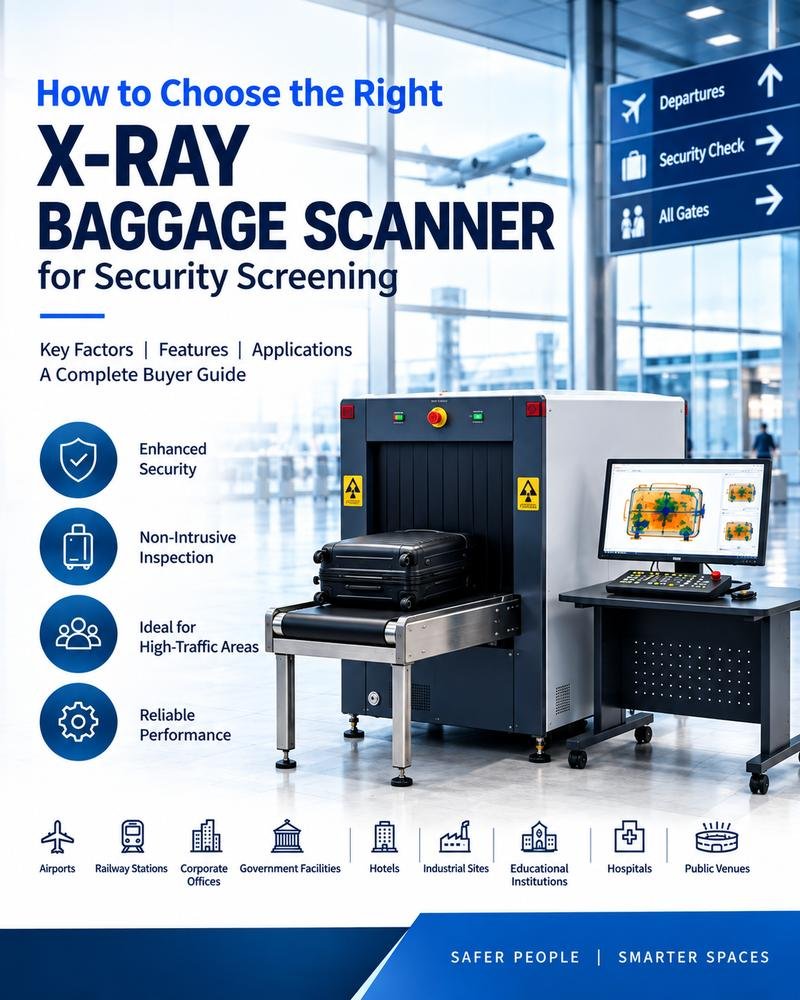
Security screening has become an important part of managing controlled entrances at airports, railway stations, government facilities, corporate buildings, hotels, industrial sites and other high-security locations. While security teams may use different screening methods, an X-Ray baggage scanner can help operators inspect the contents of bags and packages without opening them manually.
However, choosing a baggage scanner is not simply about comparing prices. Screen size, imaging requirements, tunnel dimensions, operating environment, security workflow and after-sales support can all influence which system is suitable for a facility.
Security Screening Starts With the Right Equipment
Every facility has different screening requirements. A small corporate entrance may handle a different volume of bags compared with an airport, railway station or large public venue.
This means the right baggage scanner should be selected according to the expected workload and screening environment.
Before requesting quotations, security managers and procurement teams should consider:
- Expected baggage volume
- Size and type of items being screened
- Available installation space
- Screening workflow
- Operator requirements
- Integration with other security systems
- Maintenance and service requirements
Understanding these factors can make the purchasing process more structured.
What Is an X-Ray Baggage Scanner?
An X-Ray baggage scanner is a security screening system designed to generate X-Ray images of bags, parcels and other items placed inside its inspection tunnel.
The operator can review the generated image to help identify objects that may require further inspection.
Unlike manual bag inspection, an X-Ray screening system allows security personnel to inspect the contents of baggage without opening every item.
This can help create a more organized screening process at locations where large numbers of people and bags need to be checked.
Screening Volume Should Be Considered
One of the first questions when selecting a security baggage scanner is how much traffic the system will handle.
A facility with relatively low baggage movement may have different requirements from a location operating throughout the day with continuous passenger or employee movement.
High-volume environments should consider the complete screening workflow, including:
- Baggage loading
- Operator viewing
- Image assessment
- Baggage collection
- Secondary inspection
- Overall movement through the checkpoint
The scanner should fit into the existing security process rather than create an unnecessary bottleneck.
Tunnel Size Matters
The size of the X-Ray scanner tunnel is another important consideration.
Bags, parcels and packages can vary significantly in size. A system selected for a corporate office may not necessarily be suitable for a facility handling larger baggage or industrial packages.
Before selecting a model, buyers should understand the typical dimensions of the items being screened and compare them with the available scanner configuration.
The installation area should also provide sufficient space for operators and baggage movement.
Image Quality Is an Important Consideration
The primary purpose of an X-Ray baggage scanner is to provide useful imaging for security screening.
Therefore, buyers should evaluate the imaging capabilities of the system and consider how easily operators can review the generated images.
Operator usability is particularly important because security personnel may work with the equipment for extended periods.
A practical system should provide a suitable balance between imaging capability, operator workflow and ease of use.
The Operating Environment Should Not Be Ignored
Where the scanner will be installed can influence the purchasing decision.
For example, an airport checkpoint, corporate reception, railway station, factory entrance and government facility may have different operating conditions.
Consider factors such as:
- Available floor space
- Indoor or controlled installation environment
- Expected operating frequency
- Baggage movement pattern
- Operator location
- Power requirements
- Maintenance accessibility
Planning these requirements before installation can help reduce operational difficulties later.
Integration Can Improve Security Management
An X-Ray baggage scanner may operate as part of a broader security screening process.
Depending on the facility, it may be used alongside other security equipment and procedures.
For example, a controlled entrance may combine baggage screening with pedestrian access control, metal detection, surveillance and security personnel.
The objective should not simply be to purchase individual security products. Instead, the equipment should work as part of an organized screening workflow.
Operator Training Matters
Even a capable X-Ray baggage scanner requires trained operators.
Security personnel should understand how to operate the equipment, review images and follow the facility's established screening procedures.
Training can also help operators become familiar with the system interface and routine operating checks.
When comparing suppliers, buyers should therefore ask what type of installation guidance, product training and technical support is available.
Maintenance and After-Sales Support Matter
Security equipment is part of an ongoing operational process. Maintenance and technical support should therefore be considered before purchasing.
Ask the supplier about:
- Installation support
- Product training
- Preventive maintenance
- Technical assistance
- Spare parts availability
- Service support
- Warranty terms
The availability of support can become particularly important for facilities where screening operations are required on a regular basis.
Price Should Not Be the Only Comparison
Searching for baggage scanner price in India is a natural part of the buying process, but price alone should not determine the final selection.
Two systems with different specifications may have different prices because of their configuration, imaging capabilities, tunnel size, installation requirements, support arrangements and other factors.
Instead of asking only, "What is the price?", buyers should compare the complete solution.
A useful comparison should consider:
System capability + installation + support + maintenance + suitability for the facility
This approach can help procurement teams make a more informed decision.
How to Evaluate a Baggage Scanner Manufacturer in India
Choosing the right Baggage Scanner Manufacturer in India can be as important as selecting the equipment itself.
Before making a purchase, evaluate the supplier based on:
- Product suitability
- Technical specifications
- Installation capability
- Service and maintenance support
- Warranty terms
- Spare-parts availability
- Experience with similar applications
- Ability to understand the facility's security requirements
A manufacturer or supplier should be able to discuss the application rather than simply provide a product price.
Where Are X-Ray Baggage Scanners Used?
X-Ray baggage scanners can be considered for a variety of controlled-security environments, including:
- Airports
- Railway stations
- Government buildings
- Corporate offices
- Hotels
- Industrial facilities
- Educational institutions
- Hospitals
- Public venues
- Large commercial facilities
The appropriate system depends on the site's baggage volume, security process and operational requirements.
A Simple Buyer Checklist
Before finalizing an X-Ray baggage scanner, ask:
☑ What type and size of baggage will be screened?
☑ What is the expected screening volume?
☑ Is the tunnel size suitable?
☑ Does the imaging capability meet the facility's requirements?
☑ Is there sufficient installation space?
☑ What operator training is provided?
☑ What warranty and service support are available?
☑ Are spare parts and technical assistance accessible?
☑ Can the scanner fit into the existing security workflow?
☑ Is the supplier experienced with the intended application?
These questions can help buyers compare solutions based on requirements rather than price alone.
Final Perspective
Selecting an X-Ray baggage scanner is a security and operational decision, not simply a purchasing exercise. The right system should match the facility's screening volume, baggage characteristics, installation environment and security workflow.
A well-planned selection process can help organizations create a more structured baggage screening operation while giving security teams suitable equipment for their daily requirements.
Looking for an X-Ray Baggage Scanner?
If you are comparing an X-Ray Baggage Scanner Manufacturer in India or looking for a suitable baggage screening solution, Houston Systems can help you evaluate the requirements of your facility.
Explore the Baggage Scanner solution:
https://www.houstonsystems.in/products/baggage-scanners
Contact Houston Systems for product information and quotation.