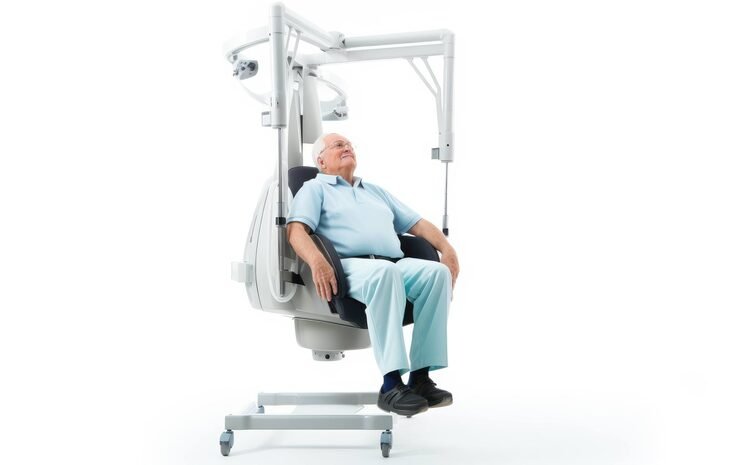
Choosing the right patient hoist means evaluating the user's mobility level, body weight, transfer needs, and the physical space available. Hoists reduce injury risk for both caregivers and patients by supporting safe, controlled lifting. Key types include mobile floor hoists, ceiling track hoists, and stand-assist lifts — each suited to different care environments and mobility levels.
Why the Right Hoist Decision Matters in Elderly Care
Among carers, manual lifting continues to be one of the main causes of musculoskeletal injuries. Inappropriate patient handling has been identified by Singapore's Ministry of Manpower as a persistent workplace risk in the home care and healthcare industries. The risks are also substantial for family carers who look after elderly loved ones at home, and they frequently go unnoticed until an injury happens.
Whether a patient is being moved from their bed to a wheelchair, from the restroom to a chair or from the floor to their bed following a fall, a well-selected hoist eliminates the physical strain associated with transfers. Additionally, it provides the senior user with greater comfort and dignity throughout the procedure.
Step 1: Assess the User's Mobility Level
This is the most important place to start. Not every senior needs the same amount of assistance. For someone who can push up from a seated position with assistance, a stand-assist lift is a good option. A full-body sling hoist is the best option for individuals who are completely dependant and unable to support any weight.
Ask these questions before anything else:
- Can the person stand independently or with minimal support?
- Do they have upper body strength to hold on during a transfer?
- Are they cognitively able to follow instructions during the lift?
- Do they experience spasticity, contractures, or joint pain?
Answers to these will immediately narrow your options between a passive hoist (full lift) and an active hoist (stand-assist).
Step 2: Check Weight Capacity
Every hoist has a Safe Working Load (SWL) — the maximum weight it is rated to handle safely. In Singapore, healthcare equipment standards require that the SWL be clearly marked on the device. Always choose a hoist with an SWL that exceeds the user's actual weight by a comfortable margin, typically at least 20–25% above current body weight.
Common SWL ranges for patient lifting equipment available in Singapore:
Never compromise on SWL. Overloading a hoist — even once — can cause mechanical failure and serious injury.
Step 3: Understand Transfer Requirements
The type and frequency of transfers determine which hoist model is most practical. Consider the full picture of the user's daily routine.
Bed-to-Wheelchair Transfers
This is the most common scenario in home elderly care. A mobile floor hoist with a U-shaped base works well here, as it can slide under most standard bed frames. Pair it with an appropriately fitted sling — universal, hammock, or divided leg — based on comfort and posture needs.
Bathroom Transfers
Space is tight in most Singapore HDB and condo bathrooms. A smaller, compact mobile hoist or a ceiling-mounted track system is far more practical. Wall-mounted or ceiling hoists eliminate the need to manoeuvre a bulky base in confined spaces.
Post-Fall Recovery
If the elderly person is at high risk of falls, a floor-level sling or rescue hoist that can operate from ground height is a valuable addition. These allow safe lifting from the floor without requiring two caregivers.
Step 4: Evaluate Available Space
Space is a genuine constraint in Singapore homes. The average HDB flat is between 90–110 square metres, which means room layouts are compact. A large mobile floor hoist may simply not be practical for a one-room or two-room flat.
Key space considerations:
- Door clearance: Most mobile hoists require at least 75–80 cm of doorway width to pass through.
- Floor turning radius: The hoist needs enough floor space to position correctly beside the bed or chair.
- Storage: When not in use, where will the hoist be stored? Foldable models are available for compact living.
- Ceiling height: For ceiling track hoists, a minimum ceiling height is required — typically 2.3 metres or more for proper clearance.
If floor space is consistently limited, a ceiling hoist for elderly care is often the best long-term investment. It stays out of the way, reduces manual handling entirely, and provides the smoothest transfer experience.
Step 5: Choose the Right Sling
Just as crucial as the hoist itself is the sling. Pressure injuries, discomfort, or dangerous placement during a lift might result from a poorly fitted sling. Body shape, the type of transfer, and any health issues like pressure sores or hip fractures should all be taken into consideration while choosing slings.
Key sling types to know:
- Universal sling: Suitable for most users; supports the back and thighs.
- Hammock sling: Full back and head support; ideal for users with poor trunk control.
- Divided leg sling: Better positioning for seated transfers; suits users with good posture.
- Bathing sling: Made from mesh or quick-dry material for hygiene care.
Always verify sling compatibility with the hoist model. Using a sling from a different manufacturer can be unsafe unless it is explicitly rated as compatible.
Indoor vs. Outdoor Use: What Changes
The majority of patient hoists are made to be used indoors on level, smooth surfaces. Verify whether the hoist has rubberised wheels appropriate for uneven terrain and whether its structure is weatherproof if outdoor mobility support is required, such as for garden transfers or car access.
Look for equipment constructed of corrosion-resistant materials for Singapore's humid climate, particularly if it will be used near water or stored in places with inadequate ventilation, like restrooms.
Practical Buying Checklist
- Confirm the user's current weight and mobility level
- Choose SWL at least 20% above current body weight
- Measure doorways, room space, and ceiling height
- Match sling type to body shape and transfer type
- Check if the hoist is compatible with existing care aids
- Confirm after-sales support, spare parts, and service availability in Singapore
- Ask about trial periods or demonstrations before purchasing
Where to Source Patient Hoists in Singapore
When purchasing patient lifting equipment in Singapore, work with a supplier who offers clinical guidance, not just product sales. A good supplier will assess your home environment, recommend the right model, provide fitting for slings, and offer ongoing maintenance support.
Asiateck's Medicare range includes a curated selection of patient hoists and mobility aids suitable for home and institutional care settings. Their team supports caregivers and care providers in making informed choices based on real care needs — not just product specifications. Visit the Asiateck homepage to explore their full range of care solutions.
Tags : patient hoist patient lift