Managing pedestrian movement is an important part of security at offices, commercial buildings, factories, institutions and other controlled facilities. As organizations look for more organized entrance management, automated pedestrian access solutions can become an important part of the overall security setup.
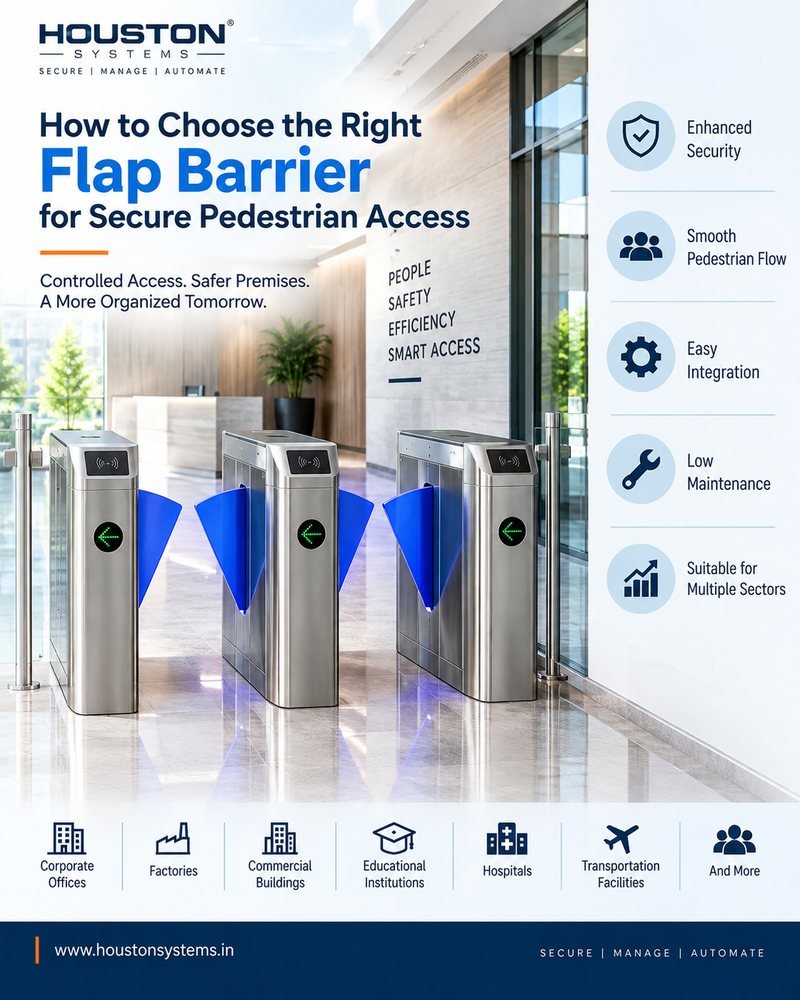
A Flap Barrier provides a defined access point for pedestrians while allowing authorized users to pass through after verification. However, selecting the right system requires consideration of pedestrian traffic, entrance layout, access-control requirements and long-term operational needs.
Why Pedestrian Access Control Matters
Busy entrances can become difficult to manage when access is handled manually. Security personnel may need to verify users, monitor movement and control entry at the same time.
A flap barrier can help create a structured pedestrian passage where access authorization and physical entry management work together.
The right solution depends on the facility, expected pedestrian flow and the level of access control required.
What Is a Flap Barrier?
A flap barrier is an automated pedestrian access-control system designed to regulate entry through a controlled lane.
The barrier panels remain closed until the required authorization is received. Once access is approved, the panels open to allow the authorized person to pass through.
Depending on the application, a flap barrier can work with access-control technologies such as RFID cards, biometric systems or other authorization methods.
Pedestrian Traffic Should Be Considered
One of the first factors to evaluate is the amount of pedestrian movement at the entrance.
An office building may experience concentrated traffic during arrival and departure times, while a factory or educational institution may have different movement patterns throughout the day.
Before selecting a Flap Barrier Manufacturer in India, consider:
- Average pedestrian traffic
- Peak-hour movement
- Number of lanes required
- Entry and exit requirements
- Available installation space
- Access-control technology
Understanding these requirements can help determine the appropriate flap barrier configuration.
Entrance Layout Matters
Every facility has different entrance conditions.
Available floor space, lane width, surrounding structures and the position of access-control equipment should be considered before installation.
The location of security personnel and nearby pedestrian pathways should also be reviewed.
A proper site assessment can help ensure that the flap barrier supports smooth pedestrian movement without creating unnecessary obstruction.
Access Control and Flap Barriers Work Together
A flap barrier can become more useful when integrated with an access-control system.
Depending on the facility, authorization can be provided through RFID cards, biometric identification, access cards or other technologies.
This allows the physical barrier and authorization process to work together at the entrance.
For organizations planning a Flap Barrier Access Control solution, compatibility with the existing security infrastructure should be considered before purchase.
Security Requirements Can Differ
Different facilities have different pedestrian access requirements.
A corporate office may require employee access management, while an industrial facility may need controlled access for employees, contractors and visitors.
Educational institutions and commercial buildings may also have different entrance-management requirements.
The selected flap barrier should therefore match the purpose of the entrance rather than being chosen only on appearance or price.
Installation Should Be Planned Carefully
Installation involves more than simply placing the equipment at the entrance.
Before installation, consider the available space, pedestrian lane arrangement, power requirements and connection with access-control equipment.
The surrounding environment should also be reviewed to determine whether the selected system is suitable for the intended location.
Proper planning can make installation more straightforward and help avoid operational difficulties.
Integration Can Improve Access Management
Modern pedestrian access systems can connect with different identification and security technologies.
A flap barrier can be integrated with an existing access-control setup to create a more organized authorization process.
Before selecting a system, buyers should check compatibility with the technology already installed at the facility.
This is particularly important when upgrading an existing security system rather than installing a completely new access-control setup.
Maintenance and Support Matter
A flap barrier operates repeatedly during normal facility operations, making maintenance an important consideration.
Regular inspection can help identify mechanical or electrical issues and support reliable operation.
Before selecting a Flap Barrier Supplier in India, buyers should evaluate:
- Installation support
- Maintenance requirements
- Technical assistance
- Availability of replacement components
- Warranty terms
- After-sales service
A suitable support arrangement can be especially important for entrances with regular pedestrian movement.
How to Evaluate a Flap Barrier Manufacturer
Choosing the right manufacturer involves more than comparing quotations.
A reliable manufacturer or supplier should understand the facility's requirements and recommend a suitable solution based on pedestrian traffic, installation conditions and access-control needs.
Buyers should also consider product construction, integration options, installation capability and technical support.
The right Flap Barrier Manufacturer in India should be able to support the system beyond the initial installation.
Where Are Flap Barriers Used?
Flap barriers can be considered for various pedestrian access applications, including:
- Corporate offices
- Commercial buildings
- Factories
- Industrial facilities
- Educational institutions
- Institutional campuses
- Fitness centres
- Transportation facilities
- Controlled employee entrances
Each application may have different requirements, so the final system should be selected according to the actual facility conditions.
A Simple Buyer Checklist
Before choosing a flap barrier, ask:
- How much pedestrian traffic does the entrance handle?
- How many access lanes are required?
- Which authorization technology will be used?
- What installation space is available?
- Is integration with an existing access-control system required?
- What maintenance support is available?
- What after-sales service does the supplier provide?
Answering these questions can help make the purchasing process more structured.
Final Perspective
A flap barrier can be an effective component of a controlled pedestrian access system. The right solution should balance access control, pedestrian movement, installation requirements and long-term support.
Instead of selecting a system based only on price, buyers should evaluate pedestrian traffic, entrance conditions, integration requirements, safety considerations and after-sales support.
If you are planning to improve pedestrian access management, selecting the right Flap Barrier Manufacturer in India can be an important first step.
Looking for a Flap Barrier?
Houston Systems provides flap barrier solutions for controlled pedestrian access applications.
Explore Flap Barrier Solutions:
https://www.houstonsystems.in/products/flap-barriers