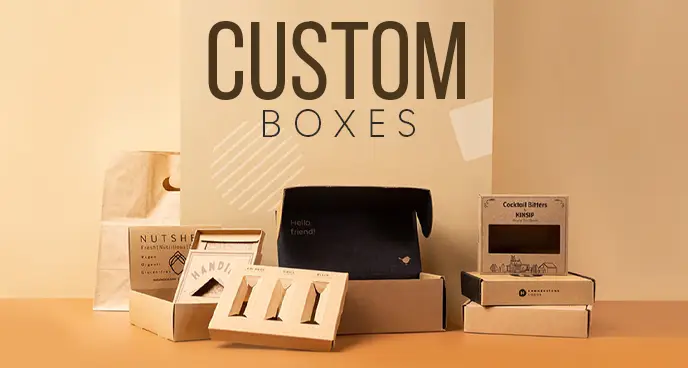
The selection of the right custom packaging boxes depends upon the systematic analysis of the physical attributes of your product. For selecting proper custom packaging, you have to analyze six important factors, which include your actual product type, the quantity of products and accessories packed, the strength of materials used, the requirement of any inserts inside the box, box size, and proper printing process.
In this blog, you will get a well-organized classification of these parameters along with comparative tables for materials and printing instructions, helping you to buy accurately and efficiently. Continue reading!
Understand Your Product's Requirements Before Choosing Custom Packaging Boxes
The way you plan to use the packaging decides which type of box is best for your product. Different sales channels have different packaging demands, making it essential to choose a solution that aligns with how the product will be stored, displayed, and delivered.
Different applications require different packaging features:
- Retail packaging emphasizes branding, product visibility, and shelf presentation
- Custom shipping packaging is designed to withstand stacking, handling, and long-distance transportation
Further attributes like moisture resistance or safe materials for storing food might be necessary according to the product being shipped. This will help the company choose the appropriate packaging material that protects the product, supports its branding, and controls packaging costs effectively.
How Do You Plan the Box Layout for Bundled Items and Accessories?
If you have more than one product or even any other accessories, you need to ensure that the design of the box is ideal for holding the product. This will ensure that there will be no movement of items while in transit.
Measure Every Component Accurately
First, take the measurements of the major product, as well as all accessories that will be placed inside the box. These accessories may include things such as manuals, samples of the product, extra parts, a lid, ribbons, gift cards, and a warranty card, among others. Rather than measuring the individual items, calculate the combined dimensions that they will occupy. This helps you select a box that fits the complete package without leaving excessive space.
Keep Small Accessories Organized
It is always advisable that small accessories should not be kept loose in the box. Things like samples, labels, cards, small instruments, small fasteners, or accessories may shift while in transit and cause damage to the product itself. If you keep them in small pouches, envelopes, or compartments, you will have better organization of things, which will look more presentable when the consumer unpacks the package. You can also use inserts for the safety of goods.
Match Your Packaging Material to Your Product's Protection Needs
According to the International Safe Transit Association (ISTA), products can experience repeated shocks, vibrations, compression, and drops throughout the shipping process. Choosing a packaging material that matches the product's weight and shipping conditions is one of the most effective ways to reduce transit damage and protect product quality.
When comparing packaging materials, consider the product's weight, shipping distance, storage conditions, and the level of protection required.
The table below outlines the most commonly used packaging materials and their ideal applications.
| Packaging Type | Materials | Strength Level | Best Used For |
| Folding Carton | Made from a single layer of paperboard | Light-duty | Cosmetics, pharmaceuticals, food products, and lightweight retail items |
| Single-Wall Corrugated | One fluted layer between two linerboards | Medium-duty | Mailer boxes, apparel, footwear, electronics, and eCommerce packaging |
| Double-Wall Corrugated | Two fluted layers between three linerboards | Heavy-duty | Industrial equipment, machinery parts, bulk shipments, and fragile products |
| Rigid Box | Thick chipboard wrapped with decorative paper | Premium structural support | Luxury gifts, jewelry, watches, and premium electronics |
Select the Right Printing Method for Your Packaging Needs
The printing method you choose affects production costs, print quality, turnaround time, and the type of packaging you produce. Understanding the strengths of each option makes it easier to select the most suitable method for your project.
Digital Printing
The process of digital printing involves printing the image right onto the package without making use of any printing plate. It can be considered a good choice for small quantities, customized packages, and companies requiring fast turnarounds.
Best Applications: Product launches, prototypes, seasonal packaging, personalized boxes, and low- to medium-volume orders.
Offset Printing
Offset printing uses printing plates to produce sharp graphics and consistent color reproduction. While there are high costs involved in the setup process of this printing method, it is more economical when producing medium to large volumes.
Ideal Applications: Retail packaging, cosmetics, food packaging, luxury products, and other packaging with detailed artwork.
Flexographic Printing
Flexographic printing uses flexible plates and fast-running presses to print on corrugated and paper-based packaging. It is widely used for large production runs because it delivers efficient, consistent results at a lower cost per unit.
Common Applications: Corrugated shipping boxes, mailer boxes, eCommerce packaging, and other high-volume packaging projects.
Final Words: Choose Smarter, Package Better
Selecting custom packaging boxes for your products must not be based on the appearance of these boxes alone. Box design, material used, size, and even printing process are all factors that affect the performance of the packaging, protection of the product, and the price.
Spending the time to review these before ordering will go a long way towards avoiding packaging problems. Businesses exploring personalized packaging solutions can also look to manufacturers such as BoxLark, a USA-based custom packaging manufacturer, to better understand the customization options available for different products and industries.