Choosing the Best Hair Oil for Hair Regrowth starts with understanding your scalp, hair type, and the reason your hair is becoming thinner or shedding more than usual. There is no single oil that suits everyone. Ingredients such as bhringraj, rosemary, hibiscus, amla, sesame, and coconut are commonly used in hair-care routines, but the complete formulation and the way you use it matter too.
For women and men in Chandigarh, everyday exposure to dust, pollution, heat, humidity, frequent washing, and styling can also affect hair condition. A practical approach is to choose an oil that fits your actual concern, use it correctly, and avoid expecting an oil alone to solve persistent hair loss.
Key Takeaways
- Understand whether your main concern is shedding, thinning, or breakage.
- Choose an oil according to your scalp and hair condition.
- Check the complete formulation instead of focusing on one trending ingredient.
- Bhringraj and rosemary can be included in botanical hair-care routines.
- Use a moderate amount rather than saturating your hair.
- Give extra attention to dry lengths and ends when needed.
- Massage the scalp gently and follow the product's directions.
- Reduce unnecessary heat, friction, and tight hairstyles.
- Keep the routine simple enough to follow consistently.
- Persistent or sudden hair loss may require professional evaluation.
First Understand What Is Happening to Your Hair
Before buying a new oil, take a closer look at the problem.
Finding some hair on your comb or during washing is not necessarily a sign of a serious problem. The situation is different when shedding noticeably increases, the parting starts looking wider, the crown appears thinner, or you see clear changes in hair density.
It is also useful to distinguish hair fall from hair breakage.
Hair breakage can happen along the length because of frequent heat styling, colouring, chemical treatments, rough brushing, friction, or tight hairstyles. Hair shedding from the root can have other causes, including stress, hormonal changes, nutritional problems, genetics, illness, certain medicines, or scalp conditions.
This is why repeatedly changing oils may not solve the problem if the real cause has not been identified.
If hair loss is sudden, persistent, excessive, or accompanied by scalp irritation or visible bald patches, professional advice is worth considering.
What Should You Look for in a Hair Oil?
A good hair oil is not necessarily the one with the longest ingredient list. Start with your own hair and scalp.
Ask yourself a few simple questions:
- Does my scalp become oily quickly?
- Do my hair lengths feel dry?
- Is my main problem breakage or shedding?
- Do I colour or chemically treat my hair?
- How often do I use heat-styling tools?
- Does heavy oil make my scalp uncomfortable?
- Can I easily include the product in my weekly routine?
Your answers can help narrow down the type of formulation you need.
For example, someone with an oily scalp and dry ends may not need to cover the roots with a large amount of oil. Someone with thick, dry, curly hair may prefer more attention on the lengths and ends.
The Best Hair Oil for Hair Regrowth should therefore be considered in the context of your complete hair-care routine rather than as a universal product.
Look at the Complete Formulation
When comparing hair oils, don't stop at the name printed on the bottle.
Two products can both contain a popular botanical ingredient but have very different textures, supporting ingredients, intended uses, and application instructions.
Check:
- The full ingredient list
- Intended use
- Scalp or hair-length application instructions
- Recommended quantity
- Whether it is a pre-wash product
- Any precautions mentioned by the manufacturer
This is particularly important when you are considering concentrated essential oils. A ready-to-use hair oil and a concentrated essential oil are not interchangeable products.
Choosing a formulation that feels comfortable and fits your routine is often more practical than buying something simply because it is popular online.
Why Bhringraj Is Popular in Hair Care
Bhringraj has a long history in traditional Indian hair-care practices and is commonly included in botanical hair oils.
People searching for bhringraj hair oil for hair growth should look beyond the ingredient name itself. Check the complete formulation and consider whether the product suits your scalp and hair type.
Bhringraj can be included in a regular hair-care routine, but it should not be presented as a guaranteed solution for hair loss or regrowth. Persistent shedding can have causes that require more than cosmetic hair care.
If your primary concern is thinning, also pay attention to other factors such as breakage, scalp condition, styling habits, and changes in your overall health.
Understanding Rosemary in Hair-Care Products
Rosemary has become another widely discussed botanical ingredient in hair care. It is found in different formulations intended for scalp and hair routines, and rosemary preparations have also been investigated in research related to hair growth.
However, not every rosemary product is the same.
When looking for the best rosemary oil for hair growth, check whether the product is a ready-to-use hair oil or a concentrated essential oil.
Concentrated essential oils can be irritating when used incorrectly, so they should not simply be applied directly to the scalp because more product is assumed to be better.
If you choose a ready-made hair oil, follow the product's directions and use a reasonable amount.
Other Ingredients You May See
Hair oils can contain several botanical ingredients, each serving a different role within a formulation.
Hibiscus
Hibiscus is commonly used in traditional Indian hair-care practices and appears in many botanical hair-oil formulations. It can be included in routines focused on maintaining conditioned and manageable hair.
Amla
Amla is another familiar ingredient in Indian hair care. It is often included in oils and other formulations designed for everyday scalp and hair maintenance.
Coconut and Sesame
Coconut and sesame oils have long been used in hair-oiling routines. Depending on the formulation and your hair type, they can provide an oil-based conditioning step before washing.
Castor Oil
Castor oil has a thicker texture than many lighter plant oils. It is therefore often included as part of a blend rather than being the only oil in a formulation.
The important thing is not to collect as many ingredients as possible. Choose a formulation that makes sense for your hair and that you can use comfortably.
Choose Oil According to Your Scalp
Your scalp condition should influence how you use hair oil.
Oily Scalp
If your scalp becomes greasy quickly, start with a small quantity. Applying a large amount repeatedly can leave the scalp feeling heavy and may make washing more difficult.
A pre-wash application can be practical because the oil can be removed during your normal washing routine.
Dry Scalp
If your scalp feels dry, a suitable oil can be included before washing. Apply it gently rather than rubbing aggressively.
However, persistent itching, redness, heavy flaking, or irritation should not automatically be treated by applying more oil. Those symptoms may need a different approach.
Oily Roots With Dry Ends
This combination is quite common. You may not need the same amount of oil everywhere.
Use less around the roots if they become oily quickly and focus more on the mid-lengths and ends if those areas feel rough or dry.
How to Apply Hair Oil Properly
You do not need to completely soak your hair in oil.
Start with a moderate amount and spread it between your palms. If the product is intended for scalp use, apply it gently using your fingertips.
Massage lightly rather than scratching with your nails or pressing hard.
If your lengths are dry or prone to breakage, distribute some oil through the mid-lengths and ends. These areas can benefit from attention even when your scalp does not need much oil.
Follow the product's recommended application time. Leaving a large amount of oil overnight is not automatically more effective.
Afterward, wash your hair properly. If you need several rounds of shampoo to remove the oil, reduce the quantity next time.
Build a Simple Oiling Routine
A complicated routine is difficult to maintain. Start with something realistic.
For many people, once-a-week oiling can be a reasonable starting point. You can then adjust according to how your scalp and hair respond.
A simple routine looks like this:
Choose → Apply → Massage → Leave → Wash → Condition
Choose an oil according to your concern. Apply a moderate amount. Massage gently if appropriate. Leave it according to the product directions. Wash thoroughly and use conditioner when suitable for your hair.
If your scalp becomes greasy quickly, you may need less oil. If your lengths are very dry, you can give them more attention.
Consistency is more useful than applying excessive amounts in the hope of getting faster results.
Don't Ignore Everyday Hair Habits
Oil is only one part of hair care.
If you regularly use straighteners, curling tools, chemical treatments, or very tight hairstyles, these habits can contribute to breakage. Rough towel drying and aggressive detangling can also put unnecessary stress on the hair.
A few simple changes can make your routine gentler:
- Reduce unnecessary heat styling.
- Avoid very hot water.
- Do not rub wet hair aggressively.
- Detangle from the ends upward.
- Avoid repeatedly pulling the hair into tight styles.
- Use conditioner when appropriate.
- Keep the scalp clean according to your needs.
- Reduce unnecessary friction while sleeping or styling.
These habits will not replace treatment for medical hair loss, but they can help reduce avoidable damage.
Choosing a Botanical Hair Oil for Your Routine
Nurture By Anita offers botanical hair-care formulations using ingredients such as hibiscus, amla, neem, coconut, black sesame, aloe vera, rosemary, bhringraj, and castor.
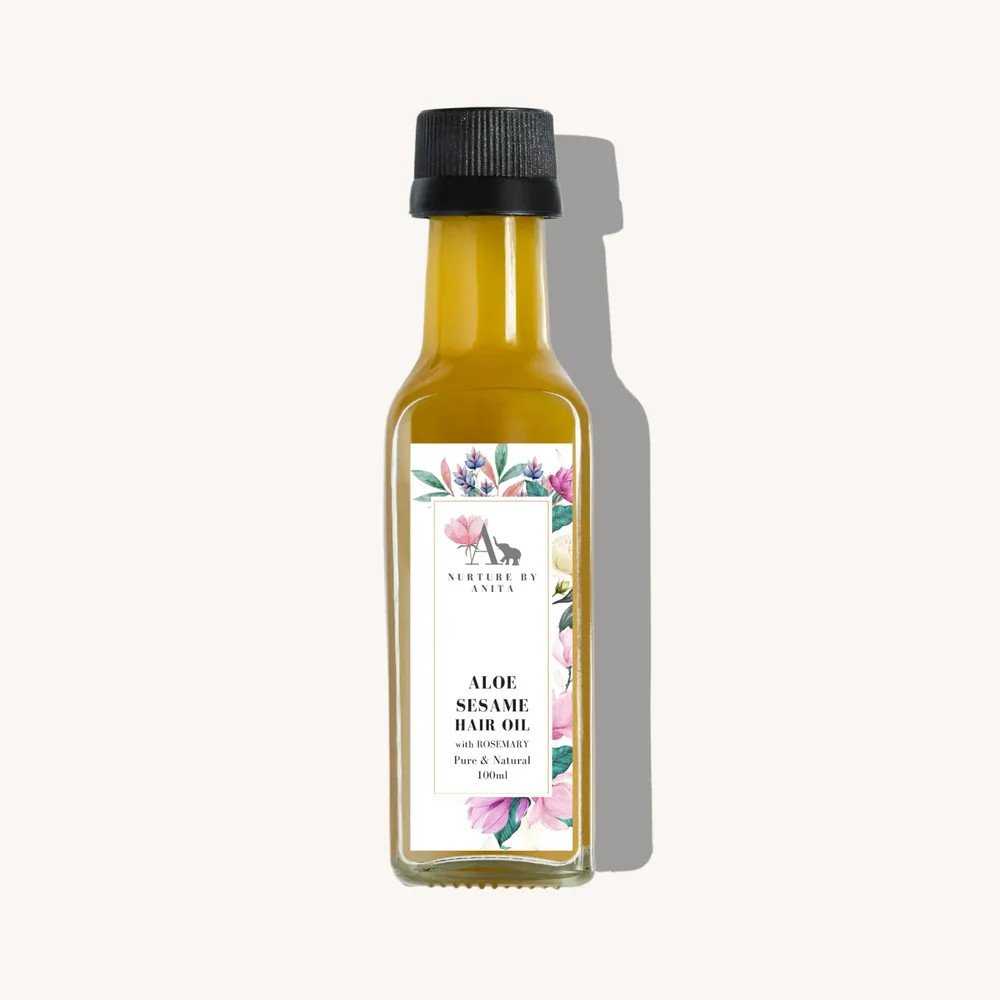
Its Rosemary Bhringraj & Mustard Hair Oil is positioned around hair growth and density. Hibiscus Hair Oil is positioned for hair-fall care, while AloeSesame Hair Oil combines black sesame, aloe vera, rosemary, and castor and is intended for dry, frizzy, breakage-prone, and chemically treated hair.
These products address different hair-care concerns, so the choice should depend on what your hair actually needs rather than simply selecting the product with the most familiar ingredient.
For readers who want to compare the available options, an internal link to the Nurture By Anita Haircare Collection can be added here.
How Often Should You Oil Your Hair?
There is no fixed schedule that works for everyone.
Once a week is a simple starting point, especially if you are introducing oiling into your routine. You can then adjust the frequency depending on your scalp and hair.
Someone with an oily scalp may prefer less frequent oiling, while someone with very dry lengths may find a regular pre-wash routine more comfortable.
Daily oiling is not necessary simply because you are concerned about hair growth.
The better question is whether the routine leaves your scalp comfortable and your hair manageable.
When Hair Oil May Not Be Enough
Hair oil can be useful for conditioning and everyday hair care, but it cannot address every cause of hair loss.
Consider professional evaluation if you experience:
- Sudden or unusually heavy shedding
- Noticeable thinning that continues
- Bald patches
- Persistent scalp itching or redness
- Scalp pain or significant irritation
- Hair loss that does not improve despite routine changes
The aim should be to understand the reason behind ongoing hair loss rather than continuously switching between different oils.
Conclusion
Choosing the Best Hair Oil for Hair Regrowth is not about finding a miracle oil. It is about understanding your hair, identifying what may be contributing to shedding or breakage, and selecting a formulation that fits your scalp and daily routine.
Botanical ingredients such as bhringraj, rosemary, hibiscus, amla, coconut, sesame, and castor can all appear in different hair-care formulations. What matters is how the complete product fits your needs and how consistently you use it.
For women and men in Chandigarh, a practical routine can combine appropriate oiling with gentle washing, careful detangling, reduced heat exposure, and good scalp care. If hair loss remains persistent or unusual, looking for the underlying cause is more important than simply changing from one hair oil to another.