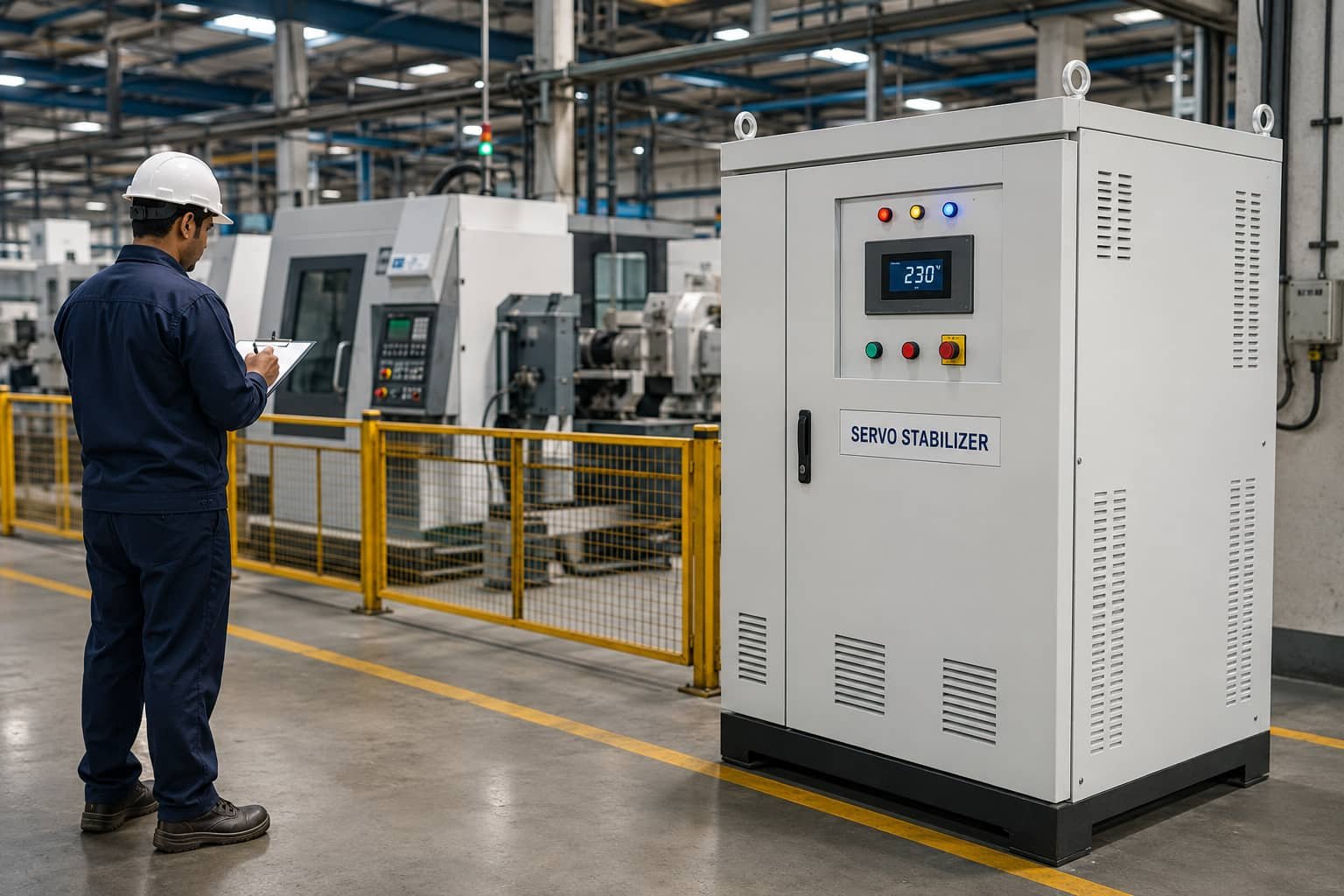
Manufacturing industries rely heavily on electrical equipment, automation systems, CNC machines, motors, control panels, and other sensitive machinery. Even small fluctuations in voltage can affect equipment performance, reduce productivity, and potentially lead to costly downtime. A servo voltage stabilizer helps maintain a consistent voltage supply and protects industrial equipment from voltage variations.
However, choosing the right supplier is just as important as selecting the right stabilizer. The supplier you work with should understand industrial power requirements, provide reliable equipment, and offer appropriate technical support. This guide explains the key factors manufacturing businesses should consider when selecting servo stabilizer suppliers.
Understand Your Manufacturing Facility's Power Requirements
Before approaching a supplier, determine the electrical requirements of your facility. Consider the total connected load, input voltage range, output voltage requirements, number of machines, and type of electrical equipment being used.
Manufacturing facilities may have different requirements depending on their operations. For example, CNC machines and automated production systems may require highly stable voltage, while heavy machinery may require stabilizers with higher capacity.
A professional supplier should be able to evaluate these requirements and recommend a suitable capacity rather than simply offering a standard model.
Check Product Quality and Specifications
The quality of a servo stabilizer directly affects its reliability and service life. Review important specifications such as:
- Input voltage range
- Output voltage accuracy
- Capacity in kVA
- Response time
- Efficiency
- Phase configuration
- Protection features
- Cooling system
- Control system
- Operating temperature range
The stabilizer should be designed to handle the electrical conditions of an industrial environment. Look for equipment manufactured using quality components and suitable protection mechanisms.
Consider the Type of Servo Stabilizer
Manufacturing facilities may require different types of stabilizers based on their electrical systems. Common options include single-phase, three-phase, air-cooled, and oil-cooled models.
Three-phase stabilizers are commonly used for industrial machinery and production equipment. The appropriate configuration depends on the connected load and the facility's electrical infrastructure.
A knowledgeable supplier should explain the differences between available models and help you select the most appropriate option for your application.
Evaluate Technical Expertise
Technical expertise is an important factor when selecting servo stabilizer suppliers. A supplier should be able to understand your manufacturing setup and provide recommendations based on actual electrical requirements.
Ask whether the supplier can assist with:
- Load assessment
- Capacity selection
- Installation planning
- Electrical integration
- Testing and commissioning
- Troubleshooting
- Preventive maintenance
A technically capable supplier can help prevent problems caused by incorrect sizing or unsuitable equipment.
Look for Customization Options
Manufacturing plants often have specific electrical requirements that cannot always be addressed with an off-the-shelf stabilizer. Depending on the application, you may require customized voltage ranges, special protection systems, specific enclosure designs, or particular control configurations.
Discuss your requirements with the supplier before purchasing. A supplier with customization capabilities can provide a solution that better matches your facility's operational needs.
Check Protection Features
Industrial electrical equipment needs protection from more than voltage fluctuations. A suitable servo stabilizer may include features such as:
- Over-voltage protection
- Under-voltage protection
- Overload protection
- Short-circuit protection
- Phase failure protection
- Phase sequence protection
- Surge protection
The exact features required will depend on the equipment being protected. Make sure the supplier clearly explains the protection mechanisms incorporated into the stabilizer.
Compare Warranty and After-Sales Support
The purchase should not end when the stabilizer is delivered. Manufacturing facilities depend on continuous operation, so reliable after-sales support is essential.
Before making a decision, check:
- Warranty duration
- Availability of spare parts
- Service response time
- Preventive maintenance options
- Technical support
- Installation and commissioning services
A supplier that provides dependable service can help minimize downtime and keep the stabilizer operating efficiently over the long term.
Assess Installation and Maintenance Support
Correct installation is essential for reliable performance. Ask whether the supplier provides installation and commissioning support and whether their technicians have experience working in industrial environments.
Regular maintenance can also help identify potential issues before they affect production. A supplier offering maintenance services can make it easier to keep the equipment in good working condition.
Compare Pricing Carefully
Price is an important consideration, but it should not be the only deciding factor. A low-cost stabilizer may not always provide the performance, durability, or support required for a manufacturing facility.
Instead of comparing only the initial purchase price, consider the overall cost of ownership. This includes energy efficiency, maintenance requirements, expected service life, spare parts, downtime risks, and warranty coverage.
A slightly higher initial investment in a reliable system can potentially provide better long-term value.
Review Industry Experience and Reputation
Experience in manufacturing applications can be a valuable indicator of a supplier's capabilities. Look for companies that have supplied stabilizers for industries similar to yours.
You can evaluate a supplier by checking:
- Years of industry experience
- Previous industrial installations
- Customer feedback
- Product certifications
- Technical capabilities
- Service network
If possible, request references or examples of previous installations. This can provide a better understanding of the supplier's experience with industrial applications.
Ask for Complete Technical Documentation
Before purchasing, request relevant technical documents such as product specifications, installation requirements, wiring diagrams, warranty terms, and maintenance instructions.
Clear documentation helps your electrical and maintenance teams understand the equipment and ensures that installation is carried out correctly.
Make a Long-Term Decision
Choosing a servo stabilizer supplier should be viewed as a long-term business decision rather than a one-time purchase. The right supplier can support your facility through equipment selection, installation, maintenance, and future expansion.
Manufacturing requirements can also change as production capacity increases. Therefore, consider whether the supplier can support additional equipment or higher power requirements in the future.
Conclusion
Selecting the right supplier is essential for manufacturing companies that depend on stable and reliable electrical power. Start by understanding your facility's load requirements, then evaluate product quality, technical expertise, customization capabilities, protection features, warranty, after-sales service, and overall value.
A reliable supplier should do more than sell a stabilizer. They should understand your industrial application and provide a solution that supports equipment protection, operational efficiency, and long-term performance. Taking the time to compare suppliers carefully can help manufacturing businesses make a more informed investment and reduce the risks associated with voltage fluctuations.
Tags : Servo Stabilizer Suppliers