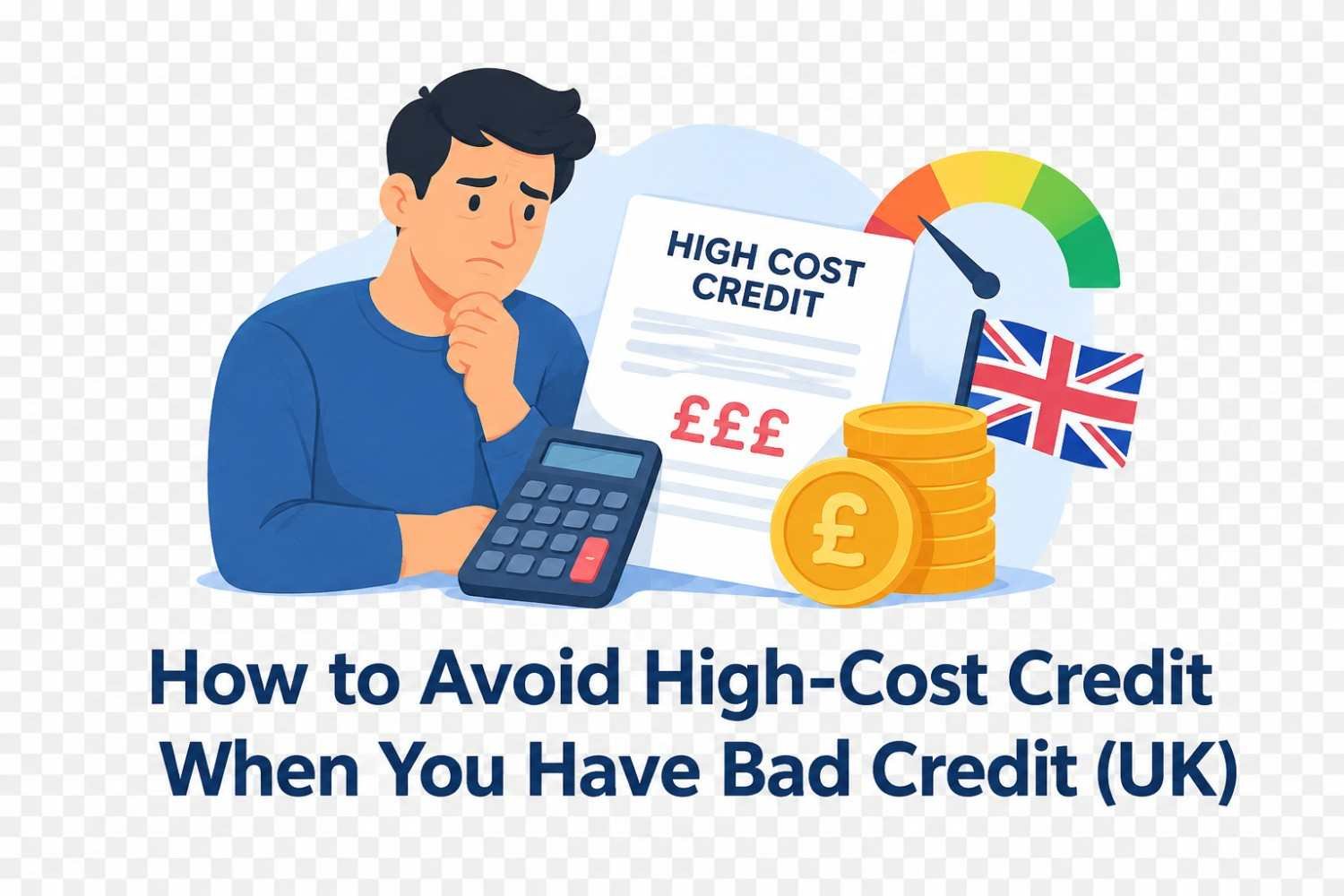
You can avoid high-cost credit like payday loans, credit cards, and overdrafts by searching for cheaper alternatives to finance your needs first. For example, resort to savings, an emergency fund, salary advances, or benefits to fund your needs. It does not bind you to any liabilities of repaying the principal amount with interest costs. One must consider high-cost credit as a last resort or when nothing else works.
What is high cost credit? Why is it risky for bad credit borrowers?
High‑cost credit means loans and credit products with very high interest and fees. For example, payday loans, some doorstep loans, and certain high‑rate personal loans. For bad‑credit borrowers, these can quickly become unaffordable because high APRs and late fees increase the total you owe, raising the risk of a debt spiral. Moreover, bad-credit individuals have few options to fund their needs.
Therefore, they are more willing to explore and take whichever loan they might get. The interest rates and terms remain non-negotiable and stern for individuals with a bad credit history. However, they can avoid the risk of expensive loans by comparing loan quotes, borrowing only needful and relying more on savings/investments to meet need.
How to avoid high-cost credit when you have a bad credit score?
Here are some alternatives that you may try with a bad credit score:
1) Select small amounts, like 5000-pound loans
A £5,000 loan is a type of unsecured borrowing that can be used to cover a significant planned or unexpected expense when you do not have enough available savings.
Depending on the lender and loan terms, a 5000 loan from a direct lender may be useful for purposes such as home improvements, car repairs or purchases, education or training costs, moving expenses, consolidating existing debts, or other major personal expenses.
The borrower normally repays the amount in instalments over an agreed period, with interest and any applicable fees added to the cost of borrowing.
The smaller the amount, the lower the liabilities. The only thing is, - don’t extend the repayment term.
2) Check low interest Secured loans
Secured loans are cheaper on the interest rate front. It is better than unsecured loans, especially if you have a bad credit history. You may get a secured loan at a cheaper interest rate with more flexible terms and a larger amount range. It may help you achieve rather massive personal goals. You may use it for home purchase, car purchase, home renovation, etc.
Check whether it is the best option by comparing across the lenders. Identify whether you can afford monthly payments. Proceed only if you can. Otherwise, you may end up losing the precious asset that works as collateral against the loan.
3) Use an eligibility checker
Loan calculators and eligibility checkers may help you know whether you may get a specific loan, depending on your affordability. It lets you know the approximate amount and terms that you may qualify for without affecting your credit score. Accordingly, you may choose a cheaper option given your financial needs and repayment potential. It is a wise thing to do before taking any loan.
4) Wait until payday
Identify whether you can delay the personal need until payday. It will prevent you from checking on or tapping expensive loans or credit cards. Certain personal goals, like buying a party dress, basketball kit, or dining out, can be delayed until you get paid.
It may help you pay from your savings instead of using high-cost credit. You must tap it only when you cannot wait. For example, urgent medicine, accidental car repairs, etc.
5) Ask friends and family for help
Being on good terms with your family members may help you here. You may ask for a little financial assistance for your short-term needs. You can even form a legal agreement if you want to keep it professional.
The document must dictate the terms, when you must repay the amount, and whether any interest exists. Sometimes, getting help from friends and family may provide instant relief.
6) Compare the total repayable not just the APR
If you must borrow, compare the interest rates, total repayable amount, monthly payment, loan APR, and any additional charges. Check whether the lender charges early repayment fees or high missed payment charges.
It is especially important when borrowing a small amount, like a 1000-pound loan for a bad credit score. The interest rates and terms are usually strict and high on small amounts. Therefore, don’t exercise negligence in this part.
Comparing the quotes across lenders may help you fetch the most affordable one for your needs. Also, set up direct debits for the repayments. It will help you avoid any missed or late payment charges.
7) Pay some debts before taking a loan
Yes, repaying some pending payments before taking a loan optimises your credit profile. It reveals responsible payment and financial behaviour. Hence, you may qualify for cheaper terms, interest rates, and pay less overall.
Check and pay high-interest debt first. It may include credit cards, rent, payday loans, overdrafts, store card payments, etc. Repaying some dues gives you the confidence of managing the new debt wisely. However, you must borrow only if you have the financial calibre to repay the dues on time.
8) Borrow only the amount that you need
Analyse the purpose for which you want to borrow a loan. Next, put your financial need against your monthly income and expenses. Check whether you can afford to repay a particular amount after meeting your basic bills and payments.
Can you cover payments without missing any? If you hesitate or doubt it, borrow less than required. It may help you meet the needs to an extent without pushing you further into the debt cycle.
Bottom line
Avoiding high-interest credit when you need money urgently is challenging. One cannot wait until the credit score improves. However, that does not mean that you must rely on high-cost credit.
Instead, check whether you can meet your needs with monthly savings. Check and use existing dividends from investments or savings from part-time income. Alternatively, if you must borrow, compare interest rates, APR, and total repayable amount. Borrow only a smaller amount to keep liabilities low.