You encounter an urgent need to repair the kitchen’s broken pipeline. However, you lack enough now for that. You cannot delay the requirement as it may hamper the structural integrity. Therefore, you explore the best loans for emergency needs to finance the requirements. One must remain conscious before exploring quotes for emergency loans.
Make sure you borrow only what you need. The loan must not affect the basic lifestyle requirements. Otherwise, it may lead to missed payments, and debts may spiral quickly. Eventually, it affects your credit history, score, and finances. You may struggle to recover financially after that.
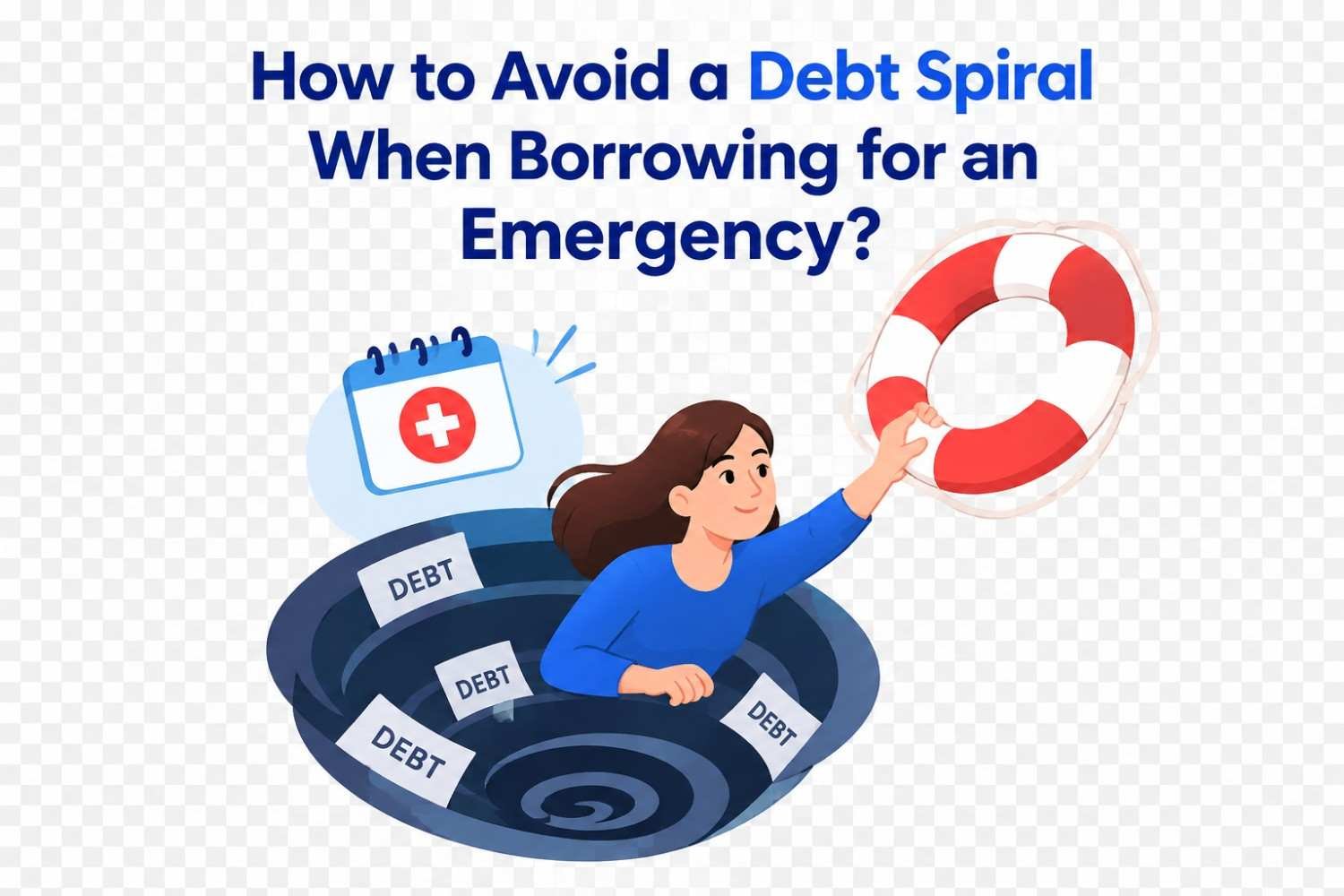
The blog discusses tips to avoid debt from spiraling when you borrow money for emergencies. It may help you ensure a responsible loan.
What is a debt spiral?
A debt spiral is a financial term for an individual’s psychology of borrowing money to repay existing debt. Eventually, taking a new loan implies fresh liabilities. This cycle continues until the borrower understands spending patterns and tries to clear debt without depending on credit.
• An emergency loan is most likely to spiral only when:
• It has a short repayment deadline.
• It is a high-interest loan.
• It requires a high monthly payment.
• It has no apparent source of repayment in the budget.
How can borrowing 2000 pounds with a bad credit score spiral? Explain.
You may take a 2000 loan for bad credit in the UK from a direct lender to pay the credit card bill on the last date. However, taking a loan with a bad credit score may also spiral as lenders charge interest and other loan costs that make the loan costly. The high monthly payments leave little scope for important expenses like groceries, water bills, and electricity.
Here is how the debt spiral works:
• Step 1- You borrow £2000 for an emergency.
• Step 2- Higher monthly repayments make it difficult for you to repay regularly.
• Step 3- You fall behind on payments because of unaffordability or unplanned expenses
• Step 4- Lenders may charge late fees, missed payment penalties, and high interest, which increases the overall due amount
• Step 5- You borrow another high-interest loan to repay this debt
• Step 6- You are now liable for this loan repayment as well. Your total repayable amount increases, your credit score drops, and you find yourself in a debt trap or debt spiral.
How to get away from the fear of debt spiral on emergency loans?
Here are some tips that may help you avoid or prevent debt spiral and repay the emergency loan on time:
1) Understand your needs and budget
Here are some tips that may help you avoid or prevent a debt spiral and repay the emergency loan on time:
Before applying for emergency loans in the UK, ask yourself:
How much exactly do I need? Analyse the purpose of the loan and your monthly income and expenses. Use a free loan calculator to determine how much you can afford to repay. Borrow only what you can repay, not the maximum amount you may get.
What will repayments cost in total? Check and compare the interest charges, APR, total loan costs, and any loan fees or additional charges. It will help you know the approximate loan costs.
How will you repay the dues each month? Identify the specific paycheck, income source, or expense reduction that will cover the payment every month.
2) Compare the best loan options
Identify and compare the best loan options such as short-term loans, instalment loans, payday loans, no guarantor loans, emergency loans, etc., and check the APR and total repayable amount. Also, check the purposes for which they are most suitable.
You can also pre-qualify to understand the approximate terms and loan amounts you may qualify for. Accordingly, you may choose the right loan depending on your needs and affordability.
3) Avoid any loan with upfront charges
You don’t pay anything upfront on short-term loans. Therefore, you know the decisions that you make while borrowing money for emergency requirements. A loan with upfront payments and fees may be expensive.
It may impact your ability to continue the repayment. Moreover, certain fraudulent loan providers may change the terms at any moment. This may make the loan more expensive and non-repayable.
Therefore, always enquire and confirm whether you are dealing with a reliable loan company. Check and confirm the authenticity of the physical location, email ID, and contact number before approaching one for financial assistance.
4) Build a repayment plan immediately
It is important to understand your liabilities immediately after you get the loan in your bank account. You may use the cash to meet urgent needs. However, you must plan the repayments without wasting time.
Check which income source you are going to tap to fund the repayments. Analyse whether your bank account has a direct debit facility for the loan payments. Check your existing expenses and try to control them to make space for repayment in your budget.
Avoid using credit cards unnecessarily and stick strictly to essentials until you repay the loan. This disciplined loan repayment structure and plan helps you avoid missing any payments. It eventually reduces the fear of being gripped by a debt trap. Instead, it gives you the confidence of managing money well.
Set up direct debits for the repayments to pay automatically. You need to ensure there is enough in your bank account for the direct debits to work.
5) Understand the warning signs
Don’t stay blind to the strict signs of a debt trap. Instead, remain conscious of every loan payment and date. Here are some signs that you must not ignore:
• Using one loan to pay another
• Missing payments or avoiding bills
• Using payday loans or short-term loans frequently
• Borrowing for everyday expenses rather than emergencies.
For example, you borrow a £3000 loan from a direct lender for basic needs like rent payments. However, you find it easy to qualify for and apply for another loan of the same amount to repay credit card debts.
Continuing this cycle in the long term may affect your finances. It may also lead to a debt trap if your financial situation changes. Therefore, remain aware of your financial decisions and budget before taking any loan.
Bottom line
These are some tips you may consider to avoid a debt spiral when borrowing money for emergency expenses. Identify and compare loan terms like APR, interest rates, total borrowing costs, etc., before borrowing. It will help you borrow an affordable loan. Next, identify any additional or surprise costs that may increase the total repayable amount.