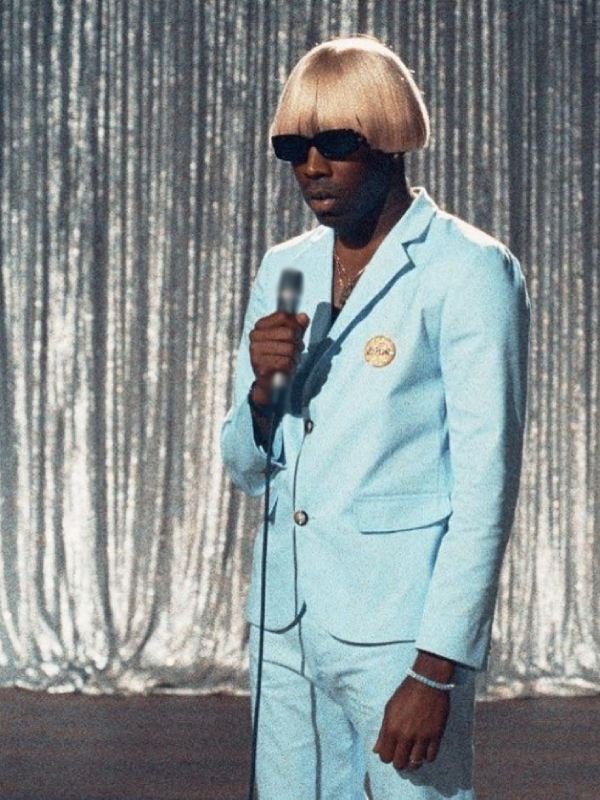
There are artists who make music. Then there are artists who build worlds. The Tyler the Creator Igor Suit is proof that Tyler belongs in the second category. When the IGOR album dropped in 2019, it arrived with a complete visual identity attached, one so fully realized and deliberately strange that it crossed over from music into fashion in a way very few artists have ever managed. A bold, pastel, unapologetically theatrical suit that became one of the most talked-about garments in recent pop culture memory.
From Skater Kid to Style Icon
To understand why the Igor suit hit so hard, you have to understand where Tyler came from. His early style was rooted in LA skate culture, oversized graphics, Vans, Supreme, and the DIY irreverence that defined Odd Future's aesthetic. He was loud and completely unconcerned with what the fashion industry thought.
That changed gradually but deliberately. By the time he launched Golf Wang in 2011 and later Golf Le Fleur, Tyler was proving that his relationship with clothing ran deeper than merch. Pastel tones started creeping into his wardrobe. Preppy silhouettes mixed with skater energy. He began using fashion as a vehicle for character-building and self-invention. By 2018, fashion critics were paying serious attention and best-dressed lists were including his name regularly.
What the IGOR Era Actually Did
When the IGOR album arrived, Tyler did something unusual. He didn't just release music. He introduced an alter ego built around a single look: a brightly colored double-breasted suit, a platinum blonde bowl-cut wig, and dark sunglasses. The character wore this throughout the Earfquake music video, across his world tour, and at public appearances during that period.
The effect was immediate. The suit became inseparable from the album's themes of heartbreak, obsession, and emotional vulnerability. Sharp tailoring represented control and structure. Vivid pastels reflected the softness and pain underneath. Tyler had essentially used clothing to communicate the emotional logic of an entire record without saying a word about it in interviews. That is a level of intentionality that most artists never reach.
Why It Resonated Beyond the Music
What made the Igor look genuinely significant rather than just memorable was how quickly it escaped the context of the album. Fans started wearing it to concerts, themed parties, and Halloween events. The demand was real enough that Tyler released a version through Golf Wang so fans could dress as the character.
The Tyler the Creator Igor Suit at Wilson Jackets captures something the music industry rarely produces: a look that functions equally well as a costume, a fashion statement, and a piece of cultural shorthand. Put it on at a party and people immediately know what it means. Wear the blazer alone with a plain tee and it reads as bold, considered personal style. That versatility is what separates a truly iconic look from something that simply went viral for a week.
The Suit as a Statement About Fashion Itself
There is something quietly radical about the Igor suit in the context of menswear. Double-breasted suiting in vivid pastels, worn with a wig and sunglasses on stage in front of thousands, is the opposite of what the music industry tells male artists their wardrobe should look like.
Tyler has never cared about that. His whole approach to dressing, from Odd Future through to his Lacoste and Louis Vuitton collaborations, is built on the idea that clothes are for self-expression first. The IGOR era took that philosophy to its most theatrical extreme.
The Legacy It Left Behind
The influence of the Igor aesthetic is still visible in how younger artists approach their visual identities, in the renewed appetite for bold suiting in menswear, and in the continuing demand for the look years after the album's release. That kind of longevity happens when a look is rooted in something genuine, when the clothes, the art, and the artist all point in the same direction.
Tyler, the Creator has always dressed like himself. With IGOR, that instinct produced something that went beyond personal style and became a genuine cultural moment. The suit is the proof.