How the Right Manual Lathes Can Give Manufacturing Businesses a Competitive Advantage
By Admin 09-10-2026 13
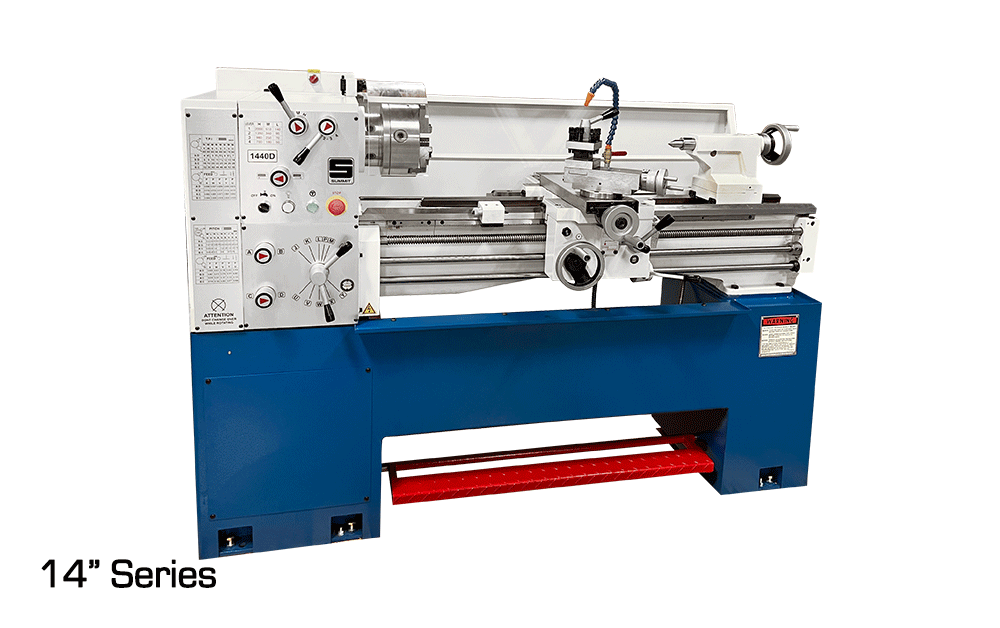
How the Right Manual Lathes Can Give Manufacturing Businesses a Competitive Advantage
Manual lathes remain a cornerstone of precision manufacturing, offering capabilities that automated systems sometimes cannot match. Choosing the right equipment can mean the difference between thriving in a competitive market and struggling to keep up with more agile competitors.
Understanding the Strategic Value of Manual Lathes
Manufacturing businesses often face a critical decision: invest heavily in CNC automation or maintain versatile manual capabilities. While automation has its place, manual lathes offer distinct advantages that directly impact a company's bottom line and market position.
Manual lathes provide unmatched flexibility for small-batch production and custom work. When a client needs five specialized components rather than five thousand, setting up a CNC machine becomes cost-prohibitive. A skilled operator with a quality manual lathe can complete these jobs quickly and profitably, accepting work that competitors turn away.
The learning curve associated with manual lathes also creates a valuable workforce development tool. Machinists who master manual operations develop an intuitive understanding of cutting forces, material behavior, and tooling selection.
This foundational knowledge makes them better CNC programmers and troubleshooters later in their careers.
Cost Efficiency Beyond the Purchase Price
Beyond their lower initial cost, the financial advantages of manual lathes run deep. These machines consume less energy, require simpler maintenance, and operate for decades with proper care. A well-maintained manual lathe from the 1970s can still produce precision parts that meet modern tolerances.
Unlike CNC machines with complex electronics and proprietary software, manual lathes use mechanical systems that any competent technician can service. Replacement parts are widely available and affordable, reducing downtime and inventory costs.
Manual lathes also occupy a smaller footprint than equivalent CNC machines, allowing businesses to maximize production capacity within existing facilities. This matters particularly for job shops and small manufacturers operating in urban areas where real estate comes at a premium.
Rapid Prototyping and Design Iteration
Product development cycles demand speed and flexibility. Manual lathes excel at rapid prototyping, allowing engineers and designers to test concepts without delays associated with CAD programming and CNC setup.
A skilled machinist can work directly with an engineer, making real-time adjustments as a prototype takes shape. This collaborative approach identifies design flaws and improvement opportunities faster than iterative CAD-to-production cycles. The ability to hold a physical prototype within hours of concept approval accelerates time-to-market for new products.
Small design changes that would require reprogramming on a CNC machine take minutes on a manual lathe. This agility is invaluable when working with clients who refine specifications as projects progress or when responding to field feedback during product launches.
Building Competitive Differentiation
Markets reward businesses that can say "yes" when others say "no." Manual lathes enable manufacturers to accept challenging, profitable work that automated shops cannot justify economically.
Here's a perfect example: custom repair work. When a client needs a discontinued shaft replaced or a damaged component restored, manual capabilities allow quick assessment and execution. These jobs often carry premium pricing because few competitors want to handle them.
Investing in quality manual lathes by Summit Machine Tool that offer precision and reliability empowers machinists to tackle complex jobs confidently, knowing their machines will deliver consistent results.
Specialty industries like aerospace restoration, antique machinery repair, and artistic metalworking specifically seek manufacturing partners with manual capabilities. These niche markets often prove more profitable and stable than high-volume commodity production.
Workforce Development and Knowledge Retention
The manufacturing skills gap continues widening as experienced machinists retire. Manual lathes provide an essential training ground for developing the next generation of skilled workers.
Apprentices learn cause and effect immediately on manual equipment. They feel how different materials cut, see how tool geometry affects surface finish, and understand why specific speeds and feeds matter. This tactile education creates problem-solvers rather than button-pushers. In fact, many training programs report that students who start on manual equipment develop troubleshooting skills 40% faster than those who begin with CNC-only instruction.
Businesses that invest in manual capabilities alongside automation create more resilient workforces. When CNC machines go down, manually trained machinists can shift production to keep critical jobs moving. This redundancy has saved countless delivery deadlines and customer relationships.
Knowledge retention improves when workers understand the fundamentals. A machinist who learned on manual equipment brings valuable perspective to automation discussions, identifying opportunities and limitations that pure CNC operators might miss.
Maximizing Return on Investment
Strategic equipment selection requires thinking beyond capabilities to consider utilization rates and revenue generation. Manual lathes typically achieve higher utilization because they handle diverse jobs without lengthy setup requirements.
A manual lathe might run profitably for two hours on a custom job, then switch to a different project in minutes. This flexibility means the machine generates revenue throughout the shift rather than sitting idle between CNC setups. Over months and years, this utilization advantage compounds into significant profit differences.
The secondary market for quality manual lathes also protects investment value. Well-maintained machines retain resale value far better than outdated CNC equipment with obsolete controls. This creates options for businesses that need to upgrade or shift focus.
Insurance and financing costs often run lower for manual equipment due to reduced replacement values and lower risk profiles. These savings may seem minor individually but add up over the equipment's service life.
Integration with Modern Manufacturing
Manual lathes don't mean rejecting modern technology, they complement it. Progressive manufacturers use manual and CNC capabilities strategically, assigning work based on economic and technical fit.
Hybrid approaches yield optimal results. A business might use CNC for production runs while reserving manual capacity for prototypes, repairs, and custom work. This balanced strategy captures efficiency where it matters while maintaining the flexibility that creates competitive advantages.
Quality measurement technology integrates seamlessly with manual operations. Digital readouts, precision measuring tools, and statistical process control apply equally to manual and automated production. The fundamental goal remains the same: producing parts that meet specifications profitably.
Making the Right Equipment Choice
Selecting manual lathes requires evaluating specific business needs rather than following industry trends. Consider:
- The types of work you want to pursue
- The skills available in your workforce
- The market gaps your competitors have left open
- The balance between specialized and general-purpose capabilities
Quality matters enormously in manual equipment. A precision-built lathe produces better parts with less operator effort and maintains accuracy far longer than budget alternatives. The productivity difference between excellent and mediocre manual lathes often exceeds the price differential within the first year of operation.
Support and service availability should influence purchasing decisions. Equipment is only valuable when it runs, so access to knowledgeable technical support and replacement parts protects your investment.
The right manual lathes transform manufacturing businesses from order-takers into problem-solvers. They enable profitable diversification, support workforce development, and create competitive advantages that automation alone cannot deliver. For businesses willing to invest in quality equipment and skilled operators, manual capabilities remain a powerful strategic asset.