How the Right Kids Sneakers Improve Comfort During Daily Activities
By Didachi Collection 29-07-2026 53
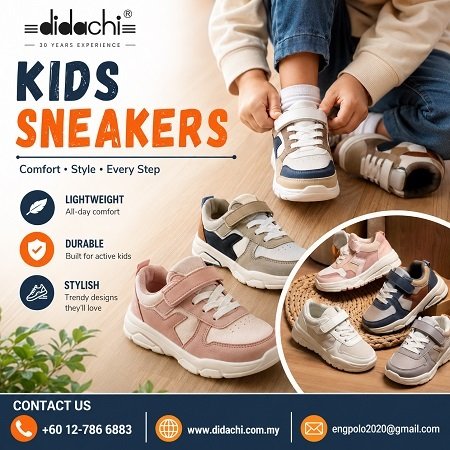
The right kids sneakers support healthy foot development, reduce fatigue, and improve stability during daily movement. Proper footwear designed for children features flexible soles, cushioned insoles, and breathable materials that align with how young feet grow and move. Choosing well-fitted, activity-appropriate sneakers helps children stay comfortable and confident throughout their day.
Every parent knows the difference a good pair of shoes makes. When children are constantly on the move — running between classrooms, playing at recess, or exploring the park — their footwear does far more than protect their feet. The right kids sneakers actively support growing feet, help maintain posture, and prevent the aches that come from poorly fitted shoes. Getting this choice right matters more than most parents realise.
Why Foot Comfort Matters More in Childhood Than You Think
Children's feet are not simply smaller versions of adult feet. Up until around age 7, the foot is still largely made of soft cartilage that gradually hardens into bone. Poor footwear during these early years can interfere with this natural development, leading to flat feet, toe deformities, or gait problems that follow a child well into adulthood.
According to the Malaysian Podiatry Association, ill-fitting or unsupportive shoes are among the most common contributors to childhood foot complaints seen in clinical settings. The concern is not just about pain — it is about long-term structural health.
What Makes Kids Sneakers Truly Comfortable?
Not all sneakers are built the same. When evaluating comfortable kids shoes, look beyond colour and brand logos. The features that matter most are the ones you cannot immediately see.
Flexible Soles That Match Natural Foot Movement
A sole that bends at the ball of the foot — not the arch — allows children to push off naturally when walking or running. Stiff soles force the foot into an unnatural movement pattern, which tires muscles faster and increases the risk of tripping.
Proper Cushioning Without Excess Bulk
Cushioning absorbs impact from hard surfaces like tiled school floors or concrete playgrounds. However, too much cushioning can reduce sensory feedback, which young children rely on to develop balance and coordination. A medium-density insole strikes the right balance.
Breathable Upper Materials
Malaysia's humid climate means children's feet sweat throughout the day. Mesh or perforated uppers allow air circulation, reducing moisture build-up that leads to blisters, skin irritation, and odour. This is not a luxury feature — in a tropical environment, it is a necessity.
Secure Fit at the Heel and Toe Box
The heel counter — the stiff section at the back of the shoe — should hold the heel firmly without digging in. Meanwhile, the toe box must have enough room for toes to splay naturally. A thumb's width between the longest toe and the shoe tip is the general rule of thumb most paediatric podiatrists recommend.
How the Right Walking Shoes for Kids Support Active Daily Routines
Think about a typical school day for a child in Malaysia. They walk to the school gate, sit through lessons, sprint across the canteen, play during recess, and walk home. That is easily 5,000 to 8,000 steps — sometimes more. Walking shoes for kids designed for this kind of sustained activity provide arch support that prevents the foot from rolling inward (overpronation), a common issue in younger children.
Overpronation over long periods places strain on the knees and lower back. The right sneaker addresses this before it becomes a problem, rather than after a child starts complaining of leg pain at the end of the day.
Everyday Sneakers vs. Activity-Specific Shoes: What Parents Should Know
| Feature | Everyday Sneakers | Activity-Specific Shoes
|
|---|---|---|
| Sole flexibility | Moderate, all-direction | Directional (e.g., forward for running) |
| Cushioning | Medium, balanced | High-impact, sport-targeted |
| Breathability | High — suited to long wear | Variable by sport |
| Durability | Built for daily wear and tear | Optimised for performance, not longevity |
| Best use case | School, errands, outdoor play | Football, basketball, running events |
For most children, everyday sneakers cover the majority of their weekly activities. A dedicated sport shoe is worth adding only when your child trains in a specific sport multiple times per week.
When to Replace Kids Sneakers: Signs Parents Often Miss
Children outgrow shoes faster than parents expect. On average, children between ages 3 and 5 need new shoes every three to four months. Older children from ages 6 to 10 typically need replacements every five to six months. But wear is not just about size — it is also about structure.
Watch for these signs that it is time for a new pair:
- The heel counter has collapsed inward or outward
- The midsole feels hard and compressed rather than springy
- The outsole shows uneven wear, particularly on one side
- Your child complains of foot or leg pain after normal activity
- There is less than a thumb's width of space at the toe
Fitting Tips: Getting the Sizing Right Every Time
Even the best-designed sneaker will fail if it does not fit properly. Here are practical steps to get it right:
- Measure both feet. Children's feet are often slightly different in size. Fit the larger foot.
- Shop in the afternoon. Feet swell slightly throughout the day, so afternoon measurements give a more accurate fit.
- Have your child stand, not sit. Standing distributes weight across the foot and gives a true length measurement.
- Check width, not just length. A shoe that is long enough but too narrow will cause just as many problems as one that is too short.
- Let them walk a few steps. Watch for heel slippage or toe scrunching — both are red flags.
Supporting Active Lifestyles Starts with the Right Footwear Choice
Active children need footwear that keeps up with them — not shoes that slow them down or cause discomfort by lunchtime. When parents invest in well-constructed everyday sneakers, they remove one major variable that affects how confidently and freely a child moves through their day.
It is worth viewing good shoes not as a recurring expense but as a small investment in a child's physical wellbeing and confidence. A child who is not distracted by sore feet is a child who can fully engage in play, learning, and exploration.
If you are looking for quality options designed with growing feet in mind, Didachi Collection offers a carefully curated range of kids sneakers that balance comfort, durability, and the kind of design children actually want to wear.
Frequently Asked Questions
What should I look for when buying kids sneakers for school use?
Look for breathable uppers, flexible soles that bend at the ball of the foot, a firm heel counter, and a toe box with enough room for natural toe movement. The shoe should feel lightweight and secure without pinching. Avoid stiff or overly cushioned designs for all-day school wear.
How often should I replace my child's sneakers?
Children aged 3 to 5 typically need new sneakers every three to four months due to rapid foot growth. Older children may get five to six months from a pair. Replace sooner if the sole shows uneven wear, the heel counter collapses, or your child reports foot discomfort.
Are expensive kids sneakers always better quality?
Not necessarily. Price does not always reflect fit or function. Focus on structural features like sole flexibility, arch support, and breathability rather than brand prestige. A mid-range sneaker with the right fit will outperform an expensive one that does not suit your child's foot shape.
Can the wrong shoes affect my child's posture?
Yes. Ill-fitting or unsupportive shoes can contribute to overpronation, which places strain on the knees, hips, and lower back over time. Children wearing poorly structured footwear daily may develop compensatory movement patterns that affect posture and gait well beyond childhood.
What is the correct way to measure a child's foot size at home?
Have your child stand on a piece of paper in the afternoon when feet are at their largest. Trace both feet and measure the length from heel to the longest toe. Add about 10 to 12mm for growing room. Always fit the larger foot if there is a size difference between the two.
How do I know if my child's sneakers fit correctly?
There should be a thumb's width of space between the longest toe and the shoe tip. The heel should not slip when walking. The shoe should feel snug across the midfoot without feeling tight. Watch how your child walks — stumbling, toe-walking, or frequent complaints about tired feet suggest a poor fit.