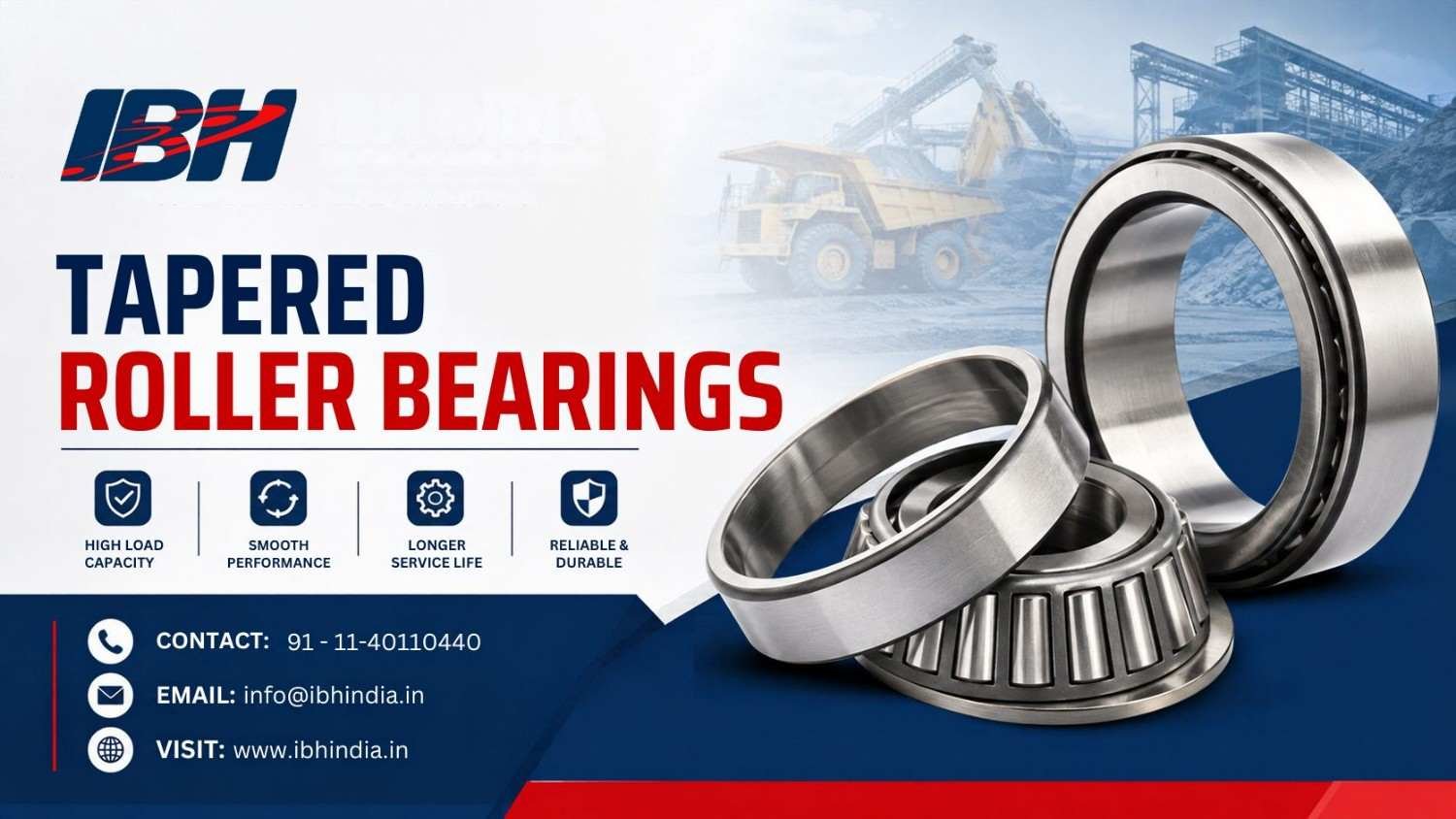
A gearbox rebuild in a sugar mill near Meerut once turned into a three-day job because nobody had checked bearing preload before reassembly. That's the kind of detail that separates a smooth rebuild from a repeat failure. Tapered roller bearings carry combined radial and axial load better than almost any other bearing type, but only if they're mounted and preloaded correctly — get that step wrong and the efficiency gain everyone talks about never actually shows up. Most buyers understand the load capacity on paper. Fewer understand that half the performance depends on installation, not the part itself.
Why the Tapered Design Handles Combined Load Differently
In a tapered roller bearing, the raceways are inclined to the bearing axis, allowing the radial load and the axial (thrust) load to be carried by a single set of rollers simultaneously. This is the key advantage of the tapered roller bearing over the cylindrical roller bearing; the latter is effective under radial load but only offers limited thrust capability without the addition of special features.
Configuration Types
- Single-row tapered bearings — the standard configuration, handling axial load in one direction, typically mounted in opposing pairs to manage thrust from both sides
- Double-row (TDO/TDI) configurations — factory-set preload, used where mounting space is limited and adjustable preload isn't practical
- Four-row tapered bearings — used in heavy rolling mill applications carrying extreme combined radial and axial load
- Metric vs. inch series — a detail that trips up more buyers than it should, since metric and inch series aren't interchangeable despite sometimes similar-looking part numbers
The Detail Most Buyers Get Wrong at Mounting
Preload adjustment gets treated as a minor step, and it's the opposite. Too little preload, and the bearing runs with excess internal play, leading to vibration and premature wear on the raceways. Too much preload, and friction heat builds up fast enough to shorten bearing life dramatically, sometimes within weeks rather than years. Correct preload on a paired tapered bearing setup requires measuring axial clearance during assembly, not estimating it by feel or torquing a locknut to a standard value regardless of the actual bearing pair. Skipping that measurement step is probably the single most common reason a tapered bearing underperforms its rated life.
What Correct Selection and Mounting Actually Protect
The case for getting tapered roller bearings right isn't about a vague efficiency claim. It's about costs that show up whether or not anyone's tracking them closely.
Reduced friction loss translates directly into lower operating temperatures and, on larger drive systems, measurably lower energy draw — a bearing running with correct preload generates less heat than one fighting excess internal clearance or over-tight assembly. Extended service intervals follow from that same correct setup, cutting the frequency of planned maintenance shutdowns needed just to inspect or replace bearings. Reduced vibration protects more than the bearing itself; excess play in a tapered bearing pair transmits vibration into the gearbox housing and connected shafts, accelerating wear across components that had nothing to do with the original bearing choice. Genuine, traceable stock also protects your warranty position — a failure investigation on grey-market bearings routinely ends with a rejected claim, and buyers only find that out after they've paid for the replacement themselves. And matched-pair sourcing reduces the guesswork your maintenance team faces during a rebuild, which matters most when the rebuild is happening under time pressure.
Why Regional Stock Changes Your Response Time
Operating from India, with reach into the industrial corridors across the north and west, cuts real transit time for buyers running paper mills in Gujarat, steel operations in Chhattisgarh and Jharkhand, and sugar and cement units scattered across Uttar Pradesh and Madhya Pradesh. A supplier quoting the same price from further away isn't offering the same deal once freight time enters the picture — and matched-pair bearings in particular need careful packaging during transit, since even minor handling damage to one bearing in a pair can throw off the whole preload calculation on arrival.
About Us
We supply premium bearings across India, and tapered roller bearings sit alongside our broader range serving heavy engineering, steel, cement, and paper industry customers. Our stock priorities came from watching what customers actually needed replaced during rebuilds, not from a catalog plan drawn up in advance.
Conclusion
Tapered roller bearings improve machine efficiency only when the selection and mounting both get done right — matched pairs, correct preload, and a configuration suited to the actual combined load. Buyers who treat installation as an afterthought lose most of the efficiency gain they paid for in the first place. Get both the spec and the mounting practice right, and the bearing stops being a recurring line item on your maintenance budget.
Frequently Asked Questions
What's the main advantage of tapered roller bearings over cylindrical roller bearings?
Tapered roller bearings carry radial and axial load through the same rollers simultaneously, because of their angled raceway design. Cylindrical roller bearings handle radial load very well but need a separate flanged configuration to manage any meaningful axial load, so the choice comes down to how much thrust your application actually carries.
Are you Nachi Tapered Roller Bearings Suppliers in India?
Yes, we work as one of the Nachi Tapered Roller Bearings Suppliers in India, and stock we supply comes with traceable sourcing rather than passing through unverified resale channels before reaching your dock.
How do I know if I'm buying from genuine Nachi Tapered Roller Bearings Distributors or a grey-market reseller?
Ask for batch documentation before you place the order. Verified Nachi Tapered Roller Bearings Distributors in India provide this without hesitation, and any pushback on that request is worth treating as a warning sign, not a minor inconvenience.
Do tapered roller bearings always need to be mounted in pairs?
Single-row tapered bearings, yes — they only carry thrust in one direction, so a paired mount handles axial load from both sides. Double-row configurations come factory-preloaded and don't require pairing, but they trade some flexibility for that convenience.
What's the typical lead time for matched-pair bearings on a bulk order?
For the sizes we keep in stock, we generally ship within 24 to 48 hours of confirmed order. For those that we don‘t keep in stock but are less common series or oversized bores, it takes us longer and we will tell you so rather than quote a date we can‘t reliably supply within.