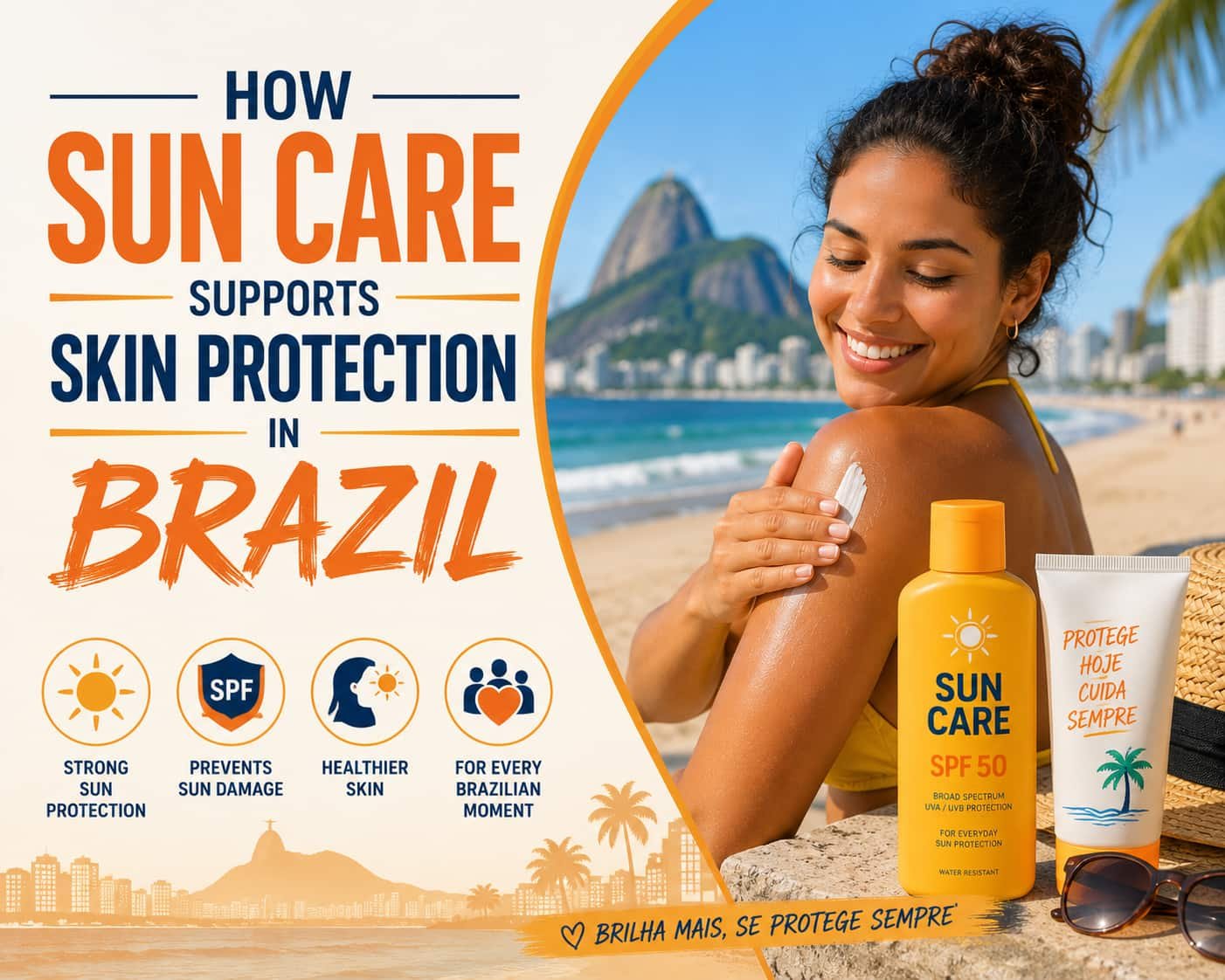
Brazil’s tropical and subtropical climate, extensive coastline, outdoor culture, and year-round recreational activity make sun protection an important part of personal care. Sunscreens, after-sun products, protective lip formulations, and specialised facial products help consumers manage exposure during work, travel, sports, and everyday routines. Growing awareness of ultraviolet radiation is also encouraging sun care to move beyond seasonal beach use toward more regular skincare habits.
The latest industry assessment by MarkNtel Advisors reports that the Brazil sun care sector was valued at USD 1.08 billion in 2025. It is projected to increase from USD 1.12 billion in 2026 to approximately USD 1.89 billion by 2032, recording a CAGR of around 9.11% during 2026–32. Sun protection products account for nearly 96% of total demand.
High UV Exposure Encourages Regular Protection
Brazil’s geography exposes large parts of the population to strong solar radiation throughout much of the year. People working outdoors, participating in sports, visiting beaches, or travelling during daylight hours may experience prolonged exposure. This makes product characteristics such as broad-spectrum protection, water resistance, sweat resistance, and suitable sun protection factor increasingly relevant.
Brazil’s National Cancer Institute states that excessive solar exposure is the principal risk factor for skin cancer. The institute also notes that the country’s tropical climate, beaches, outdoor occupations, and cultural association between tanning and appearance can contribute to repeated ultraviolet exposure. These conditions support the importance of consistent protection across different age groups.
Sun Protection Becomes Part of Skincare
Consumers are increasingly treating sunscreen as a daily skincare product rather than an item used only during holidays. Facial moisturisers with SPF, tinted sunscreens, anti-ageing formulations, oil-control products, and lightweight gels allow protection to fit more easily into established beauty routines. These multifunctional options can address concerns including pigmentation, premature ageing, shine, uneven tone, and sensitivity.
Product texture is especially important in warm and humid conditions. Heavy or greasy formulations may discourage consistent application, particularly among consumers with oily or combination skin. Manufacturers are therefore developing fast-absorbing lotions, dry-touch finishes, fluid textures, sprays, sticks, and non-comedogenic products suited to different skin types and usage occasions.
Adult Consumers Lead Product Demand
Adult sun care accounts for more than 96% of demand because adults purchase products for commuting, leisure, outdoor employment, sports, travel, and everyday skincare. Working professionals may prefer compact facial products that can be applied before leaving home, while beachgoers and families often require larger, water-resistant formats designed for broader body coverage.
Child-specific products remain important despite representing a smaller segment. Parents generally look for gentle formulations, high SPF levels, water resistance, simple application, and products developed for sensitive skin. Sprays and coloured lotions can make application easier, although adult supervision remains necessary to ensure sufficient and even coverage.
Correct Application Shapes Effectiveness
The performance of sunscreen depends not only on the labelled protection level but also on the amount applied, timing, reapplication, perspiration, swimming, and towel drying. Applying too little can significantly reduce the protection achieved in practice. Consumers therefore need clear instructions that explain how and when products should be used.
INCA recommends using sunscreen with SPF 15 or higher that also protects against UVA radiation. It advises application before exposure and reapplication every two hours or after swimming, sweating, or towel drying. The institute also emphasises that sunscreen should complement shade, clothing, hats, and sunglasses rather than justify longer exposure.
Tourism Supports Seasonal and Regional Sales
Brazil’s beaches, festivals, natural attractions, and outdoor destinations generate strong sun care requirements among domestic and international travellers. Coastal pharmacies, supermarkets, hotels, airports, resort stores, and convenience outlets often experience increased demand during holiday periods and warmer months.
Tourism also creates opportunities for travel-size packs, family formats, high-SPF products, after-sun gels, and water-resistant formulas. Retailers in destinations such as Rio de Janeiro, Bahia, Ceará, and Santa Catarina can adjust inventory according to seasonal visitor volumes and local weather conditions. However, strong ultraviolet exposure in many regions supports demand beyond traditional summer periods.
Digital Retail Expands Product Access
E-commerce is widening access to dermatological, premium, imported, and specialist sun care products. Consumers can compare SPF levels, formulations, ingredients, reviews, prices, and skin-type suitability before making a purchase. Online channels are particularly valuable for products that may have limited availability in smaller cities or conventional retail outlets.
Digital platforms also support education through product guides, application demonstrations, ingredient explanations, and dermatologist-led content. However, shoppers still need reliable information and trusted sellers, as packaging authenticity, expiry dates, storage conditions, and regulatory compliance are important for personal care products.
Innovation Responds to Diverse Skin Needs
Brazil’s diverse population requires formulations that work across a broad range of skin tones and sensitivities. Tinted sunscreens are gaining relevance because they can provide cosmetic coverage while reducing the visible residue sometimes associated with mineral filters. Multiple shade options are important for ensuring that tinted products suit different complexions.
Hybrid formulas combining chemical and mineral filters are also expanding choice. Other developments include products designed for acne-prone skin, pigmentation concerns, children, sports use, sensitive skin, and high-humidity conditions. The strongest innovations are those that make regular application more comfortable without compromising protection.
Outlook for Sun Care in Brazil
Sun care demand in Brazil is expected to remain supported by high ultraviolet exposure, preventive skincare awareness, tourism, product innovation, and expanding digital access. Sun protection products will continue to dominate, while facial formats, tinted formulations, high-SPF products, and multifunctional skincare options are likely to gain wider attention.
Future development will depend on affordability, formulation comfort, consumer education, product reliability, and inclusive shade ranges. Products that combine effective protection with convenient textures and everyday skincare benefits will remain central to Brazil’s evolving approach to sun safety.