How Sports Video Annotation Enables Automated Highlight Generation
By Pixel Annotation 15-09-2026 41
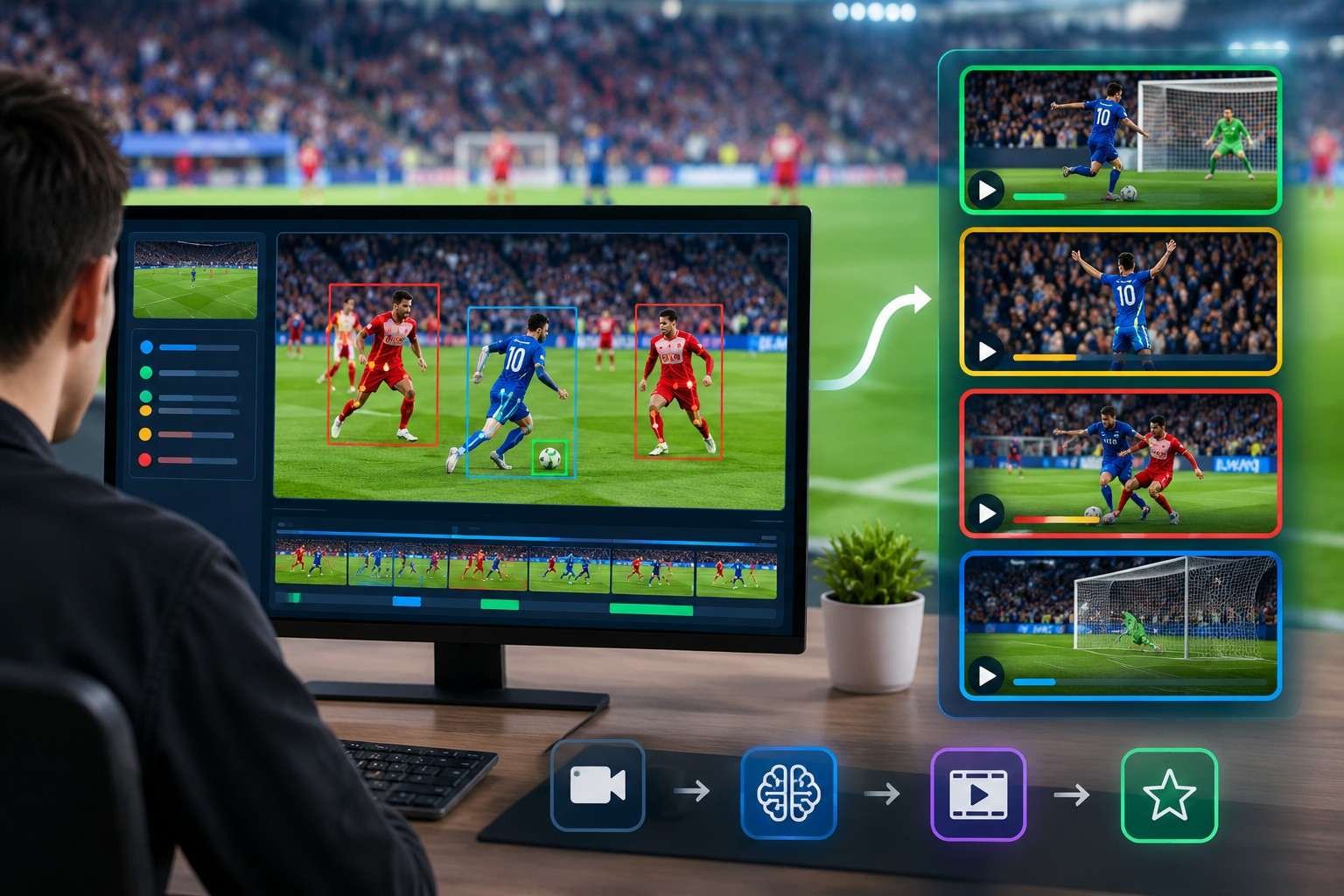
A great sports highlight reel looks simple when you watch the final result. A few seconds of a goal, a powerful shot, a wicket, a save, or a game-changing moment appear in the right order, creating a short video that captures the excitement of an entire match. Behind that seemingly simple experience, however, there is a significant amount of video understanding taking place.
For automated highlight generation to work reliably, a system needs to understand what is happening inside a sports video. It must identify players, recognize important actions, understand changes in the game, locate meaningful events, and separate those moments from routine footage. In this blog, we will explore how sports video annotation supports automated highlight generation, what information needs to be labeled, why annotation quality matters, and how well-prepared datasets can improve AI-based sports analysis.
What is Sports Video Annotation?
Sports video annotation is the process of labeling sports footage so AI and machine learning models can recognize players, objects, actions, and important events.
A raw video contains thousands of frames, but AI needs labeled examples to distinguish routine actions from key moments such as goals, wickets, or winning plays.
Depending on the application, annotation may include:
- Player identification
- Ball tracking
- Player movement
- Game actions
- Important events
- Object locations
- Team identification
- Event timestamps
- Player positions
- Changes in game situations
For example, football footage can be labeled for goals, passes, shots, and tackles, while cricket footage can include wickets, boundaries, shots, and ball movement. This structured data helps AI understand sporting events more accurately.
How Sports Video Annotation Enables Automated Highlight Generation
Automated highlight generation requires more than simply finding exciting looking frames. An AI system needs to understand players, objects, actions, and important events within a match. This is where properly labeled sports footage becomes valuable
1. Identifying Players, Objects, and Key Visual Elements
AI models first need to recognize important elements within sports footage. These may include:
- Players
- Ball
- Bats and rackets
- Goalposts and nets
- Field or court boundaries
Through sports video annotation services, these elements can be labeled using bounding boxes, polygons, keypoints, and other methods. Accurate object identification gives AI a foundation for understanding what is happening during a match.
2. Recognizing Player Actions and Sporting Events
Identifying an object is only the first step. The system also needs to understand the actions taking place around it.
Annotations can help identify events such as:
- Goals and shots
- Passes and tackles
- Wickets and catches
- Saves and blocks
- Serves and celebrations
With enough consistent examples, machine learning models can learn the visual patterns associated with important sporting moments.
3. Using Temporal Annotation to Capture Complete Moments
Most important sports events happen across a sequence of frames rather than one isolated image. A goal, for example, may include a pass, player movement, shot, goal, and celebration.
Temporal annotation helps mark the beginning and end of these events. Sports data tagging services can also connect events with timestamps and relevant match information.
This helps an automated system select a complete moment instead of cutting the highlight too early or too late.
4. Tracking Players and Ball Movement
Sports involve constant movement, making player and ball tracking essential for video understanding.
Annotation can help AI models learn how players and objects move across consecutive frames. This isparticularly useful for:
- Football
- Cricket
- Basketball
- Tennis
- Hockey
Tracking movement can help the system understand whether a sequence is developing into an attacking play, scoring opportunity, or other important event.
5. Separating Important Events From Routine Gameplay
A match contains many routine actions, but only a small percentage become highlights. The AI system needs training data that clearly separates ordinary gameplay from significant events.
Data annotation services in India can help create structured datasets where important events are labeled according to clear guidelines.
For example, a football match may contain hundreds of passes, but only a few directly contribute to a goal. Similarly, in cricket, only certain deliveries may result in wickets, boundaries, or match-changing moments.
6. Handling Replays and Different Camera Angles
Sports broadcasts often switch between wide shots, close-ups, slow-motion footage, replays, and crowd reactions. The same event may also appear several times from different camera angles.
Data labeling services can help identify replays, camera changes, players, and relevant events. Including varied footage in training datasets can make AI systems more capable of handling real broadcast conditions.
7. Ranking Events and Creating the Final Highlight
After detecting potential events, the system needs to determine which moments deserve inclusion in the final video.
It can consider factors such as:
- Event type
- Match timing
- Score or game situation
- Player actions
- Importance of the event
- Surrounding footage
A simplified workflow is:
Sports Video → Object Detection → Player Tracking → Action Recognition → Event Detection → Event Ranking → Clip Selection → Highlight Generation
Accurate annotation gives the AI model better examples to learn from, helping it identify meaningful events and create more relevant automated highlights.
Common Challenges in Automated Highlight Generation
Although automated highlight generation has significant potential, several challenges remain.
1. Similar-Looking Events
Some actions may look almost identical but have different meanings. The model needs sufficient contextual information to distinguish them.
2. Occlusion
Players can block one another, especially during crowded moments. This makes tracking difficult.
3. Camera Changes
Broadcasts frequently switch between wide shots, close-ups, replays, and audience reactions. These transitions can confuse automated systems.
4. Fast Movement
Balls and players can move rapidly, making precise detection and tracking challenging.
5. Unusual Events
Rare events may not appear frequently enough in the training dataset. As a result, the model may struggle with them.
6. Replays
The same event may appear multiple times during a broadcast. An automated system needs to recognize that repeated footage represents the same event rather than separate highlights.
Practical Ways to Improve Automated Highlight Systems
Organizations working on sports AI can improve their systems by taking a structured approach.
- Define the highlight criteria clearly: Decide what makes an event important before annotation begins.
Create detailed annotation guidelines: Annotators should understand exactly how each object and event should be labeled. - Include temporal context: Important sporting events should be represented as sequences rather than isolated frames whenever possible.
- Use diverse footage: Include different venues, camera angles, players, lighting conditions, and broadcast formats.
- Review difficult examples: Ambiguous events should be checked carefully instead of being treated as routine annotations.
- Measure annotation quality: Regular quality checks can identify inconsistent labels and improve the dataset over time.
- Keep improving the dataset: Once the model is tested in real conditions, difficult examples can be added back into the training process.
Conclusion
Automated highlight generation works best when AI can understand what is happening throughout a game, not just detect individual frames. Sports video annotation provides the structured data needed to recognize players, actions, events, and their timing.
As sports technology continues to evolve, accurate and consistent annotation will remain essential for creating highlights that are faster, more relevant, and closer to the way people naturally understand the game.
FAQs
1. Why is temporal annotation important in sports videos?
Sports events develop over several seconds or frames. Temporal annotation helps identify the beginning, main action, and end of an event, allowing systems to create more complete highlight clips.
2. Can automated highlight generation work across different sports?
Yes. The underlying technology can be adapted to different sports, but each sport requires its own event definitions, annotation guidelines, and training data.
3. What affects the quality of an automated sports highlight system?
Several factors matter, including annotation accuracy, dataset diversity, event definitions, video quality, temporal information, model performance, and the ability to handle replays and different camera angles.
4. How do replays affect automated highlight generation?
Replays can cause the same event to be detected multiple times. Proper labeling helps systems identify repeated footage and avoid unnecessary duplicate highlights.
5. Why is annotation quality important for sports AI?
Inconsistent or incorrect labels can confuse machine learning models. Accurate and consistent annotations provide better examples for model training.