How Smart Access Control Systems Are Transforming Modern Infrastructure
By flap barrier 18-04-2026 406
The Shift Toward Intelligent Infrastructure
Modern infrastructure is rapidly evolving with the integration of smart technologies. From commercial buildings to industrial facilities and urban developments, organizations are increasingly adopting intelligent systems to improve efficiency, security, and operational control.
Traditional access systems often fail to meet the demands of modern infrastructure, leading to inefficiencies, delays, and security gaps. In fast-paced environments, even small delays at entry points can disrupt overall operations and reduce productivity.
This is why smart access control systems are becoming a critical component of modern infrastructure.
The Evolution of Access Control Systems
Access control has evolved significantly over the years. Earlier systems relied heavily on manual verification and basic security checks, making them inefficient and prone to human error.
Today, modern systems leverage advanced technologies such as:
- RFID-based authentication
- Automatic Number Plate Recognition (ANPR)
- Cloud-based monitoring platforms
- IoT-enabled devices
- Mobile and remote access systems
This evolution enables organizations to manage access more accurately, efficiently, and securely.
Why Smart Systems Are Becoming Essential
As infrastructure grows more complex, the need for intelligent access control solutions continues to increase. Smart systems are essential because they:
- Provide real-time monitoring and control
- Reduce human error and operational delays
- Enable data-driven decision-making
- Improve both security and efficiency
- Scale easily with expanding infrastructure
Studies indicate that organizations adopting smart access control systems can significantly reduce entry delays and improve operational efficiency through automation.
The Role of Automation in Modern Access Control
Automation lies at the core of smart infrastructure. By eliminating manual processes, automated systems ensure faster, more reliable, and consistent access management.
Key advantages include:
- Instant authentication of vehicles and users
- Reduced waiting time at entry points
- Accurate logging and reporting of access data
- Improved coordination between security and operations
Automation transforms access control from a reactive process into a proactive and intelligent system.
Smart Boom Barrier Systems in Modern Infrastructure
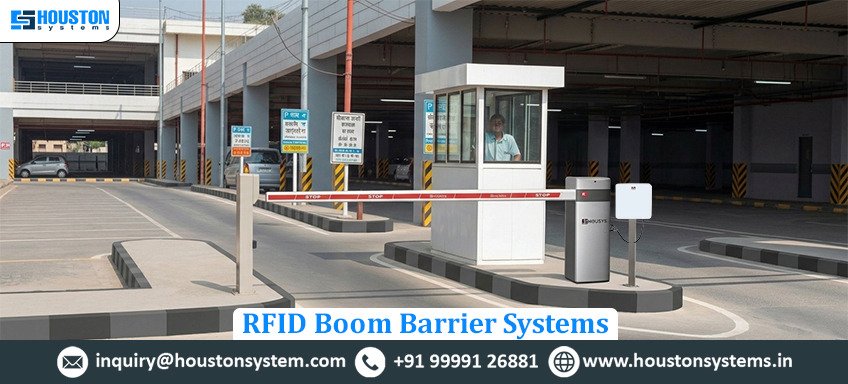
A key component of modern access control is the integration of smart boom barrier access systems. These systems combine physical security with intelligent automation to regulate vehicle movement efficiently.
When integrated with RFID, ANPR, or centralized platforms, boom barriers enable:
- Seamless and automated vehicle authentication
- Controlled and efficient entry/exit management
- Real-time monitoring and alerts
- Improved traffic flow and reduced congestion
This makes them an essential part of smart infrastructure in commercial, industrial, and urban environments.
Real-World Application: Smart Access in Corporate Facilities
Consider a large corporate campus managing high volumes of daily vehicle movement.
Before implementing smart systems:
- Manual entry caused delays and congestion
- Lack of real-time tracking reduced visibility
- Security checks were inconsistent
After adopting a smart access control system integrated with automated boom barriers:
- Entry and exit became fully automated
- Waiting times reduced significantly
- Real-time monitoring improved security
- Data insights enabled better operational decisions
This transformation demonstrates how smart technology enhances both efficiency and security.
Key Features of Smart Access Control Solutions
When selecting a smart access control system, organizations should consider:
- Integration with RFID and ANPR technologies
- Cloud-based monitoring and centralized control
- Real-time analytics and reporting
- High-speed performance for busy environments
- Scalability for future expansion
Choosing the right solution ensures long-term efficiency and adaptability.
The Future of Smart Infrastructure
As smart cities continue to develop, access control systems are becoming more advanced and interconnected. Integration with AI, machine learning, and predictive analytics will enable systems to anticipate risks and optimize operations automatically.
Smart access control, including boom barrier systems, will play a central role in creating connected, secure, and efficient environments.
Conclusion
The shift toward smart infrastructure is redefining how organizations manage access, security, and operations. Traditional systems are no longer sufficient in environments that demand speed, accuracy, and scalability.
Smart access control systems, supported by automated boom barrier solutions, provide a reliable and future-ready approach to managing vehicle entry and exit.
Organizations that adopt intelligent and automated access control systems gain a significant advantage in operational efficiency, security, and long-term scalability.