Stand anywhere in Doha, maybe on the Corniche at sunset, and you’ll see it. The city’s skyline isn’t just a jumble of glass towers, it’s a dialogue between centuries-old traditions and a bold, modern vision. That same conversation happens indoors too, quietly influencing how Qatari homes, offices, and public spaces are designed.
If you’ve ever worked with a fit out company in Qatar, you know the best ones do more than measure spaces and pick furniture. They understand the heartbeat of the culture, how heritage, climate, and innovation meet to create a very particular kind of interior comfort.
Let’s walk through the influences shaping Qatar’s modern fit-out scene.
1. Heritage in the Smallest Corners
Step into an old courtyard house in Al Wakrah and you’ll notice it — arches that seem to frame the light perfectly, carved wooden doors that feel solid yet welcoming, plastered walls that cool to the touch. These aren’t relics to be replaced, they’re inspirations.
Today’s designers often reinterpret these elements with a modern twist. A new villa might feature the soft curve of a traditional arch, only in steel and glass. A corporate reception area might subtly incorporate mashrabiya patterns into its partitions. The result is a space that looks new but feels rooted, as though it belongs to Qatar’s long architectural story.
2. Keeping the Outdoors Close
In a place where desert meets sea, nature’s colors create the design palette. Sandy beige walls, deep ocean blues in upholstery, even the green of date palms in rugs or cushions serve as reminders of the landscape.
Open layouts, wide windows, and balconies are common because they invite natural light and views in. Greenery is welcome indoors too. An office atrium with indoor palms, for example, not only looks striking but softens the work atmosphere. Little by little, these connections to the outdoors bring freshness into daily life without needing to step outside.
3. Patterns with a Purpose
If you’ve spent time in Souq Waqif or the Museum of Islamic Art, you’ve seen them — repeating geometric patterns that seem almost hypnotic. The beauty of Islamic design lies not just in its symmetry but in its symbolism, and Qatari interiors often weave these motifs into the modern fabric.
Sometimes it’s bold, like a patterned tile floor in a dining room. Other times it’s subtle, like geometric etchings on a glass sliding door. An experienced fit out company in Qatar knows how to let these details hint at heritage without overwhelming the overall look.
4. Climate-Smart Comfort
Long before “eco-friendly” became a popular term, Qatari architecture worked with the climate. High walls provided shade, narrow window slits blocked the harshest sun, and thick building materials kept interiors cooler.
Modern fit-outs take that wisdom and pair it with technology. Smart thermostats, LED lighting, low-energy cooling systems, and materials that naturally regulate temperature are becoming standard. Choosing local suppliers also avoids unnecessary transport emissions, a choice that is both sustainable and supportive of regional craft industries.
5. Technology That Stays in the Background
Qatar is as digitally connected as any place in the world, but in interiors, tech plays a supporting role rather than the lead. Think wireless charging hidden inside a wooden desk, motion-sensor lighting tucked into staircases, or meeting rooms where screens appear only when needed.
This approach allows spaces to keep their cultural warmth while offering the convenience of the latest innovations. Your phone might connect instantly to the room’s speakers, but the feel of the space remains unmistakably Qatari.
6. Hospitality Built Into the Design
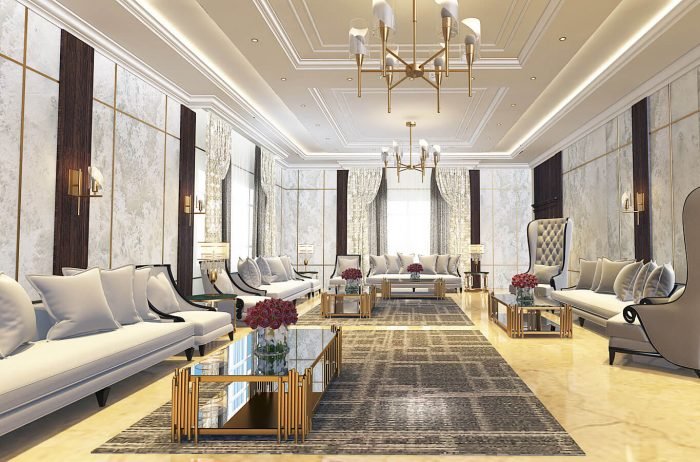
Hospitality isn’t an afterthought here, it’s in the blueprint. Furniture is arranged to face inward for conversation. Sofas are plush and often layered with cushions. Even in modern apartments, there’s usually a spot that echoes the traditional majlis — a space meant for gathering, resting, and sharing.
Lighting is warm rather than harsh, and there’s often a dining space that feels celebratory even on a weeknight. Designing for welcome is second nature in Qatar, and it’s something no serious fit-out professional overlooks.
7. The Handcrafted Signature
Walk into a finished space and the eye is often drawn not to the largest furniture piece, but to the detail — a ceramic bowl with an irregular glaze, a handwoven runner across a console, a lamp base carved from local wood.
These are the marks of human hands, and they add a depth no machine-made item can match. Many designers collaborate directly with artisans, ensuring each project has at least a few one-of-a-kind elements. It’s these small touches that turn a polished interior into a personal one.
8. The Modern Landmarks Effect
Look closely and you’ll see Doha’s newest architectural statements echoed in its interiors. A spiral staircase might hint at the sweeping curves of the National Museum. Minimalist stone walls could nod to Msheireb’s revival of traditional building materials.
These references aren’t accidental, they’re part of building a national design language that’s modern without losing its sense of place. By borrowing shapes, materials, and lighting ideas from the city’s skyline, interiors become part of Qatar’s evolving visual identity.
Closing Thoughts
Qatar’s architecture is a conversation between past and future, and the country’s interiors speak the same language. Every doorframe, every light fixture, every seating arrangement tells a story of where the culture has been and where it’s going.
If you’re planning a project, you’ll want a partner who understands that design here is never just decoration. At Artisans Interiors, a trusted fit out company in Qatar, we bring together tradition, innovation, and an understanding of the land itself to create spaces that don’t just look beautiful, they feel right.
Tags : .....