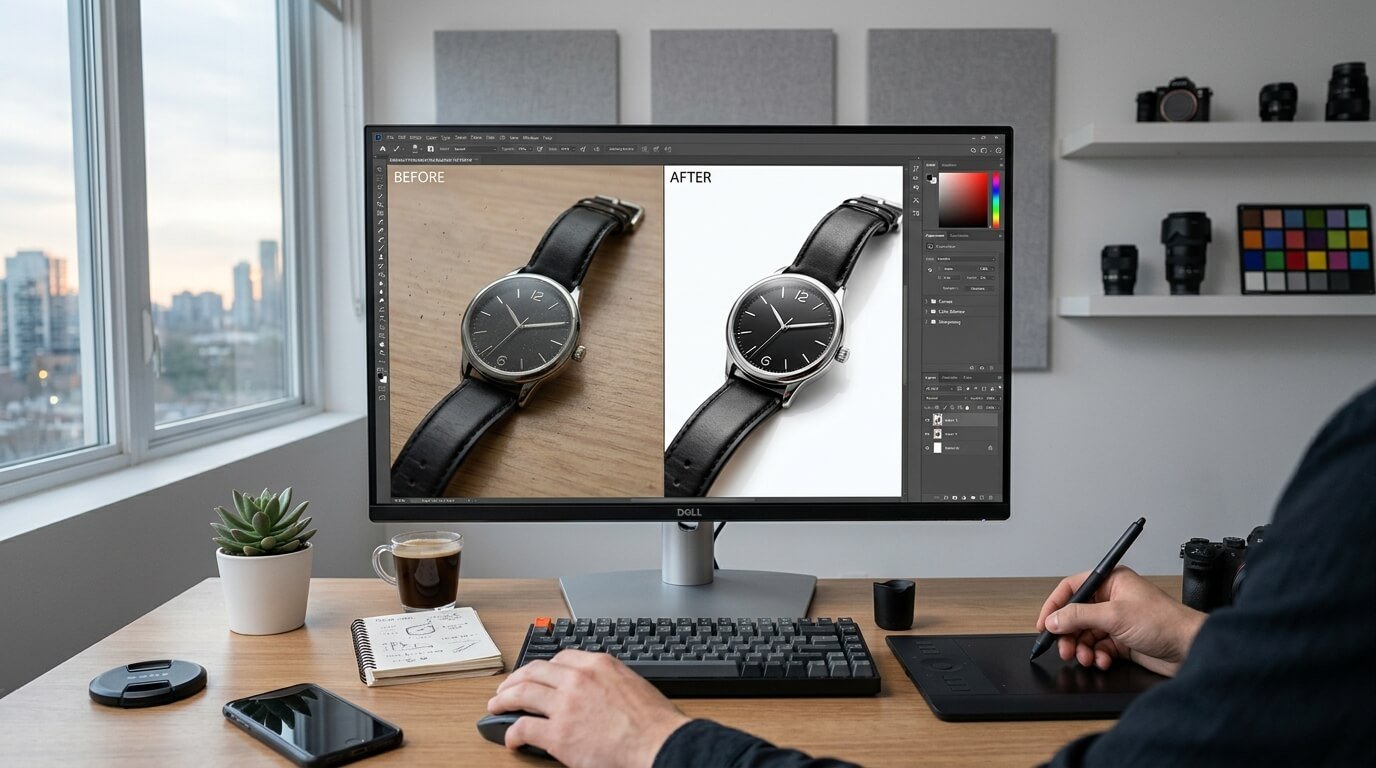
In the digital world, images often shape a customer's first impression of a business. From online stores and company websites to social media pages and digital advertisements, visual content plays an important role in how people recognize and evaluate a brand.
Even a well-captured photograph may need a few adjustments before it is ready for publication. Uneven lighting, distracting backgrounds, inaccurate colors, or small imperfections can affect the overall presentation. Professional image editing helps businesses improve these details and create visuals that look polished without losing their natural appearance.
For companies that depend on product photography and online marketing, investing in better images can support a more consistent and professional brand identity.
Why Image Quality Matters for Online Businesses
When customers shop online, they cannot touch a product or examine it in person. Instead, they rely on photographs to understand its design, color, texture, and features.
Clear and well-prepared images help shoppers see what a product looks like and make comparisons more easily. On the other hand, blurry photographs, harsh shadows, distracting backgrounds, and inconsistent colors can make even a quality product appear less appealing.
Professional editing can address these problems by improving brightness, correcting colors, removing unwanted elements, and making the overall presentation more consistent. The goal is to show products clearly while keeping their appearance accurate.
For businesses, this means treating images as an important part of the customer experience rather than simply adding them to a page.
Common Image Problems That Professional Editing Can Fix
Not every image requires complicated editing. In many cases, small corrections can make a noticeable difference.
Some common image editing tasks include:
Removing or replacing distracting backgrounds
Adjusting brightness, exposure, and contrast
Correcting colors and white balance
Removing dust, scratches, and minor imperfections
Improving sharpness and image clarity
Creating realistic shadows and reflections
Removing unwanted objects from photographs
Retouching product images and portraits
Resizing images for websites and online marketplaces
Preparing photographs for advertisements and social media
The right approach depends on the purpose of the image. A product listing may need a clean background, while a promotional photograph might require more detailed retouching.
Good editing should improve the original image without making the subject look misleading or unnatural.
Maintaining a Consistent Visual Identity
Consistency is an important part of building a recognizable brand. Imagine visiting an online store where every product photograph has different lighting, background colors, and dimensions. Even if the individual pictures look acceptable, the overall catalog may feel disorganized.
Businesses can avoid this problem by creating clear image guidelines. These guidelines may cover background styles, image dimensions, lighting, color accuracy, file formats, and retouching standards.
Following the same approach across a product catalog creates a more organized browsing experience. It also helps businesses reuse images across websites, advertisements, email campaigns, printed catalogs, and social media platforms.
For growing e-commerce businesses, consistency becomes especially important as the number of products and marketing channels increases.
Why Different Products Need Different Editing Techniques
Every product has its own visual characteristics, so a single editing method may not work for every photograph.
For example, clothing images may require color correction, wrinkle reduction, and background cleanup. Jewelry photography often needs careful work on reflections, fine details, and surface imperfections. Electronics may require precise edges, balanced lighting, and realistic shadows to highlight their design.
Lifestyle images can have different requirements because the surrounding environment contributes to the overall message. In these cases, editing should improve the composition while preserving a believable setting.
Choosing the right technique starts with understanding where the image will be used and what information it needs to communicate.
How Professional Photo Retouching Services Help Businesses
As a business grows, managing hundreds or thousands of product photographs can become time-consuming. Editing every image internally may place extra pressure on marketing teams, designers, and product managers.
This is where Photo Retouching Services can become a useful option for businesses that need polished, consistent images for their online presence.
Professional retouching can help correct visual imperfections, refine product details, improve lighting, and prepare photographs for different publishing requirements. Depending on the project, businesses may also need background removal, image masking, color adjustments, or more detailed photo enhancement.
Outsourcing this work can reduce the time spent on repetitive editing tasks and help internal teams focus on other priorities. It can be particularly helpful for retailers that regularly introduce new products or update their online catalogs.
Before starting a large project, businesses should share sample images and explain their expectations. Clear instructions help an editing team understand the desired style and deliver more consistent results.
Improving the Online Shopping Experience
Product images help customers understand what they are buying. Detailed photographs can show materials, product dimensions, important features, and differences between similar options.
For example, a clothing retailer might use close-up images to show fabric texture, while a furniture store could display multiple angles to help shoppers understand a product's shape and finish.
Consistent image quality also makes it easier to browse product categories without distractions. When customers can examine products clearly, they have more information available when deciding what to purchase.
Businesses should remember that editing must preserve product accuracy. Changing a product's actual color, hiding defects that customers should know about, or exaggerating its features can create unrealistic expectations and damage trust.
The Connection Between Image Editing and SEO
Image editing alone does not guarantee higher search rankings, but preparing images properly can support website performance and accessibility.
Large image files may slow down page loading, particularly on mobile devices. Resizing images to appropriate dimensions and using suitable file formats can help reduce unnecessary file sizes while maintaining acceptable visual quality.
Descriptive file names and meaningful alternative text can also help search engines and assistive technologies understand the content of an image.
A practical image optimization workflow includes:
Correcting exposure, color, and other visual issues.
Removing unnecessary elements where appropriate.
Cropping the image to suit its intended layout.
Resizing it for the website or publishing platform.
Compressing the file while maintaining visual quality.
Saving it in an appropriate web-friendly format.
Adding descriptive file names and relevant alt text when publishing.
These steps help businesses prepare images that look good while supporting a smoother website experience.
When Should a Business Consider Professional Image Editing?
Professional editing can be valuable whenever visual presentation influences how customers perceive a product or service.
You may benefit from outsourcing image editing if:
Your online store contains a large product catalog.
Your photographs require frequent background removal.
Images from different sources need a consistent appearance.
You sell through several online marketplaces.
Your marketing team spends too much time editing photographs.
Your products require detailed retouching.
You regularly publish new promotional images.
Your existing photographs need improvement before publication.
Businesses with ongoing image production requirements may also find it easier to establish a repeatable workflow with an external editing partner.
The best solution depends on image volume, project complexity, turnaround expectations, and the level of control your team wants to maintain.
How to Choose the Right Image Editing Partner
Selecting an editing provider involves more than comparing prices. Businesses should evaluate whether a provider can meet their visual standards and handle their workload reliably.
Before making a decision, consider these questions:
Can they handle bulk editing?
If you have a large catalog, make sure the provider can process multiple images while maintaining consistent quality.
Do they have relevant experience?
A provider experienced in product photography may be better suited to e-commerce work than one focused mainly on portraits.
Can they follow detailed instructions?
Clear communication is essential when you need specific backgrounds, colors, dimensions, or retouching styles.
What is the expected turnaround time?
Ask how long projects usually take and whether urgent requests can be accommodated.
Are revisions available?
A revision process can help resolve differences between the initial results and your expectations.
What file formats will you receive?
Confirm that the final files will work with your website, marketplace, advertising platform, or design software.
It is also wise to review sample work and test a small batch before committing to a large project. This gives both sides an opportunity to confirm the expected quality and workflow.
Final Thoughts
Professional image editing helps businesses present their products and services in a clear, consistent, and appealing way. From simple color correction to detailed retouching and image optimization, the right techniques can improve the quality of visual content across digital channels.
For e-commerce businesses, strong product images can make browsing easier and help customers understand what they are considering. For marketing teams, a consistent editing workflow can simplify content production and reduce repetitive work.
As online competition continues to grow, businesses should pay close attention to the quality and accuracy of their visual content. By setting clear image standards and choosing an editing approach that fits their needs, they can create a more professional online presence and deliver a better experience to their audience.














