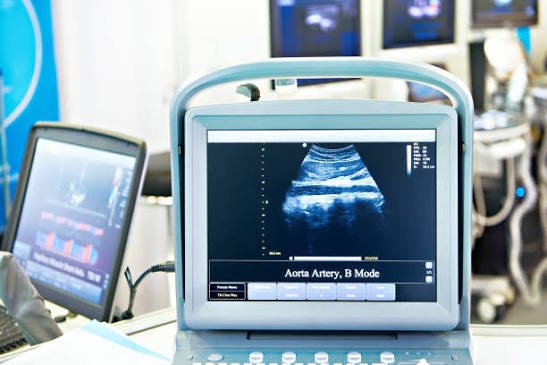
Portable ultrasound technology is transforming the way medical imaging is delivered across healthcare settings. Unlike conventional ultrasound systems that are confined to imaging departments, compact and handheld devices allow clinicians to perform diagnostic scans at the patient's bedside, in ambulances, rural clinics, emergency departments, and even home healthcare environments. Their portability, ease of use, and ability to provide real-time imaging are making them an increasingly valuable tool for faster clinical decision-making.
The growing emphasis on accessible diagnostic solutions has encouraged healthcare providers to adopt compact imaging technologies across multiple specialties. An analysis published by MarkNtel Advisors highlights how advancements in handheld diagnostic imaging are supporting broader access to ultrasound examinations while improving workflow efficiency in both hospital and outpatient settings.
Healthcare systems continue to prioritize technologies that enhance patient care without compromising diagnostic quality. Portable ultrasound devices help reduce patient transfers, shorten waiting times, and improve access to imaging in remote or resource-constrained regions. As medical facilities continue embracing decentralized healthcare models, these compact systems are becoming an integral component of modern clinical practice.
Why Portable Ultrasound Is Gaining Momentum
Several healthcare trends are contributing to the increasing adoption of portable ultrasound systems. Growing demand for rapid diagnosis, rising prevalence of chronic diseases, and expanding emergency care services have created greater need for imaging devices that can be deployed wherever patients require immediate evaluation. In addition, improvements in battery life, wireless connectivity, and image quality have significantly enhanced the capabilities of modern portable systems. According to the World Health Organization (WHO), expanding access to essential diagnostic technologies is an important step toward strengthening healthcare delivery worldwide.
Supporting Faster Clinical Decisions
One of the greatest advantages of portable ultrasound lies in its ability to support point-of-care diagnostics. Physicians can perform immediate examinations during patient consultations, helping reduce delays associated with scheduling imaging appointments. Real-time visualization allows clinicians to evaluate internal organs, blood vessels, soft tissues, and fetal development without exposing patients to ionizing radiation.
Emergency physicians frequently rely on portable ultrasound to assess trauma patients, detect internal bleeding, evaluate cardiac function, and guide urgent clinical interventions. Intensive care specialists also benefit from bedside imaging when monitoring critically ill patients, reducing the risks associated with transporting unstable individuals to radiology departments. These practical applications continue to demonstrate the technology's versatility across diverse medical environments. Guidance from the American Institute of Ultrasound in Medicine (AIUM) also emphasizes the importance of ultrasound in improving diagnostic accuracy and supporting safe clinical practice.
Expanding Applications Across Medical Specialties
Portable ultrasound systems are now widely utilized across numerous healthcare disciplines. In obstetrics and gynecology, they support prenatal assessments and fetal monitoring. Cardiology teams use compact ultrasound devices for echocardiography and cardiovascular evaluations, while emergency medicine professionals depend on rapid imaging during critical situations.
Musculoskeletal imaging, anesthesiology, urology, nephrology, pulmonology, sports medicine, and internal medicine are also benefiting from portable ultrasound technology. Many physicians use these devices to guide minimally invasive procedures such as biopsies, fluid aspiration, vascular access, and regional anesthesia, improving procedural accuracy while enhancing patient safety.
Technology Innovations Driving Adoption
Continuous technological advancements are improving both the functionality and accessibility of portable ultrasound systems. Artificial intelligence-assisted image interpretation, cloud-based data sharing, wireless probes, touchscreen interfaces, and smartphone-compatible devices are making ultrasound examinations more efficient and user-friendly.
Many manufacturers are also focusing on software enhancements that simplify image acquisition while supporting clinicians with automated measurements and workflow optimization. These innovations help reduce operator dependency and make ultrasound technology more accessible to healthcare professionals with varying levels of imaging experience.
Challenges That Remain
Despite numerous advantages, portable ultrasound adoption still faces several challenges. High equipment costs for advanced systems may limit purchasing decisions among smaller healthcare facilities. In addition, effective image interpretation requires proper clinical training, making education and certification essential for maximizing diagnostic accuracy.
Image quality can also vary depending on patient characteristics, operator expertise, and device specifications. Healthcare organizations therefore continue investing in professional training programs alongside equipment upgrades to ensure consistent clinical outcomes and maintain high diagnostic standards.
The Future of Portable Ultrasound
The future of portable ultrasound is expected to be shaped by ongoing innovations in artificial intelligence, telemedicine integration, miniaturization, and digital healthcare infrastructure. As healthcare delivery increasingly shifts toward patient-centered and decentralized care models, portable imaging solutions are likely to become even more integrated into routine clinical workflows.
Growing collaboration among healthcare providers, technology developers, and research organizations will continue supporting improvements in device performance, accessibility, and clinical usability. By enabling faster diagnosis, supporting minimally invasive procedures, and expanding access to imaging services, portable ultrasound technology is well positioned to remain an important contributor to modern healthcare delivery across hospitals, clinics, emergency settings, and community-based care.