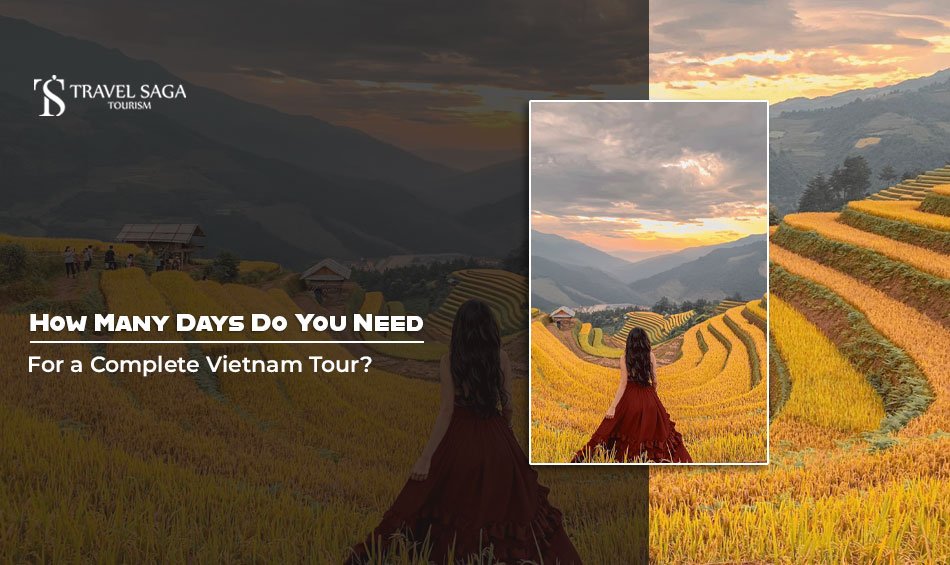
Vietnam is one of those destinations where the number of days can significantly change the experience. A short holiday can cover Hanoi, Ninh Binh and Ha Long Bay, while a longer itinerary can add Sapa, Fansipan, Da Nang and Hoi An without making the journey feel unnecessarily rushed. The right duration ultimately depends on how much of the country you want to experience and how much time you have available.
For travellers considering a Vietnam Tour Package, the practical answer is around 7 to 10 days for a well-rounded holiday. Five days works for a focused northern Vietnam trip, while 10 days gives you considerably more room to combine northern and central Vietnam. The current package options also make it possible to match the itinerary to your available holiday time rather than trying to squeeze every destination into one trip.
How Many Days Are Enough for a Vietnam Tour?
There is no single ideal duration for everyone. A first-time visitor with limited leave may be satisfied with five days, whereas someone looking for a broader Vietnam experience should consider seven or 10 days.
Travel Saga's current itineraries provide three useful duration options:
These are not simply different lengths of the same itinerary. Each additional day opens up a different part of Vietnam, which is why choosing the duration according to your interests is more useful than choosing purely by the number of nights.
5 Days: A Compact Vietnam Tour Package
Five days is enough when your priority is seeing some of northern Vietnam's most recognisable landscapes and cultural attractions.
The 4N/5D itinerary begins in Hanoi and includes:
- Hanoi
- Ninh Binh
- Trang An
- Hoa Lu
- Ha Long Bay
- Luon Cave
- Titop Island
- Hanoi city sightseeing
A highlight is the overnight Ha Long Bay cruise, with kayaking or bamboo-boat exploration, a Titop Island visit and sunset views. The itinerary then returns to Hanoi for the final day and departure.
This option makes sense if you have limited annual leave or want a relatively focused introduction to Vietnam. However, it does not attempt to cover destinations such as Sapa, Da Nang or Hoi An.
7 Days: The Best Balance for Most Travellers
If you can take a full week, the 6N/7D itinerary offers a much broader combination of landscapes, culture and coastal experiences.
The route includes:
- Hanoi
- Ha Long Bay
- Da Nang
- Ba Na Hills
- Golden Bridge
- Cam Thanh Coconut Village
- Hoi An Ancient Town
The itinerary combines an overnight Ha Long Bay cruise with kayaking, swimming and a Vietnamese cooking class. After travelling to Da Nang, you can visit Ba Na Hills and the Golden Bridge, experience a basket boat ride at Cam Thanh and explore Hoi An's Japanese Covered Bridge and Lantern Street. The final sightseeing day returns to Hanoi for attractions such as the Temple of Literature, Hoan Kiem Lake and the Old Quarter.
For travellers asking how long they should spend in Vietnam without extending the holiday too much, seven days is a strong middle ground.
10 Days: For a More Complete Vietnam Experience
If your idea of a complete trip includes mountains as well as cities, cruises and beaches, 10 days gives you considerably more flexibility.
The 9N/10D itinerary adds Sapa and Fansipan to the experiences covered in the shorter programme. The journey includes:
- Hanoi
- Sapa
- Moana Sapa Complex
- Fansipan Peak
- Silver Waterfall
- Cat Cat Village
- Sin Chai Village
- Ha Long Bay
- Da Nang
- Ba Na Hills
- Hoi An
- Hanoi
This itinerary gives you time for northern mountain scenery before continuing to Ha Long Bay and central Vietnam. Fansipan, Cat Cat Village and Sin Chai Village add a different dimension to the trip compared with an itinerary focused only on major cities and coastal attractions.
For someone who wants the most comprehensive option among the available itineraries, 10 days is the strongest choice.
What Should You Cover During a Complete Vietnam Holiday?
Vietnam is geographically diverse, so your itinerary should have a logical flow rather than simply listing as many attractions as possible.
Northern Vietnam: Hanoi, Ninh Binh, Sapa and Ha Long Bay
Hanoi provides a cultural and urban introduction, with the Old Quarter, Hoan Kiem Lake and the Temple of Literature among the attractions featured in the itineraries.
Ninh Binh offers a very different landscape through Trang An's waterways and limestone formations. Ha Long Bay then adds an overnight cruise experience, caves, kayaking and dramatic limestone islands.
If you have 10 days, Sapa adds mountains, village experiences and access to Fansipan Peak.
Central Vietnam: Da Nang, Ba Na Hills and Hoi An
Adding central Vietnam makes a seven- or 10-day itinerary much more varied.
Da Nang provides a coastal break, while Ba Na Hills brings the Golden Bridge, cable car, Linh Ung Pagoda and Fantasy Park. Nearby Hoi An adds a slower cultural experience through its Ancient Town, Japanese Covered Bridge, historic buildings and lantern-lined streets.
Southern Vietnam: Allow Extra Time
The destination information also highlights Ho Chi Minh City and the Mekong Delta, along with Hue and Phu Quoc. These places can be considered when building a customized itinerary, but they are not all part of the three standard itineraries above.
That distinction matters. Trying to add every major destination to a five- or seven-day holiday can turn sightseeing into a sequence of transfers rather than an enjoyable holiday.
What Is Included in a Vietnam Tour Package?
The exact inclusions depend on the selected itinerary, but the package information specifies several core services:
- Accommodation in selected 3-, 4- or 5-star hotel categories
- Modern, air-conditioned transportation according to the itinerary
- English-speaking local guide
- Meals specifically mentioned in the day-wise itinerary
- Entrance fees for attractions mentioned in the itinerary
- Two bottles of drinking water per person per day
International airfare is excluded, while assistance with flights is available. Visa assistance is available at an additional charge if required. Travel insurance is mandatory and must be arranged before departure. Optional activities and personal expenses are also excluded unless specifically stated.
When Is the Best Time for a Vietnam Holiday?
Vietnam can be visited throughout the year, but March to April and September to November are generally highlighted as favourable periods for sightseeing and outdoor activities.
- March–April: Pleasant conditions for cities and natural attractions
- May–August: Particularly suitable for beach-focused holidays in destinations such as Da Nang, Nha Trang and Phu Quoc
- September–November: Comfortable conditions for sightseeing and fewer crowds in some areas
- December–February: Southern Vietnam can be particularly suitable, while northern areas have cooler weather
Because Vietnam stretches across different climate zones, your chosen destinations matter when deciding travel dates.
Vietnam Visa and Flight Planning
Visa requirements depend on nationality. Travellers should check the latest requirements before booking because eligibility and entry conditions can change.
Vietnam's official immigration portal confirms that eligible foreign travellers can apply for an e-Visa online, and the current e-Visa system allows a maximum validity of 90 days for single or multiple entries.
For travellers arranging international trip packages from Dubai, it is also important to distinguish between the holiday package and international airfare. The Vietnam package lists international flights as excluded, while certain domestic flights may form part of the itinerary.
Before departure, check:
- Passport validity
- Current visa eligibility
- Flight schedules
- Travel insurance requirements
- Required travel documents
Travel Tips for Choosing Your Trip Duration
The number of days should reflect your travel style rather than simply the number of attractions you can fit in.
- Have only five days? Concentrate on Hanoi, Ninh Binh and Ha Long Bay.
- Have one week? Add Da Nang, Ba Na Hills and Hoi An for greater variety.
- Have 10 days? Add Sapa and Fansipan for a broader northern and central Vietnam experience.
- Want Ho Chi Minh City, Hue or Phu Quoc too? Consider a customized itinerary rather than overloading a short package.
- Travelling with family? Leave enough downtime between sightseeing days.
- Travelling for adventure? Allocate more time to mountain and outdoor experiences.
Vietnam also uses the Vietnamese Dong (VND), with Vietnamese as the official language. Tourist areas commonly have English speakers, while taxis, ride-hailing services, buses and domestic flights provide several ways to move around. The country's official tourism authority also recommends checking transport options according to the distance between destinations.
Important Notes Before Booking
A few practical details can prevent surprises after your reservation is confirmed.
- Hotels, flights, cruises, transfers and sightseeing services remain subject to availability.
- A booking is confirmed after the required deposit or full payment, according to the agreed terms.
- Prices can change until the booking is confirmed.
- Special requests such as room preferences, dietary requirements or celebrations are subject to availability.
- Itinerary changes may be necessary because of operational conditions, weather or supplier availability.
- Cancellation charges depend on the notice period and the policies of the relevant suppliers.
- Refunds, where applicable, are processed after applicable supplier penalties, cancellation charges, bank fees and administrative costs.
Why Choose Travel Saga Tourism for Your Vietnam Holiday?
Travel Saga Tourism lists several credentials and service advantages for travellers booking its international holidays. These include a Dubai Department of Tourism (DTCM) licence, 32+ travel desks across Dubai, experienced travel experts, curated itineraries and dedicated customer support.
The company also states that it has 3,000+ TripAdvisor reviews and has received the TripAdvisor Travellers' Choice Award in 2023, 2024 and 2025.
For travellers who prefer flexibility, the Vietnam itineraries can also be customized around travel duration, hotel category, sightseeing and activities. This is particularly useful when you want to extend a seven-day trip or add destinations that are not included in the standard itinerary.
Conclusion
For most travellers, 7 to 10 days is the sweet spot for a Vietnam holiday. Five days works well for a focused northern itinerary, seven days creates a balanced combination of Hanoi, Ha Long Bay, Da Nang and Hoi An, while 10 days allows Sapa and Fansipan to be added for a more complete experience. The best choice depends on the destinations you want to see, your pace of travel and the amount of leave available. With carefully structured itineraries, customization options and travel support, Travel Saga Tourism can help turn your preferred duration into a practical Vietnam holiday. For travellers looking for the best tourism company in Dubai, the company's DTCM licensing, established Dubai presence and travel expertise provide additional factors to consider when arranging an international holiday.
FAQs
1. How many days are ideal for a Vietnam Tour Package?
A 7 to 10-day itinerary is ideal for exploring several of Vietnam's major destinations without making the trip excessively rushed. Five days can work for a shorter Hanoi, Ninh Binh and Ha Long Bay itinerary.
2. Is 5 days enough for Vietnam?
Yes. A 4N/5D itinerary can cover Hanoi, Ninh Binh, Trang An, Hoa Lu and Ha Long Bay. It is best suited to travellers with limited time who want to focus on northern Vietnam.
3. What can I see in Vietnam in 7 days?
A seven-day itinerary can combine Hanoi, Ha Long Bay, Da Nang, Ba Na Hills and Hoi An. The package also includes experiences such as a Ha Long Bay cruise, kayaking, the Golden Bridge and a basket boat ride at Cam Thanh.
4. Is 10 days enough for a complete Vietnam Tour Package?
Ten days provides the most comprehensive experience among the standard itineraries. It adds Sapa, Fansipan, Cat Cat Village and Sin Chai Village to destinations such as Ha Long Bay, Da Nang and Hoi An.
5. Can I customize my Vietnam Tour Package?
Yes. The available packages can be customized according to travel duration, hotel category, sightseeing and activities. Customization is useful if you want to add destinations such as Ho Chi Minh City, Hue or Phu Quoc.
6. Are international flights included in the Vietnam package?
International flights are generally excluded unless specifically stated. Some domestic flights within Vietnam may be included as part of the selected itinerary.
7. Do I need a visa to visit Vietnam?
Visa requirements depend on your nationality. Vietnam's official e-Visa system provides online applications for eligible foreign travellers, so travellers should verify their current eligibility and entry requirements before departure.
8. What is the best time to visit Vietnam?
March to April and September to November are generally recommended for comfortable sightseeing conditions. However, Vietnam is a year-round destination, and the best period can vary depending on whether your itinerary focuses on northern, central or southern Vietnam.