How Leading Defence Parts Manufacturers in India Meet Global Quality Standards?
By Hardik Aegis 27-04-2026 222
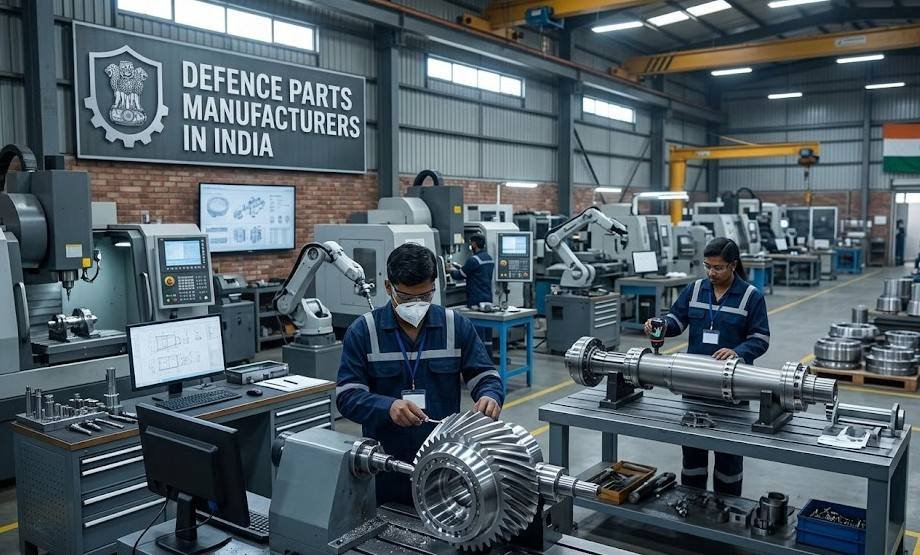
India has quickly become a worldwide center for defense manufacturing, thanks to the combination of inventiveness, precision engineering, and the government’s firm backing through the Make in India program. At present, top defence parts manufacturers in India are establishing new standards in quality and dependability by complying with the most rigorous international regulations, such as AS9100 and ISO certifications. The industry has undergone a transformation from being a big importer to an exporter of defense parts due to the focus on innovative technology, material integrity, and global compliance. Vimax Technocast is one of the companies that are connecting the two concepts of “Make in India” and “Made for the World” through its exceptional precision manufacturing.
The Rise of Defence Manufacturing in India
India's defense industry has changed drastically, turning from a reliance on imports to making a commitment to self-sufficiency based on the Atmanirbhar Bharat initiative. The transformation of the industry is represented by the new era of innovation, local capability, and growth through exports. The leading defense parts manufacturers in India are co-creating this transition by bringing their production to match worldwide quality and performance levels.
Current Market Snapshot:
- The defense exports of India hit $2.6 billion in FY 2024, and the target is to reach $5 billion by 2025.
- More than 400 private companies have been certified and are included in the list of defense manufacturers.
- The major increase in demand comes from aerospace components, armored vehicle parts, and precision-engineered systems.
Strong Policy Support:
- Defence Production & Export Elevation Policy (DPEPP) 2020 – fostering local design, manufacturing, and exports.
- Make in India project – motivating production in the country and bringing in foreign investments.
- iDEX as well as DRDO partnerships – providing the platform for research, innovation, and evolution of advanced technologies in the defense sector.
What Defines Global Quality Morality in Defence Manufacturing
Indian Defence Parts Manufacturers have to comply with strict global standards that guarantee precision, reliability, and safety in order to compete in the global market.
The major certifications are:
- AS9100D: Guarantees compliance with regularity, attributability, and top quality in the production of aerospace and security products.
- ISO 9001:2015: Highlights the areas of persistent progress, customer satisfaction, and quality handling that have been consistent.
- NADCAP: Provides certification for special processes. These include heat treatment, welding, and coatings. Used in the making of aerospace and defense components
- MIL-SPEC: Specifies the U.S. military's usual requirements regarding durability, performance, and reliability.
How Indian Manufacturers Maintain Quality Precision
Global recognition is only possible with consistency, precision, and high technology. The major Defence Parts Manufacturers in India, through a mix of advanced infrastructure, stringent inspection,s and skilled workforce, give world-class quality.
- Advanced Casting and Machining Capabilities:
Producers like Vimax Technocast apply investment casting and CNC machining to make aerospace-grade parts with unbeatable dimensional accuracy and surface finish.
- Material Integrity Testing:
All the parts go through tough non-destructive testing (NDT). Such as ultrasonic and X-ray surveys, which ensure perfect structural strength and credibility.
- Quality Control Systems:
A complex inspection process — consisting of raw material checks, in-process and final audits — secures no defects and uniform performance.
- Digital Integration:
The merging of CAD or CAM tools, intelligent manufacturing, and real-time defect detection makes the process more efficient, precise, and traceable with global standards.
- Trained Workforce:
Extremely skilled technicians and engineers, who are approved by international quality programs, guarantee that every part is up to the highest defence and aerospace standards.
Collaboration with Global Defence OEMs
The strong alliances forged across borders have literally put the Defence Parts Manufacturers in India at par with others, and they have become reliable partners in the international defence ecosystem. The combination of Indian engineering excellence and the global technological expertise of the collaborators is a driving force for innovation and precision production.
Strategic partnerships:
The Indian manufacturers are engaged in active collaborations with the leading international defence organizations and suppliers to satisfy the global demand for high-quality components.
- Global supply network:
Vimax Technocast is one of the companies that delivers precision-engineered parts to the defence companies in Europe, the Middle East, and the USA, and thereby ensures consistency of performance even in the most challenging environments.
- Technology collaboration:
The ToT (Transfer of Technology) programs under which joint co-development projects are undertaken gradually strengthen India’s design capabilities and, at the same time, encourage domestic innovation.
- Strict compliance and confidentiality:
Production involves strict adherence to international defence protocols with traceability, data security, and export compliance prioritized at every stage.
By means of these worldwide partnerships, the Defence Parts Manufacturers in India are still getting their recognition as trustworthy collaborators who provide quality to the foremost defence OEMs in the world.
Challenges in Meeting Global Standards
The meeting of international standards is challenging for Defence Parts Manufacturers in India, but innovation and strategy enable them to get rid of these obstacles:
- Depletion of First-class Raw Materials: The short supply of metals that are suitable for aerospace and defence might cause a delay in production.
- Regularly Investing Requirements: It is necessary to modernize high-precision machines and devote resources to research and development to keep up with the world standards.
- Costs of Certification and Compliance: Attaining certifications of ISO, AS9100, and MIL-SPEC involves heavy investment, as well as numerous audits, along with strict measures.
- Winning Over Challenges: Firms such as Vimax Technocast utilize innovative technology, experienced personnel, and uncompromising quality processes to easily pass world standards tests.
Why Choose Vimax Technocast
Vimax Technocast holds a prime position among Defence Parts Manufacturers in India, enjoying the benefits of superb precision, dependability, and excellent quality.
- Expertise Across Industries: Admittedly, the company is an expert in precision casting and machining for defence, aerospace, and automotive sectors.
- Certified & Advanced Manufacturing: The company runs really advanced, certified production facilities that obey international quality standards.
- Strong R or D & Quality Checks: Continuous research and innovation support the company's rigorous quality control throughout the production process.
- Proven Export Track Record: Moreover, the company exports top-notch defence components that are already certified by international customers.
- Reliability & Performance: The company gives priority to trust, precision, and regular performance while making sure that global compliance and client satisfaction are achieved.
Future of Defence Manufacturing in India
The future of Defence Parts Manufacturers in India is really going to be great and full of new ideas, the ones that start new things and the ones that manage to grow strategically:
- Global Collaborations: More and more partnerships with international defence OEMs open the doors for technology exchange and combine advanced manufacturing practices.
- Adoption of Advanced Technologies: The introduction of AI-based inspection systems and the use of additive manufacturing (3D printing) have led to great precision, higher efficiency, and lower cost
- Ambitious Production Targets: India is significantly bettering its position in global defence exports by setting a $25 billion defence production goal for 2025.
- Vision for Global Leadership: Indian manufacturers, who will be the “Global Defence Supply Leaders,” will merge their knowledge with that of others and will be the first among equals with their quality standards.
Conclusion
India’s defence manufacturing industry is undergoing a rapid transformation, and Defence Parts Manufacturers in India are establishing global benchmarks in quality, precision,n and innovation. One of the companies that reflects this change is Vimax Technocast, which supplies components of export quality that conform to international standards. India, with the backing of good policy, high-end technology, and skilled manpower, is all set to become a reliable global leader in defence production, thus connecting the two slogans -- “Make in India” and “Made for the World”.
FAQs
Q1. What makes Indian defence parts manufacturers globally competitive?
Indian suppliers integrate their cost-effectiveness, skilful workers, and international quality standards, which make them very trustworthy suppliers in the market worldwide.
Q2. Are Indian defence parts certified for export?
Leading companies that are certified ISO, AS9100, MIL-SPEC, etc., are sure that they comply with global defence requirements, thus their parts are exported.
Q3. How does Vimax Technocast ensure product reliability?
The adherence to cutting-edge casting, CNC machining, thorough quality inspections, and certified processes results in the high quality of the components produced by Vimax Technocast as a consequence of their commitment to providing per
Q4. Which sectors, apart from defence, use precision-cast components?
Precision castings are used in the air, automotive,e and Industrial Machinery sectors for high-strength and high-accuracy uses.
Q5. What’s the future of defence manufacturing exports from India?
Exports are predicted to grow stronger due to the adoption of cutting-edge technology, global partnerships, and setting up $25 billion production by 2025 as the main goal.