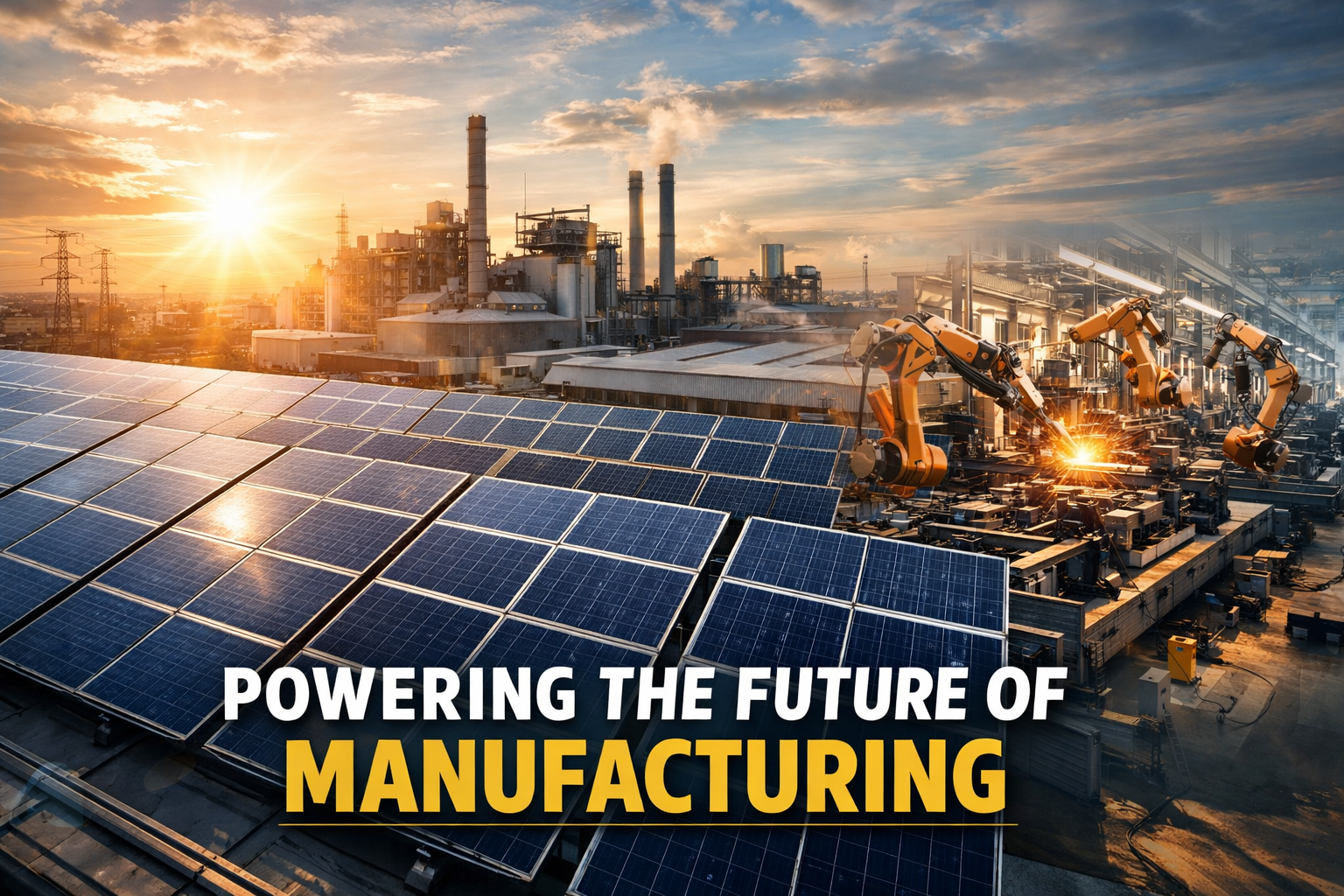
The manufacturing sector has always been a symbol of progress — the driving force behind economic growth, innovation, and large-scale employment. But as the world faces the challenges of climate change and rising energy costs, manufacturers are now at a crossroads: continue relying on traditional energy sources or transition to a more sustainable model. This is where industrial solar panels are stepping in, revolutionizing how factories, plants, and production facilities power their operations.
The Shift Toward Renewable Manufacturing
Energy is the backbone of the manufacturing industry. From running heavy machinery to maintaining temperature-controlled environments and powering assembly lines, factories depend on vast amounts of electricity. Historically, this energy has come from fossil fuels — coal, oil, and natural gas — which are not only expensive but also harmful to the environment.
Over the past decade, however, renewable energy has shifted from a niche concept to a mainstream business strategy. Solar energy, in particular, has seen exponential growth thanks to technological improvements, falling installation costs, and increasing global emphasis on sustainability.
For manufacturers, this transformation offers both environmental and economic advantages. Adopting solar power isn’t just about “going green”; it’s about gaining a competitive edge in a rapidly evolving marketplace.
Why Industrial Solar Panels Are Different
Unlike residential or small commercial solar systems, industrial solar panels are designed for large-scale energy demands. These systems typically cover vast rooftop areas or open land adjacent to manufacturing facilities. They generate megawatts of electricity — enough to power not just offices and lighting, but also heavy equipment, HVAC systems, and automated production lines.
Industrial solar setups often integrate advanced technologies such as:
- High-efficiency photovoltaic (PV) modules capable of maximizing output per square meter.
- Battery storage systems that allow energy use even during non-sunlight hours.
- Smart inverters and grid integration tools that balance power loads and optimize efficiency.
In short, industrial solar installations aren’t just bigger — they’re smarter, more resilient, and tailor-made for continuous, high-demand industrial operations.
The Economic Advantage: Saving Millions on Energy Costs
Energy expenses account for a significant portion of operating costs in manufacturing. Depending on the sector, electricity can represent anywhere from 15% to 30% of total production expenses. With energy prices continuing to fluctuate, many manufacturers are turning to solar as a long-term cost control measure.
Once installed, solar panels provide free energy from the sun, drastically reducing reliance on the grid. Over time, this leads to millions of dollars in savings. The initial investment is offset by:
- Government incentives and tax credits that lower upfront costs.
- Depreciation benefits that enhance return on investment.
- Net metering programs, allowing excess energy to be sold back to the grid.
For instance, large manufacturers like Tesla and General Motors have already deployed massive solar arrays to cut operational costs while aligning with global sustainability targets. These examples highlight how industrial solar panels are not only environmentally friendly but also financially strategic.
Sustainability and Corporate Responsibility
Today’s consumers and investors are increasingly drawn to brands that demonstrate genuine commitment to sustainability. This trend is influencing how manufacturers position themselves in the market.
By adopting solar energy, manufacturers can:
- Reduce carbon emissions and overall environmental footprint.
- Comply with stricter environmental regulations.
- Enhance brand reputation and attract eco-conscious customers and partners.
A company’s sustainability record has become a major factor in procurement and partnership decisions. Thus, switching to solar is no longer just a moral decision — it’s a strategic business move that strengthens corporate image and stakeholder trust.
Energy Independence and Reliability
Industrial facilities often operate in regions prone to power outages, voltage fluctuations, or unreliable grid access. These interruptions can cause costly downtime and production delays.
Industrial solar panels, combined with energy storage solutions, offer a buffer against such disruptions. Manufacturers gain:
- Greater energy independence, reducing dependence on local utilities.
- Predictable energy supply, especially when paired with batteries.
- Protection against fuel price volatility.
This reliability ensures that critical operations continue without interruption, maintaining productivity and profitability even during grid failures.
The Technological Leap: Smart Manufacturing Meets Solar Power
The rise of Industry 4.0 — marked by automation, IoT (Internet of Things), and data-driven decision-making — has made manufacturing more energy-intensive but also more intelligent. Industrial solar panels now integrate seamlessly into this digital ecosystem.
Smart solar systems can monitor energy generation and consumption in real-time, allowing plant managers to adjust operations for maximum efficiency. For example:
- Automated controls can shift high-energy processes to peak sunlight hours.
- AI-driven analytics can predict power needs and optimize battery usage.
- Maintenance alerts ensure panels perform at peak capacity year-round.
This fusion of solar power and smart manufacturing technology is creating a new era of energy-optimized production.
Overcoming Challenges: Space, Costs, and Maintenance
While the benefits are clear, transitioning to solar energy isn’t without challenges. Industrial facilities must consider:
- Space availability – Large systems require significant rooftop or ground area.
- Initial investment – Despite falling costs, upfront installation can still be substantial.
- Maintenance and monitoring – Regular cleaning and technical inspections are needed to ensure long-term performance.
Fortunately, solutions are evolving rapidly. Manufacturers can now opt for solar leasing models or power purchase agreements (PPAs) that eliminate the need for heavy capital investment. Meanwhile, advanced tracking systems and automated cleaning technologies minimize maintenance demands, ensuring consistent output with minimal human intervention.
Case Studies: Real-World Impact of Industrial Solar Adoption
- Siemens (Germany): The company’s manufacturing plant integrates a rooftop solar array that offsets nearly 70% of its annual energy use.
- Toyota (USA): Its North American plants use solar energy to power production lines, reducing CO₂ emissions by thousands of tons annually.
- Tata Motors (India): With one of the largest solar rooftops in Asia, Tata Motors’ facility generates over 15 MW of clean power, meeting a large portion of its energy needs.
These success stories demonstrate that solar adoption is not limited to specific regions or industries — it’s a global movement reshaping how manufacturers operate.
The Road Ahead: A Solar-Powered Industrial Revolution
Looking ahead, the role of solar energy in manufacturing will only expand. Continuous improvements in panel efficiency, energy storage, and grid integration are making solar more accessible than ever before.
Furthermore, as nations commit to net-zero emissions targets, governments are introducing stronger incentives and stricter emission norms. Manufacturers who act early will not only meet compliance standards but also future-proof their operations against energy market volatility.
The shift to solar isn’t just about saving costs or meeting regulations — it’s about redefining industrial progress itself. Factories of the future will be clean, efficient, and energy self-sufficient — powered by the limitless energy of the sun.
Conclusion
Industrial solar panels are no longer an experimental technology; they’re a cornerstone of modern manufacturing. By lowering costs, ensuring reliability, and supporting global sustainability goals, they are empowering manufacturers to thrive in a competitive, eco-conscious economy.
As we move further into the 21st century, the most successful manufacturers will be those who recognize that the true power of progress lies not in consuming more energy — but in harnessing it more wisely. And in that journey, solar power is lighting the way forward.
Tags : .....