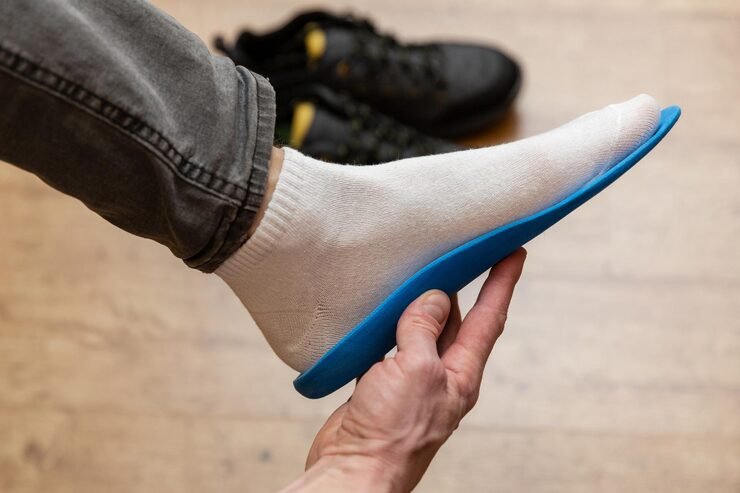
High arch insoles support the foot's natural arch and distribute body weight evenly over the foot. This alignment directly affects the ankles, knees, hips and spine generating a chain of better posture from the ground up. Fixing foot alignment is generally the most disregarded first step when adults feel discomfort, tiredness or instability.
If you've ever noticed lower back pain after a long walk or felt unsteady on uneven ground, your foot structure may be a contributing factor. High arch insoles are designed to address exactly this — by supporting the arch, they influence how your entire body carries itself with every step.
Why Foot Alignment Affects Your Whole Body
Your feet are the foundation of your entire musculoskeletal system. When the arches are unsupported, the foot tends to overpronate or supinate — meaning it rolls inward or outward during movement. This misalignment doesn't stay in your foot. It travels upward.
Poor foot alignment can contribute to:
- Knee joint stress and pain
- Hip imbalances and uneven gait
- Lower back tension and chronic pain
- Neck and shoulder tightness caused by compensatory posture
In a research published in the Journal of the American Podiatric Medical Association, custom and semi-custom foot orthoses were shown to considerably reduce discomfort in the lower limb and enhance postural stability in people with high arches. The conclusion is simple: what happens in the foot reverberates throughout the entire body.
How High Arch Insoles Improve Posture
Posture support begins the moment your foot makes contact with the ground. High arch insoles create a structured platform that encourages the foot to maintain its natural position, rather than collapsing or compensating.
Spinal Alignment Starts at the Arch
With the arch supported appropriately, the tibia (shin bone) drops down vertically, the knee tracks properly and the pelvis levels out. A level pelvis decreases anterior pelvic tilt, which is one of the most common reasons for lower back discomfort in individuals who sit for extended periods or walk a lot.
So, think of it as the foundation of a building. If the base is uneven, each floor above compensates. You fix the base and everything realigns.
Reducing Muscle Fatigue Through Better Load Distribution
Without arch support, your muscles must work harder with every step to keep you stable. Insoles with the correct arch contouring can help to spread your weight more evenly across your heel, midfoot and forefoot. This decreases the physical work required to maintain an upright posture – notably during prolonged standing or walking.
This is particularly significant for those over 40. Muscle exhaustion occurs more rapidly, and compensatory postures become habitual without conscious correction.
The Role of High Arch Insoles in Balance and Stability
Balance isn't just a physical skill — it's a neuromuscular one. Your feet contain a dense network of proprioceptive receptors that send signals to your brain about body position. When the arch collapses or lacks support, these signals become distorted, making balance harder to maintain.
Proprioception and the Foot's Sensory Role
High arch insoles that make full contact with the foot's arch activate more proprioceptive nerve endings. This enhanced sensory feedback improves the body's real-time awareness of its own position — a direct boost to balance and coordination.
This is particularly relevant for:
- Older adults at risk of falls
- People recovering from lower limb injuries
- Individuals who walk on varied or uneven surfaces regularly
Centre of Gravity and Gait Stability
A properly supported arch helps maintain your centre of gravity over your base of support during movement. When the arch collapses, your centre of gravity shifts, increasing the likelihood of stumbling or placing excess strain on one side of the body.
Insoles designed for high arches correct this shift — keeping your gait biomechanically efficient and your balance centred with each stride.
What to Look for in a High Arch Insole
Not all insoles are built the same. Choosing the right one depends on your arch height, foot shape, and the activities you perform daily.
A rigid or semi-rigid shell is generally more effective for posture correction than a fully soft foam insole, which tends to compress and lose its supportive shape over time.
Who Benefits Most from Arch Support Insoles?
While anyone can benefit from better foot support, certain groups see the most significant improvements.
- Adults with chronic back or knee pain — often rooted in uncorrected foot alignment
- People who stand for long hours — retail workers, healthcare professionals, teachers
- Fitness enthusiasts and walkers — who need consistent biomechanical efficiency
- Seniors focused on fall prevention — where balance and stability are critical daily concerns
- Office workers — whose sedentary habits create postural imbalances that walking barefoot or in flat shoes worsens
Practical Tips for Getting the Most from Your Insoles
Buying the right insole is step one. Using it correctly makes all the difference.
- Wear them consistently: Postural improvements take time. Wearing insoles only occasionally won't create lasting alignment changes.
- Pair with supportive footwear: Insoles work best inside shoes with a firm midsole and a low heel drop. Avoid pairing with overly flexible or worn-out shoes.
- Replace when worn: Insoles lose structural integrity over time. Replace them every 6–12 months depending on usage.
- Combine with stretching: Calf stretches, plantar fascia stretches, and hip flexor work complement what insoles do biomechanically.
- Break them in gradually: Especially with firm arch supports, start with 2–3 hours of wear per day and build up over 1–2 weeks.
The Long-Term Value of Supporting Your Arches
The benefits of consistent arch support compound over time. Adults who address foot alignment early tend to experience fewer joint replacements, less chronic pain management dependency, and better mobility well into their later decades.
Posture isn't just about appearance — it affects breathing efficiency, nerve function, digestive comfort, and even energy levels. When your body is aligned, it operates with less mechanical resistance.
For a well-rounded solution designed with these principles in mind, LifeForce Hub offers insoles built to support active adults seeking real, lasting improvements in how they move and feel.
Tags : high arch insole