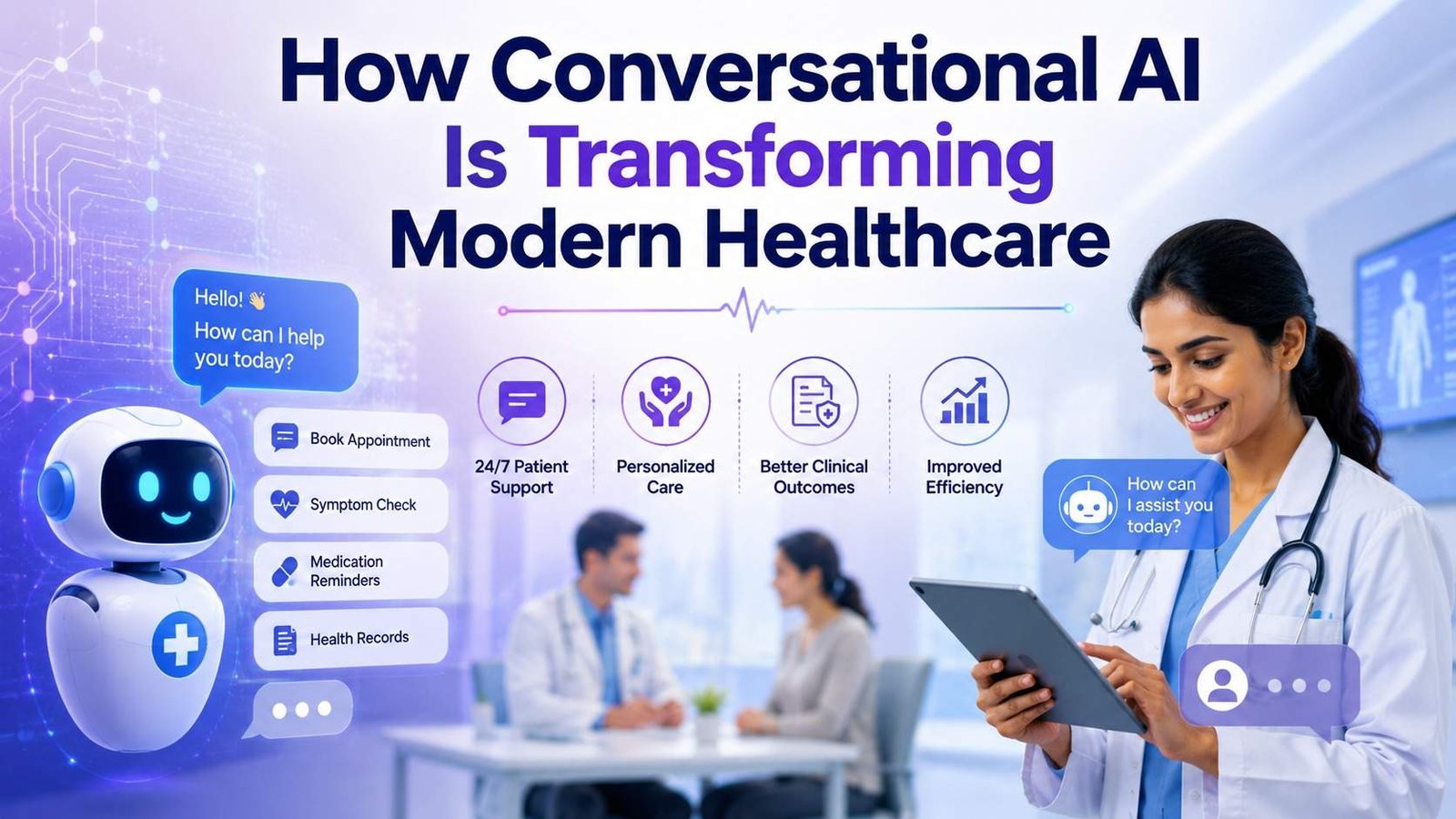
Conversational AI in healthcare is reshaping how patients, providers, and healthcare systems interact across digital platforms. The technology combines artificial intelligence, natural language processing, and machine learning to enable automated yet human-like communication in clinical and administrative settings. From virtual health assistants to AI-driven appointment scheduling, conversational platforms are becoming increasingly integrated into healthcare ecosystems.
The growing demand for digital healthcare solutions, rising patient expectations for faster support, and expanding telehealth infrastructure are contributing to broader adoption. According to the Conversational AI Healthcare Report, the industry is projected to witness notable growth during the forecast period, supported by advancements in AI-enabled patient engagement and operational automation.
Conversational AI Is Improving Patient Engagement
Healthcare organizations are increasingly adopting conversational AI tools to improve patient communication and accessibility. AI-powered chatbots and virtual assistants can provide 24/7 support for appointment scheduling, medication reminders, symptom checking, and insurance-related queries. These solutions reduce waiting times while helping healthcare providers manage growing patient volumes more efficiently.
Digital patient engagement platforms are also supporting healthcare systems in addressing staffing challenges. By automating repetitive administrative tasks, medical professionals can focus more on direct patient care. The growing adoption of AI-enabled healthcare support tools aligns with broader digital health transformation initiatives being implemented globally.
The expansion of telehealth services has further accelerated conversational AI integration. According to the World Health Organization’s digital health overview, digital technologies are increasingly supporting healthcare accessibility, continuity of care, and patient-centered services across multiple healthcare environments.
Healthcare Providers Are Using AI to Streamline Operations
Conversational AI is also helping healthcare providers optimize internal workflows and reduce operational inefficiencies. Hospitals and clinics are deploying AI-driven systems to automate patient intake processes, manage electronic health records, and improve communication between departments. These systems can minimize administrative burdens while enhancing response accuracy and consistency.
AI-powered virtual assistants are being used in call centers and support desks to manage large volumes of patient inquiries without requiring extensive human intervention. As healthcare systems continue to face pressure from increasing patient demand, automation technologies are becoming essential for improving service efficiency and reducing operational costs.
Healthcare organizations are also integrating conversational AI into remote patient monitoring systems. These solutions allow providers to maintain regular communication with patients managing chronic conditions, improving follow-up care and treatment adherence through automated interactions and personalized health reminders.
Natural Language Processing Is Expanding Clinical Applications
Advancements in natural language processing are enabling conversational AI systems to better understand medical terminology, patient intent, and contextual healthcare conversations. This capability is improving the quality of AI-driven interactions and allowing healthcare platforms to deliver more accurate responses across clinical and non-clinical applications.
AI-powered symptom assessment tools are becoming increasingly common in healthcare settings, particularly for preliminary patient screening and triage support. These systems can analyze patient-reported symptoms and guide individuals toward appropriate care pathways. The increasing sophistication of conversational AI is supporting broader adoption across hospitals, clinics, insurance providers, and digital health platforms.
The U.S. Food and Drug Administration has also highlighted the growing role of artificial intelligence in healthcare technologies through evolving regulatory frameworks focused on AI-enabled medical software and clinical decision-support systems. Regulatory developments are expected to influence how healthcare organizations deploy conversational AI solutions in the coming years.
Data Security and Privacy Remain Critical Considerations
Despite growing adoption, data privacy and cybersecurity remain major considerations for conversational AI deployment in healthcare environments. AI systems frequently process sensitive patient information, making compliance with healthcare regulations and data protection standards essential. Healthcare organizations are increasingly investing in secure AI infrastructure to reduce cybersecurity risks and maintain patient trust.
Maintaining transparency in AI-generated healthcare interactions is also becoming an important industry focus. Providers must ensure that AI systems deliver reliable, unbiased, and medically appropriate information while clearly defining when human intervention is necessary. Ethical AI governance is expected to remain a central discussion point as healthcare AI adoption expands globally.
The increasing use of cloud-based healthcare platforms is also influencing conversational AI deployment strategies. While cloud integration improves scalability and accessibility, healthcare organizations continue evaluating infrastructure models that balance operational efficiency with data protection requirements.
Future Outlook for Conversational AI in Healthcare
The future of conversational AI in healthcare will likely be shaped by continued advancements in machine learning, voice recognition, and predictive analytics. Healthcare providers are expected to expand AI integration across patient communication, diagnostics support, and personalized healthcare delivery models.
As digital healthcare ecosystems continue evolving, conversational AI technologies may play a broader role in improving healthcare accessibility and operational responsiveness. Growing investment in AI-driven healthcare innovation, combined with expanding digital infrastructure, is expected to support long-term industry development across both developed and emerging healthcare markets.
Industry stakeholders are also exploring multilingual conversational AI systems capable of supporting diverse patient populations across global healthcare networks. The ability to deliver scalable and personalized communication solutions could further strengthen the role of conversational AI within future healthcare transformation strategies.