How Cloud-Based ERP Is Reshaping Financial Operations in Saudi Businesses
By haris riaz 20-01-2026 83
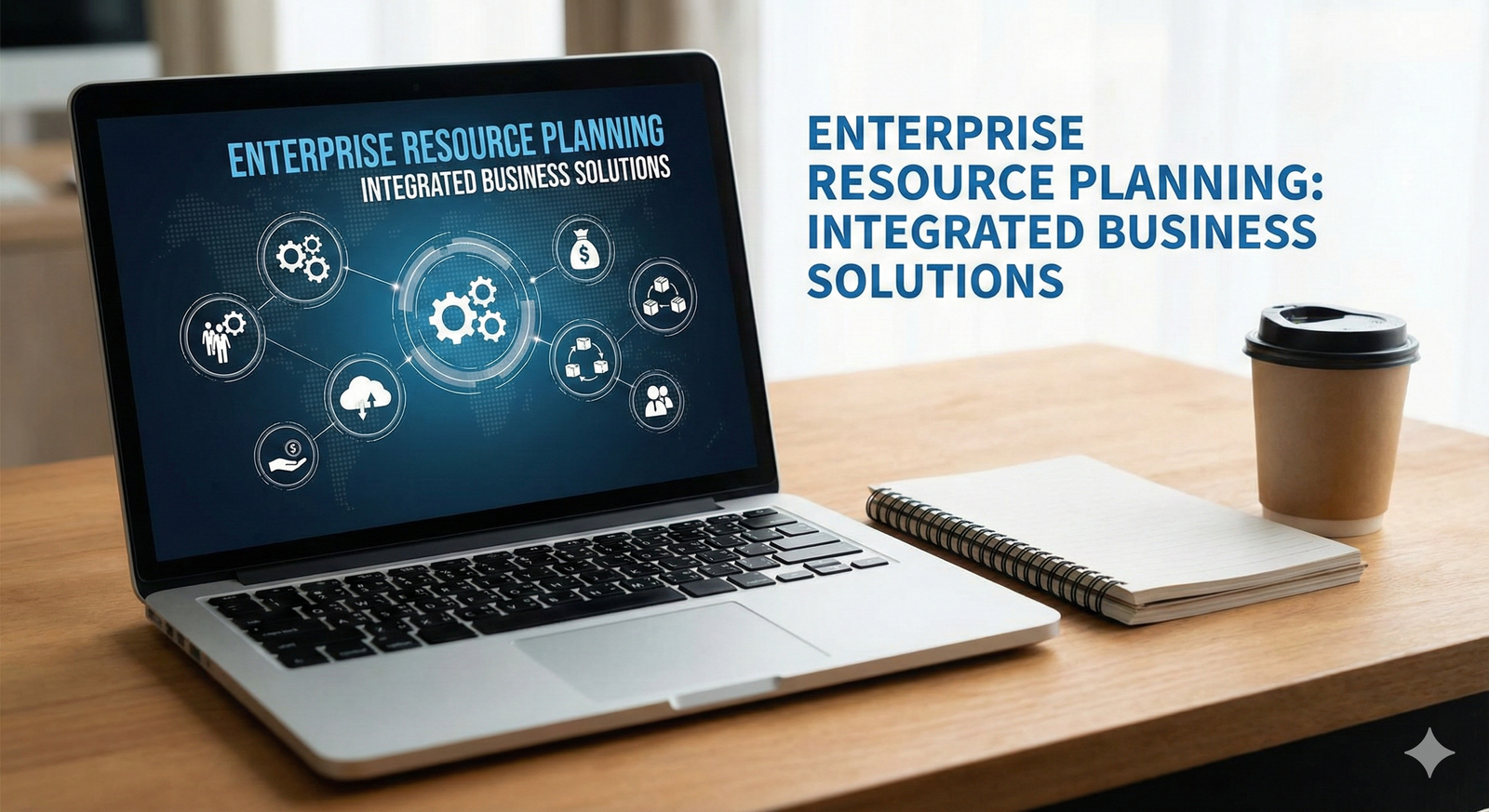
The business environment in Saudi Arabia is transitioning towards digital-first operations and areas that have been affected include financial management. The best erp in ksa solutions based on the cloud have rapidly gained prominence with Vision 2030 moving companies to smarter, more automated systems. These platforms are not just simple accounting tools, as they bring financial functionality together with automating the fundamental business operations as well as assisting businesses stay in line with local standards, such as the ZATCA and VAT reporting. Consequently, companies in the Kingdom are becoming more modernized in the way they transact their financial activities faster, more precisely and with more strategic foresight.
Real-Time Financial Visibility to make better decisions.
Real time access to financial information is one of the greatest benefits of cloud-based ERP. Conventional accounting programs are known to be manual and slow in reporting. Contrastingly, cloud ERP systems are updated in real time and therefore the managers can have a full picture of their cash flow, expenses, revenue and profitability anytime.
This visibility in real time enables Saudi businesses to make faster decisions that are data-driven. To either control their budgetary allocations, financial risk assessment, or performance, cloud ERP allows all financial indicators to be displayed on a single dashboard. This proves to be particularly helpful to the expanding businesses that require the immediate knowledge to remain competitive.
Fluid Adherence to Saudi VAT and ZATCA.
Business compliance in the Kingdom is a serious issue. Cloud ERP solutions ensure ease in compliance (taxes are calculated automatically, it creates reports that are friendly to taxation and it creates e-invoices that comply with ZATCA e-invoicing requirements). This will remove chances of human mistakes and prevent fines among companies.
In addition, numerous cloud ERP vendors in Saudi Arabia are constantly updating the systems using new regulations. This keeps the businesses in check without having to keep on altering their financial procedures manually. Cloud ERP is a trusted regulatory compliance tool, whether it is in VAT filings or real-time invoice validation.
Automation Minimizes Human (Manual) mistakes and increases efficiency.
The monotonous tasks that fall under the financial operations include invoicing, bank reconciliation, expense management, and payroll processing. These activities can take a lot of time and are also prone to errors when they are done manually. ERP is done in clouds, which automates the following functions, allowing finance teams to concentrate on more strategic initiatives.
Automation not only decreases the human error, but also speeds up the processes. An example is that automated invoice posting, real-time bank integration, and scheduled financial reporting assist businesses to close their books at a faster and more accurate speed. This efficiency will be highly applicable to Saudi companies that have branches in many places or handle a high amount of transactions.
Scalability to Support Business Development.
As the businesses of Saudi Arabia grow either in new geographical locations or new services they require financial systems which are capable of expanding with them. The hr software in saudi arabia solutions on the cloud are very scalable and thus the companies could add users, modules, and capabilities without significant disturbances.
This scalability renders cloud ERP to be the most suitable to startups, SMEs, and even the large enterprises. The system accommodates a business regardless of whether the business is adding an additional warehouse, an additional branch or adding more workers. The cost-effectiveness is also guaranteed by cloud scalability since companies get to pay according to their usage.
Greater Security and Data Protection.
The Saudi businesses especially when handling sensitive financial data have placed data security as a priority. ERP systems based on the cloud have enhanced security features that include encryption, multi-factor authentication, automated back-ups, and recovery in case of an accident.
These security controls prevent cyber attacks on financial data as well as providing a high availability of systems. Cloud ERP systems are also a secure option and in most instances, the cloud systems are more secure than the on-premise system hence a strong alternative to companies worried about the security of their data.
Final Thoughts
The ERP in the cloud is transforming the way Saudi companies undertake their financial processes through automation, accuracy, scalability, as well as compliance provisions. With the Kingdom ever gaining pace in the digital realm, businesses that have already switched to these systems are building a sustainable course of development and smarter financial management. Cloud ERP is rapidly turning into the main element of the contemporary financial change in Saudi Arabia with real-time insights and streamlined processes.
Tags : sowaanerp erp solutions