India’s transition toward cleaner and more efficient energy sources is accelerating as natural gas becomes an increasingly important part of the country’s energy mix. Expanding gas infrastructure, supportive government initiatives, and growing environmental awareness are encouraging industries, businesses, and households to adopt cleaner fuel alternatives. This shift is also strengthening long-term energy security while supporting the nation’s sustainability goals.
The India City Gas Distribution (CGD) Market is playing a central role in this transition by expanding access to compressed natural gas (CNG) and piped natural gas (PNG) across urban and semi-urban regions. According to an analysis published by MarkNtel Advisors, the market is projected to grow from USD 12.78 billion in 2026 to USD 26.14 billion by 2032, registering a CAGR of 12.67%. Additional insights are available through this city gas infrastructure analysis.
The expansion of gas distribution networks is supported by large-scale investments in pipeline infrastructure, digital monitoring systems, and the rapid establishment of CNG stations. Together, these developments are improving accessibility while encouraging greater adoption of cleaner fuels across transportation, residential, commercial, and industrial sectors.
Government Policies Continue to Drive Expansion
Government initiatives remain one of the strongest catalysts behind India's growing natural gas ecosystem. Regulatory authorities have expanded geographical areas for gas distribution, enabling wider network coverage across states and cities. The national objective of increasing natural gas's share in the country's overall energy mix has encouraged significant investments in pipeline connectivity, distribution infrastructure, and last-mile access.
Multiple bidding rounds conducted by regulatory authorities have also encouraged both public and private companies to invest in new infrastructure. These measures are improving accessibility while strengthening competition across regional markets. Recent policy initiatives further emphasize digital infrastructure and smarter utility management, helping operators improve efficiency and customer service.
Growing Infrastructure Strengthens Gas Accessibility
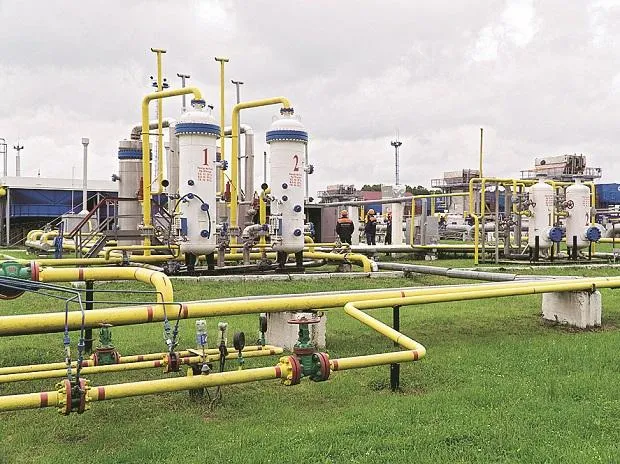
Pipeline expansion remains the backbone of India's gas distribution network. Steel transmission pipelines and medium-density polyethylene (MDPE) distribution pipelines allow uninterrupted supply to residential neighborhoods, industrial facilities, and commercial establishments. As new cities become connected to the national gas grid, the availability of natural gas continues to improve.
Simultaneously, the number of CNG stations has expanded rapidly, making cleaner transportation fuels more accessible to commercial fleets, public transport operators, and private vehicle owners. Better infrastructure reduces supply bottlenecks while increasing consumer confidence in switching from conventional fuels to natural gas-based alternatives.
Digital Technologies Are Modernizing Distribution Networks
Technology is becoming an essential component of modern gas distribution systems. Smart metering, automated monitoring, and digital billing solutions are improving operational efficiency while reducing technical losses. These technologies allow distributors to monitor consumption patterns in real time, detect leakages earlier, and improve customer engagement through more transparent billing.
Digital transformation also supports better planning for future infrastructure investments. Data-driven decision-making enables operators to optimize pipeline utilization, forecast demand more accurately, and improve maintenance schedules. As India's broader smart utility ecosystem continues to evolve, digital technologies are expected to become an integral part of city gas operations.
Transportation Continues to Lead Demand
Among various applications, transportation remains one of the strongest demand drivers for natural gas. Rising petrol and diesel prices, combined with stricter emission regulations, have encouraged commercial vehicles, taxis, buses, and public transport systems to adopt CNG. Lower operating costs and reduced emissions continue to make natural gas an attractive alternative for fleet operators.
Residential demand is also increasing as more households receive access to piped natural gas connections. PNG offers convenience, improved safety, and continuous fuel availability compared to traditional LPG cylinders. Industrial and commercial consumers are similarly adopting natural gas to improve operational efficiency while meeting environmental compliance requirements.
Challenges Remain Despite Positive Momentum
Despite strong growth prospects, several challenges continue to influence the sector. India's significant dependence on imported liquefied natural gas exposes distributors to international price volatility and geopolitical uncertainties. Fluctuating global gas prices can increase procurement costs, affecting pricing strategies for both CNG and PNG consumers.
Infrastructure expansion also requires substantial capital investment and coordination among multiple stakeholders. Delays in obtaining regulatory approvals, land acquisition, or pipeline construction can slow network expansion in some regions. Nevertheless, ongoing investments and supportive policy measures continue to address many of these structural challenges.
Future Outlook
India's growing focus on cleaner energy, expanding urbanization, and continued investment in gas infrastructure are expected to strengthen the country's natural gas ecosystem over the coming years. The combination of supportive policies, digital innovation, expanding pipeline networks, and increasing consumer awareness positions city gas distribution as a critical component of India's long-term energy transition.
As infrastructure reaches more regions and cleaner fuels gain wider acceptance across transportation, residential, and industrial sectors, natural gas is likely to play an increasingly important role in supporting sustainable economic development while improving energy accessibility nationwide.