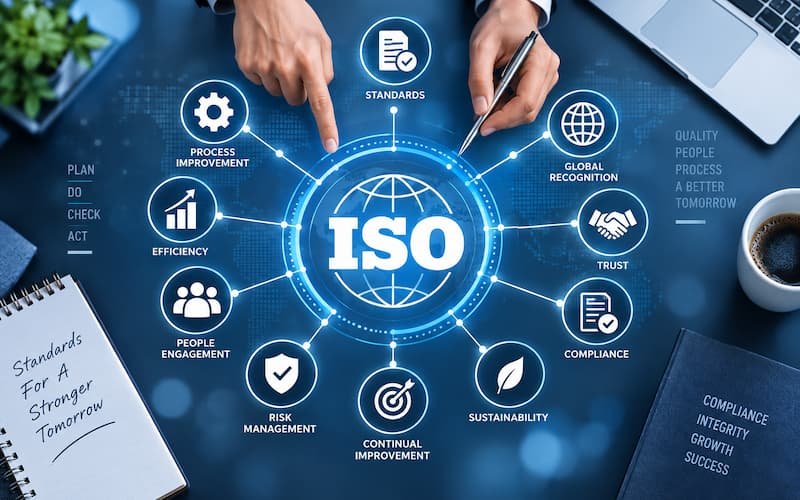
Keeping an IT Service Management Certification is a continuous process that businesses need to engage in rather than just a one-off accomplishment. It is important for organizations to periodically assess their IT service processes, track service performance, identify service deficiencies, and take corrective action to maintain services for continued customer and business needs.
By setting up clear procedures, performing internal audits, monitoring key performance indicators, and timely addressing of nonconformities, businesses can enhance their service management practices. These practices can be employed by organisations seeking to implement iso 20000 certification to ensure that they have a well-functioning service management system in place and that they are committed to providing consistent, reliable IT services.
Actively monitor IT Service Management processes regularly.
It is important for organisations to regularly review their IT service management processes to make sure they continue to achieve desired results and meet business goals. Incident Management, Problem Management, Service Continuity Management, Change Management and Service Level Management should be looked at regularly. Regular reviews can uncover obsolete procedures, inefficiencies and opportunities to enhance service quality.
Conduct Internal Audits
Internal audits play a crucial role in the retention of certification since they allow it to be determined that the service management system still fulfills the requirements that apply. Documented process, documented operational activity, documentation records and performance results should be reviewed during audits. Gaps found at an audit should be recorded and corrected by appropriate corrective actions.
Monitor Service Performance
Businesses need to have measurable performance metrics to assess the performance of IT services. These can range from incident resolution times to service availability, customer satisfaction, response times, to the effectiveness of change management. By routinely reviewing these findings, companies can detect trends and make timely decisions to preemptively address minor issues to prevent them from becoming major service problems.
Keep Documentation Updated
In order to have an effective service management system it is important to have accurate and up-to-date documentation. Policies, procedures, service agreements, process documents and operational records should be regularly reviewed by organisations. If business processes, technology, responsibilities, and/or customer needs change, the applicable documentation needs to be updated.
Handle risks and changes effectively
The business needs and technology requirements may evolve rapidly, resulting in emerging risks in IT service provision. The organizations should have a systematic methodology for identification, assessment and control of these risks. Infrastructure, application, supplier, or service process changes must be appropriately assessed and executed to minimize the impact on the infrastructure and its services while keeping service quality at an acceptable level.
Provide Employee Training
Staff are key to meeting certification requirements. Businesses need to deliver relevant training to ensure employees are aware of their responsibilities, service management processes, policies and service performance expectations. Refresher training may also be necessary to ensure that employees remain compliant with the procedures when there are changes in process or technologies.
Nonconformities are addressed and there is continuous improvement.
If problems are uncovered during an audit, because of customer input, incidents, or performance monitoring, businesses should seek to understand the root cause of the issue, not just correct it. Corrective action should be taken and assessed. A continuous improvement approach ensures that organisations can continue to provide reliable IT services and reinforces the organisations' overall service management system.
Investigate and prepare for Certification Audits
The best approach to being ready is to be ready all year round, not just when facing the external audit. Internal audits, management review, performance monitoring and corrective actions, and good record keeping can make external assessments more manageable. Regular preparation also indicates that service management practices are embedded in the day-to-day activities.
Conclusion
To keep up an IT Service Management Certification it is important to monitor, keep up to date auditing, involve workers, have effective records, and consistently improve. Companies that regularly assess their IT services can uncover vulnerabilities at an early stage and ensure processes are in place to deliver reliable IT services.
A structured approach to service management also enable organizations to show their dedication in providing quality service, satisfaction and efficiency. Having these controls in place and continually enhancing their systems will help to drive the value of their IT Service Management Certification and further enhance their IT service.