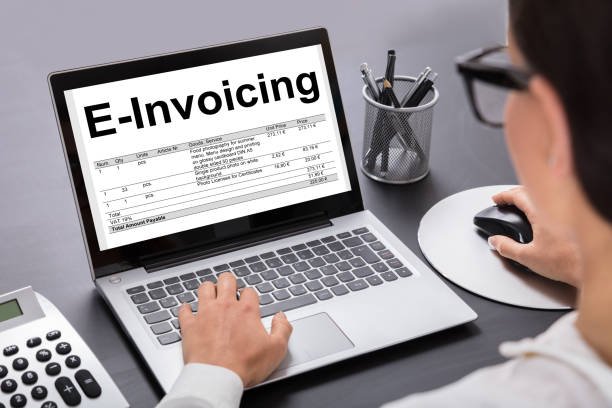
Saudi Arabia’s e-invoicing requirements have transformed how businesses create, manage, and submit invoices. Accuracy of invoices is crucial in organizations where ZATCA regulations are in place since the slightest technical or data-related error will lead to delays and extra efforts. This is where a trusted zatca solution provider can assist businesses to establish more efficient and compliant invoicing process. Automated validation, system integration and continuous technical support enables businesses to minimize errors that are normally made and enhance the overall accuracy of electronic invoices.
In most companies, ZATCA e-invoice rejection errors may turn into the key operational problem when invoices are done manually or when the accounting systems are not properly integrated. The recurrent refusal can result in correction of invoices, resubmission, late payment and extra work on the part of the finance teams. A professional ZATCA provider might avoid such problems by detecting any possible problems in the pre-submission stage, keeping the proper system settings, and assisting businesses in their e-invoicing process.
What Causes E-Invoice Rejection?
E-invoices may be rejected due to various technical, formatting and data reasons. Being aware of these typical causes will enable companies to develop more robust preventive actions.
Some of the common problems are:
Absence of required information on invoices.
Wrong VAT registration information.
Unacceptable invoice numbers or dates.
Incorrect VAT calculations
Mistakes in sub-totals of invoices.
Incorrect XML structure
Absence of needed invoice fields.
Issues of integration or data-transfer.
Wrong business system set-up.
Where such concerns are detected after submission, the finance teams have to take extra time fixing and re-submitting invoices. Many of these problems can be identified earlier with the assistance of automated validation.
How Can a ZATCA Provider Prevent Rejection Errors?
1. Automated Invoice Validation
Automated invoice validation is one of the largest benefits of cooperation with a specialized provider. The solution will be able to verify the contents of the invoices prior to submission and detect possible compliance or technical issues.
The system is able to examine such vital information as VAT information, invoice totals, obligatory fields, the type of invoice, as well as necessary technical parts. This is a proactive solution that assists businesses to minimize the errors in rejection of ZATCA e-invoices prior to the submission of invoices.
2. Accurate Tax Calculations
Calculation errors of VAT may cause discrepancies in taxable values, VAT values, discounts and the total value of the final invoice. Hand calculations enhance the chances of human error particularly when the businesses are handling a lot of transactions.
With an automated e-invoicing system, it is possible to calculate tax according to predetermined rules and use the same calculation systematically. This saves time on duplication of manual work and enhances accuracy of invoices.
3. Proper XML Generation
Electronic invoices must have a certain technical design. Wrong XML elements, lack of information or invalid values may result in an invoice failing to pass the validation.
A provider specialising in ZATCA can set the system such that it will produce invoices in the correct technical format. Structural issues can then be detected in time by automated technical validation to prevent businesses to fail invoices unnecessarily.
4. Seamless ERP Integration
Most businesses already use ERP, accounting, billing, or point-of-sale systems. Without proper integration of these systems with the e-invoicing platform, information can be exchanged with errors or incomplete.
The e-invoicing solution can be integrated with the existing business systems by a provider. This enables the invoice information to be automatically transferred to the source system into the e-invoice. Effective integration will minimize data entry as well as the errors that arise due to hand copying of information.
5. Real-Time Error Detection
Early detection of invoice issues can save a lot of time to the finance departments. Businesses can be alerted when they have missing or incongruent information as opposed to waiting until an invoice is rejected.
On-the-fly validation allows the employees to rectify problems in real time. This will provide a workflow that is simpler, and minimizes chances of recurring submission failures.
6. Continuous Compliance Support
Technology of e-invoicing and regulations may vary with time. As business requirements change, businesses must make sure that their systems are properly configured.
An established provider can assist companies to keep their e-invoicing systems and implement any necessary technical changes. The continuous support will decrease the chances of using outdated configurations, and gives businesses a further guarantee on their invoicing procedures.
Improving Business Efficiency
Compliance is only one of the key aspects of preventing ZATCA e-invoice rejection errors. It has the ability to enhance daily business activities, too.
In cases where invoices are created and approved automatically, finance teams do not have to spend a lot of time rectifying the errors and re-filing the documents. This enables the employees to concentrate on reconciliation, reporting, financial planning and other significant tasks.
Consistency can also be enhanced with automated procedures. Rather than relying solely on individual employees to recall all the requirements, companies can create a standard validation check into their invoicing system.
Improved accuracy of invoices may also facilitate an easier relationship with customers. Proper invoices are facilitated to be processed, reconciled and recorded and they assist to minimize the unwarranted communication between the customer and the accounting departments.
Choosing the Right Provider
There are a few things that the businesses should put into consideration when choosing a ZATCA provider. The provider must also be well versed with the requirements of electronic invoicing and the technical requirements to enable the support of compliant invoice generation.
It is also important to have integration capabilities. The solution must be compatible with already existing ERP, accounting, billing or point of sale systems in the company.
Security, scalability, usability, customer support, and troubleshooting capabilities should also be considered by the businesses. An excellent provider is not just one that provides software but must assist the organization to put in place a reliable and sustainable e-invoicing process.
Conclusion
A well-designed e-invoicing system can significantly reduce the risk of ZATCA e-invoice rejection errors by combining automated validation, accurate tax calculations, proper XML generation, reliable integrations, and continuous system support. Rather than finding errors after they have been submitted, companies are able to find and rectify numerous errors before invoices get to the validation point. This saves on manual labor, delays and assists in financing teams to continue with a more efficient flow of work.
To businesses in Saudi Arabia, selecting the appropriate provider of ZATCA may thus be a significant move towards enhancing compliance as well as efficiency in operations. Having the appropriate technology and professional support, companies will be able to establish a reliable invoicing system, minimize the errors in rejection of ZATCA e-invoices, and more easily manage their increasing electronic invoicing demands.
Tags : ZATCA E-Invoicing