The U.S. automotive radar industry is becoming a cornerstone of modern vehicle safety and intelligent mobility. Radar sensors enable vehicles to monitor their surroundings by detecting the distance, speed, and position of nearby objects, supporting a wide range of advanced driver assistance systems (ADAS). As automakers continue integrating smarter technologies into passenger and commercial vehicles, radar solutions are gaining a larger role in everyday driving.
The growing adoption of autonomous and semi-autonomous driving capabilities is also transforming the demand for high-performance sensing technologies. Features such as adaptive cruise control, blind-spot detection, lane departure warning, and automatic emergency braking increasingly rely on radar systems for accurate environmental awareness. According to a recent U.S. automotive radar market analysis, the sector was valued at around USD 1.82 billion in 2024 and is projected to reach approximately USD 4.19 billion by 2030, expanding at a CAGR of about 18.15% during 2025-2030.
Growing ADAS Adoption Is Fueling Automotive Radar Demand
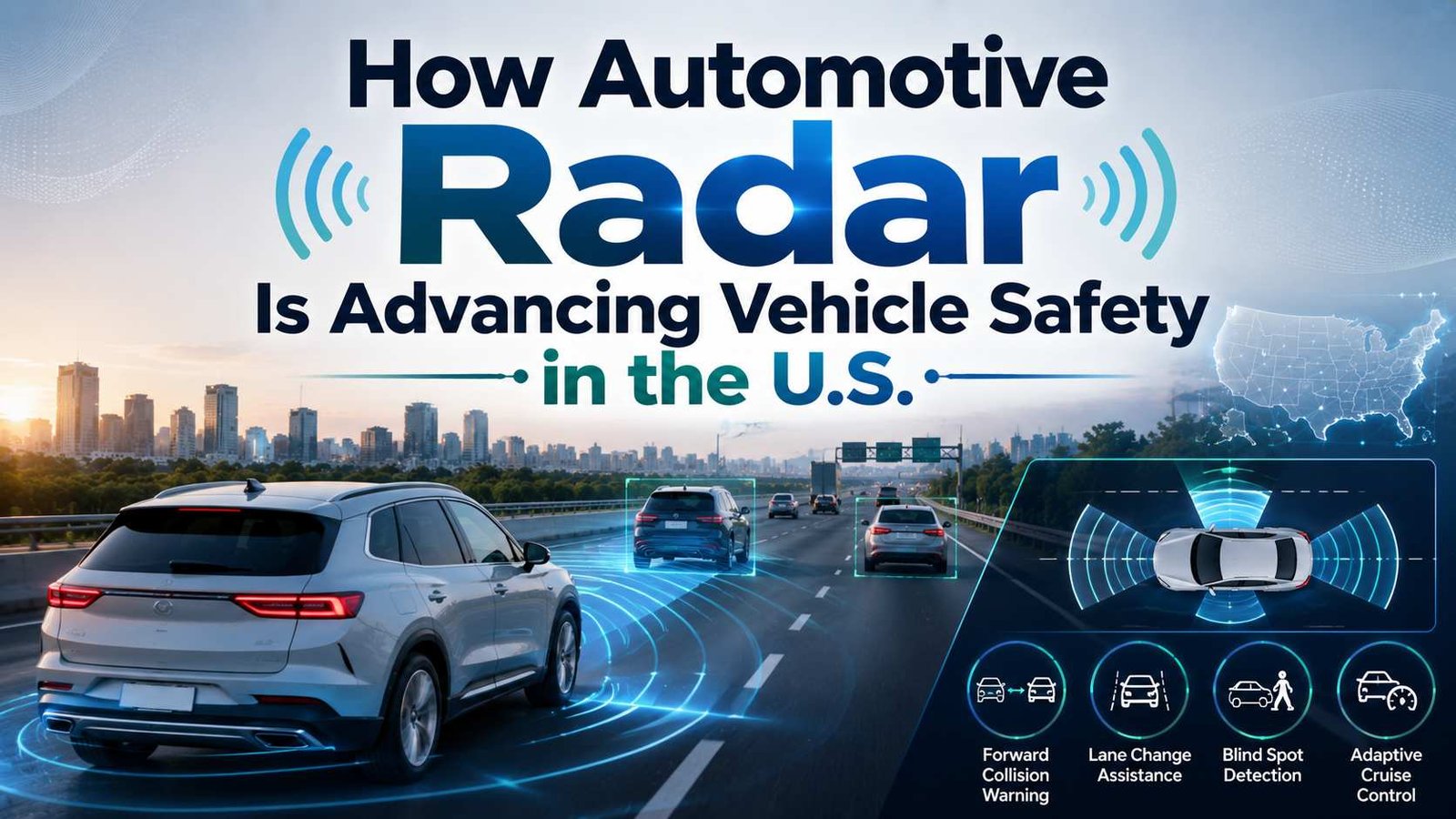
The rapid expansion of ADAS technologies remains one of the strongest growth drivers for automotive radar systems. Vehicle manufacturers are equipping new models with intelligent safety features that reduce the risk of collisions and improve driver confidence. Radar sensors function reliably in low-light conditions, rain, and fog, making them an essential component of these safety systems.
Automotive radar is widely used in applications such as forward collision warning, emergency braking, traffic jam assistance, and cross-traffic alerts. The technology provides real-time object detection and distance measurement, allowing on board software to react faster than human drivers in many situations. As safety features become standard across more vehicle categories, radar integration is expected to continue rising. According to the U.S. National Highway Traffic Safety Administration's ADAS information page, driver assistance technologies are designed to help reduce crashes and improve road safety.
Autonomous Mobility and Connected Vehicles Create New Opportunities
The evolution of autonomous mobility is accelerating the deployment of sophisticated radar platforms. Self-driving and highly automated vehicles require a combination of cameras, lidar, ultrasonic sensors, and radar to create a comprehensive understanding of the driving environment. Among these technologies, radar offers reliable long-range detection and performs effectively under challenging weather conditions.
Connected vehicles are also creating opportunities for radar innovation. By integrating radar data with artificial intelligence and vehicle-to-everything (V2X) communication systems, manufacturers can enhance predictive safety capabilities and optimize traffic management. The combination of sensor fusion and real-time connectivity is expected to play a central role in the next generation of intelligent transportation systems.
Passenger Vehicles Lead the Adoption Curve
Passenger vehicles currently account for the largest share of radar integration across the U.S. automotive sector. Consumer demand for convenience, safety, and premium driving experiences has encouraged original equipment manufacturers (OEMs) to include advanced safety packages even in mid-range vehicle segments. Features that were once limited to luxury models are increasingly available in mainstream cars and SUVs.
The popularity of electric vehicles is also contributing to higher radar deployment rates. Many EV manufacturers position their products around connected technologies and advanced automation, making radar sensors a natural addition to their digital architecture. As vehicle electrification and automation continue to develop together, demand for compact and efficient radar modules is expected to increase.
Technology Innovations Are Expanding Radar Capabilities
Continuous innovation is improving radar performance, resolution, and integration flexibility. The industry is moving toward compact high-frequency radar systems capable of detecting smaller objects with greater precision. Miniaturization trends are allowing manufacturers to install multiple radar sensors around a vehicle without compromising design or aerodynamics.
Another emerging opportunity lies in the development of 4D imaging radar technology. Unlike traditional radar systems, 4D radar can generate richer environmental data by measuring range, velocity, azimuth, and elevation simultaneously. This advancement helps vehicles identify complex traffic scenarios more accurately and supports higher levels of driving automation. The SAE International overview of 4D imaging radar technology highlights its growing relevance for future autonomous vehicle architectures.
Challenges and the Road Ahead for the U.S. Automotive Radar Industry
Despite its strong growth outlook, the automotive radar ecosystem faces several challenges. Developing and integrating advanced radar hardware requires significant research and development investment. Manufacturers must also ensure compatibility with evolving safety standards, software platforms, and sensor fusion technologies. Balancing performance improvements with cost efficiency remains a critical objective for suppliers and OEMs alike.
Another challenge involves achieving seamless coordination between radar and other sensing technologies. While radar offers excellent object detection and all-weather performance, combining data from multiple sensors requires advanced algorithms and robust computing platforms. The ability to integrate these technologies effectively will influence the pace of autonomous vehicle deployment in the coming years.
Looking ahead, the U.S. automotive radar industry is expected to benefit from stronger vehicle safety regulations, growing consumer awareness, and continuous innovation in autonomous mobility. The increasing use of ADAS features, combined with advancements such as 4D imaging radar and connected vehicle ecosystems, positions radar technology as a fundamental building block for the future of transportation. As automakers continue prioritizing intelligent safety solutions, automotive radar will remain central to creating smarter, safer, and more efficient roads.