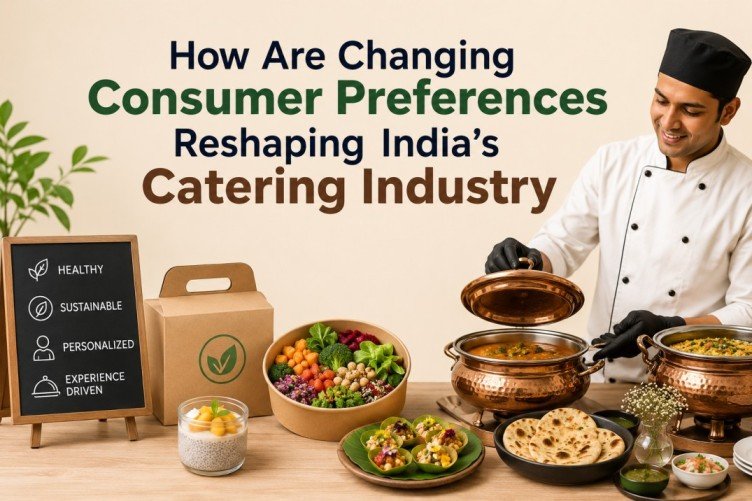
India’s catering industry has evolved far beyond traditional event food services. Today, catering providers serve a wide range of clients, including corporate offices, educational institutions, healthcare facilities, government organizations, transportation networks, and private celebrations. The growing demand for convenience, menu customization, and professionally managed food services is influencing how catering businesses operate across the country.
According to a recent analysis by MarkNtel Advisors, the India catering industry is projected to grow at a CAGR of around 6.1% during 2025–2030. The expansion is supported by rising social events, corporate gatherings, institutional food requirements, and changing consumer expectations regarding food quality and service standards. The broader growth of India's food service ecosystem is also supported by government initiatives promoting tourism and hospitality development.
Rising Events and Celebrations Drive Demand
India's cultural diversity and tradition of large-scale celebrations continue to generate significant demand for catering services. Weddings, religious festivals, family functions, and community gatherings require organized food preparation and service capabilities that professional caterers are increasingly equipped to provide.
The country's growing disposable income levels have encouraged consumers to allocate larger budgets toward food experiences and event management. As celebrations become more elaborate, catering providers are focusing on menu innovation, presentation quality, and operational efficiency to meet evolving customer expectations. Industry observations indicate that millions of weddings take place annually across India, creating a consistent requirement for catering solutions.
Corporate Catering Emerges as a Key Growth Segment
The expansion of India's corporate sector has transformed workplace dining and event catering. Businesses increasingly rely on professional food service providers to manage employee meals, conferences, training sessions, and corporate events.
The industry growth forecast highlights the increasing role of business-to-business catering arrangements. Client Pay B2B models account for a significant share of industry demand as organizations prioritize employee well-being, convenience, and food safety. Long-term contractual agreements also help businesses maintain service consistency while enabling caterers to operate at scale.
Growing Preference for Outsourced Food Services
One of the most notable shifts within the industry is the increasing adoption of outsourced catering services. Organizations across sectors such as healthcare, education, government, construction, and manufacturing are choosing specialized catering providers rather than managing food operations internally.
Outsourced contractual catering offers advantages such as standardized service quality, cost management, compliance monitoring, and operational expertise. According to this catering industry report, outsourced catering currently represents the dominant service model, accounting for more than 60% of the sector's share.
Health Conscious Menus and Sustainable Practices Gain Importance
Consumer preferences are increasingly influenced by health, wellness, and environmental considerations. Demand for vegetarian, vegan, plant-based, and nutritionally balanced meals has grown across both institutional and event catering segments.
Many catering companies are responding by sourcing local ingredients, reducing food waste, and incorporating sustainable practices into their operations. The trend is particularly visible among younger consumers and urban populations who seek food options aligned with personal health goals and environmental awareness. Studies by the Food and Agriculture Organization (FAO) emphasize the importance of sustainable food systems, while dietary guidance from the World Health Organization (WHO) continues to encourage healthier eating habits globally.
Technology Is Transforming Catering Operations
Digital transformation is becoming an important factor in the modernization of catering services. Online booking systems, mobile applications, digital payment solutions, customer feedback platforms, and automated inventory management tools are helping caterers improve efficiency and customer engagement.
Technology also enables providers to personalize menus, streamline logistics, and better manage large-scale events. This catering market analysis highlights technology adoption as one of the emerging opportunities supporting industry development in the coming years.
Expanding Opportunities in Travel and Hospitality
Beyond traditional events and institutional catering, opportunities are expanding in airline, railway, hospitality, and tourism-related food services. As domestic travel and tourism activity increase, demand for reliable meal solutions during travel continues to rise.
The hospitality sector's growth has also encouraged hotels, resorts, convention centers, and event venues to collaborate with specialized catering providers. This report provides insights into industry growth trends associated with these expanding end-user segments and their contribution to overall sector development.
Future Outlook
India's catering industry is entering a period of steady transformation driven by changing lifestyles, expanding corporate activity, growing institutional demand, and evolving food preferences. Businesses that can balance operational efficiency with menu innovation, sustainability, and technology integration are likely to remain competitive in an increasingly dynamic environment.
As consumer expectations continue to shift toward personalized, health-conscious, and professionally managed food experiences, the sector is expected to play an increasingly important role within India's broader food service economy. According to a MarkNtel Advisors report, the industry growth forecast remains positive, supported by both traditional demand drivers and emerging service opportunities.
Tags : indiacatering