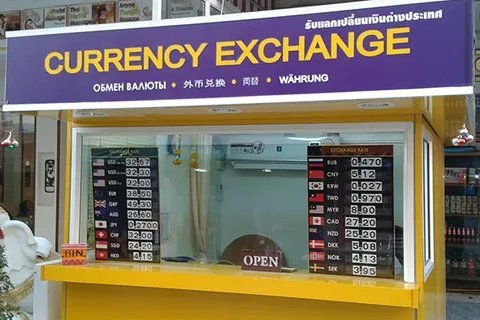
So, let me ask you something. Have you ever wondered how financial analysts keep up with the crazy fast changes in currency markets every single day? Like, one minute the dollar is strong, and the next it's dropping. It's a lot to track, right?
Well, a big part of the answer is simpler than you might think. Most of them are using a currency converter online not just for quick conversions, but as a real working tool to spot trends, compare rates, and make sense of what the market is doing.
In this article, we gonna look at how analysts actually use these tools in their day-to-day work, and why platforms like Vunelix are becoming go-to resources for traders, developers, and financial professionals around the world.
What Even Is a Currency Converter Online?
Okay so most people think of a currency converter as that simple thing you use when you're traveling and want to know how much your dollars are worth in euros. And yeah, it does that. But for analysts? It's way more than that.
A currency converter online is basically a tool that shows you the real-time exchange rate between two currencies. But the good ones — like the one on Vunelix — also give you:
- Live rate updates pulled from global markets
- Historical data so you can compare today's rate to last week, last month, even last year
- Cross rates between multiple currencies at once
- Charts and visual tools to see how rates are moving
It's not just "1 USD = X EUR." It's a whole data dashboard if you know how to use it right.
Why Analysts Check Currency Rates Every Single Day
You might be wondering why do analysts look at this stuff daily? Can't they just check once a week or something?
Not really. Here's the thing. Currency markets move 24 hours a day, 5 days a week. And small changes in exchange rates can have big effects on things like:
- Import and export costs for companies
- Stock prices of companies that do international business
- Cryptocurrency valuations which often move with USD strength
- Investment returns when you're dealing with assets in different currencies
So yeah, keeping a daily eye on exchange rates isn't optional for most analysts — it's just part of the job.
How Analysts Actually Use a Currency Converter in Real Life
Let me give you a more personal look at this. Imagine you're a financial analyst working at a fintech company. Your morning routine probably looks something like this:
1. Checking Overnight Rate Movements
First thing in the morning, before even getting coffee (well, maybe after coffee), an analyst will pull up an online currency converter to see what happened overnight. Because markets in Asia and Europe were open while they were sleeping, rates could have shifted significantly.
Platforms like Vunelix show real-time rates for over 180 currencies, so you can scan through the major pairs fast. USD/JPY, EUR/USD, GBP/USD — the big ones get checked first.
2. Comparing Against Historical Data
This is where it gets interesting. Analysts don't just look at today's rate — they compare it to historical data. Vunelix has access to over 30 years of historical currency exchange data, which is honestly a lot.
By comparing current rates to past performance, analysts can ask questions like:
- Is this currency at a 52-week high or low?
- Is there a seasonal pattern here?
- Has anything like this happened before?
These comparisons help build better predictions and more informed decisions.
3. Tracking Cross Rates
Currency cross rates are basically exchange rates between two currencies that don't involve the US dollar. Like EUR/GBP or AUD/JPY.
Analysts use these to find relationships between economies that aren't always obvious. If EUR/GBP is dropping, that tells you something about the UK economy versus the eurozone. A good currency rate tool will show you a full cross rate table so you can spot these patterns quickly.
4. Using Charts to Spot Trends
Visual tools matter a lot. An analyst might use a currency conversion tool that also includes charts showing price movements over time. This makes it way easier to see things like:
- Breakouts above resistance levels
- Sudden spikes after news events
- Long-term uptrends or downtrends
Vunelix provides live charts for forex, crypto, and stocks all in one place, so analysts don't have to jump between a bunch of different tabs.
Why Developers and Fintech Companies Love These Tools Too
It's not just analysts and traders using currency conversion tools. Developers and fintech companies are a huge part of the user base too.
A lot of websites — like online exchange platforms or e-commerce stores — need to display live currency rates to their visitors. Instead of building all that from scratch, they can pull data from platforms like Vunelix that already have it.
Vunelix collects data from exchanges all around the world, sourced from leading financial institutions, central banks, and market data providers. For a developer, that's gold. You don't have to worry about whether the data is reliable — it already is.
And with data covering 2000+ forex currency pairs, 6000+ cryptocurrencies, and 50,000+ stocks from 30 countries, there's a lot to work with.
Vunelix vs. Other Platforms ,What Makes It Different?
Okay so there are other platforms out there. CoinGecko and CoinMarketCap are big names for crypto data. TradingView is popular for charting. So where does Vunelix fit in?
The main thing is that Vunelix brings everything together in one place — forex, crypto, and stocks — with extra tools like:
- Market heatmaps to see which assets are gaining or losing
- Advanced screeners to filter markets by specific criteria
- Financial calendars for upcoming economic events
- Currency converter with real-time and historical rates
- A database of 500,000+ financial news articles
And it's free. That's a big deal for smaller analysts, researchers, and educators who don't have a huge budget for data subscriptions.
Vunelix doesn't offer trading or brokerage services — it's purely a data and analytics platform. Some people actually prefer this because it means there's no conflict of interest. The platform is just giving you the information; what you do with it is up to you.
How Educators and Researchers Use Currency Data
It's not all about trading and profit. Teachers, professors, and researchers use currency conversion tools too — sometimes daily.
Think about a finance professor who's teaching students about exchange rate theory. Having live data right there in the classroom makes the lesson way more real and engaging. Or a researcher studying how currency fluctuations affect trade relationships between countries. They need clean, reliable historical data — exactly what Vunelix provides.
With over 30 years of historical data and real-time rates for 180+ currencies, it's actually a solid academic resource too.
Common Mistakes People Make When Using a Currency Converter
Alright, let me be real for a second. A currency converter is a powerful tool, but people misuse it sometimes. Here's what to watch out for:
- Only looking at spot rates — The rate you see isn't always the rate you get in actual transactions. Banks and brokers add spreads.
- Ignoring the timestamp — Always check when the rate was last updated. Stale data can mess up your analysis.
- Not accounting for fees — If you're doing any actual money movement, conversion fees change the effective rate.
- Forgetting context — A rate moving 0.5% might sound small, but on a large transaction or investment, it's actually significant.
These aren't things that'll trip up experienced analysts, but newer users should keep them in mind.
Tips for Getting the Most Out of an Online Currency Tool
Here's some practical advice if you wanna use these tools better:
- Bookmark your favorite pairs :Most platforms let you save the currency pairs you track most often.
- Set rate alerts :Some tools let you know when a rate hits a certain level. Super useful.
- Use charts alongside the converter : Don't just look at the number. Look at the trend.
- Check economic events :A big news release can move currency rates fast. Use a financial calendar to stay ahead.
- Look at multiple timeframes : Daily, weekly, monthly — they all tell different parts of the story.
Final Thoughts
Using a currency converter online isn't just a travel hack. For analysts, traders, developers, and educators, it's a daily essential. It's how they track what's happening in global markets, make sense of price movements, and stay informed.
Platforms like Vunelix make this whole process easier by putting everything in one place — real-time rates, historical data, charts, heatmaps, screeners, and news. It's built for people who take market data seriously, without making it complicated or expensive.
If you're not already using a solid online currency tool in your daily workflow, honestly, you're probably missing out on a lot of useful information.
Frequently Asked Questions (FAQs)
Q1: What is a currency converter online used for?
A currency converter online is used to check real-time exchange rates between two or more currencies. Analysts use it to track price movements, compare historical rates, and study market trends on a daily basis.
Q2: Is Vunelix free to use?
Yes, Vunelix is a free platform. It provides real-time financial data, currency conversion tools, charts, heatmaps, and screeners at no cost to users.
Q3: How many currencies does Vunelix support?
Vunelix offers real-time rates for over 180 currencies and provides access to more than 2,000 forex currency pairs, 6,000+ cryptocurrencies, and 50,000+ stocks from 30 countries.
Q4: Can developers use Vunelix data for their websites?
Yes, developers and website owners who want to display live currency rates or market data can use Vunelix as a data resource. It's especially useful for online exchange platforms and fintech applications.
Q5: Does Vunelix provide historical currency data?
Yes. Vunelix has over 30 years of historical currency exchange data, making it a valuable resource for researchers, educators, and analysts who need long-term market information.
Q6: How is Vunelix different from CoinGecko or TradingView?
While CoinGecko focuses mainly on crypto and TradingView is primarily a charting tool, Vunelix combines forex, crypto, and stock data in one platform along with extra tools like currency converters, cross rates, heatmaps, screeners, and a financial news database — all for free.
Q7: Does Vunelix offer investment advice or trading services?
No. Vunelix is purely a market data and analytics platform. It does not offer brokerage accounts, trading services, or investment advice.
Q8: How accurate is the data on Vunelix?
Vunelix sources its data from leading financial institutions, central banks, and market data providers worldwide, ensuring the information is reliable and up to date.