How Advanced Turbine Maintenance Is Supporting Reliable Power Generation
By Monu Singh 06-07-2026 240
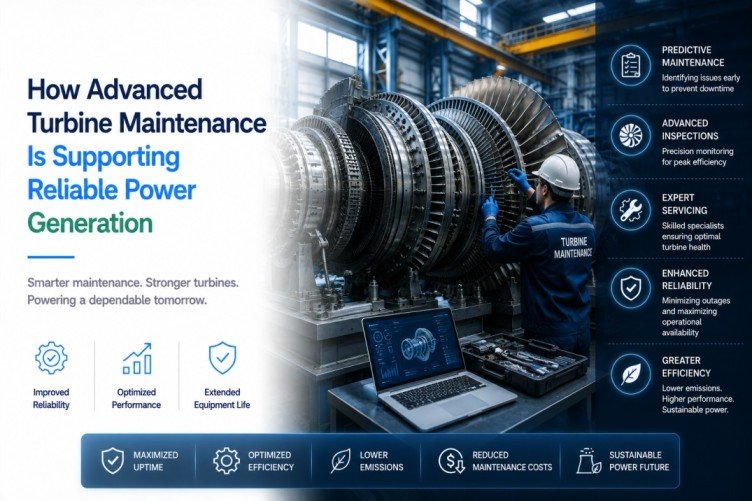
Reliable power generation has become increasingly important as industries, utilities, and governments respond to rising electricity demand and the growing complexity of modern energy infrastructure. Gas, steam, wind, and hydro turbines continue to serve as the backbone of global power production, supporting electricity generation across utility-scale power plants, industrial facilities, and renewable energy projects. As these assets operate for decades under demanding conditions, regular maintenance, inspections, upgrades, and component replacements have become essential for maximizing efficiency, reducing unexpected outages, and extending operational life.
According to the Turbine Services Market Research Report published by MarkNtel Advisors, the global turbine services market was valued at USD 23.49 billion in 2025 and is projected to grow from USD 25.33 billion in 2026 to USD 36.39 billion by 2032, registering a CAGR of 6.22% during the forecast period. The report attributes this growth to increasing electricity consumption, expanding global turbine installations, rising demand for maintenance and repair services, and growing investments in lifecycle management across power generation, oil & gas, and industrial manufacturing. Gas turbines remain the dominant turbine type, accounting for approximately 46% of total revenue, while Maintenance & Repair represents nearly 42% of the global service market. North America leads the industry with an estimated 29% share.
Growing Electricity Demand Is Increasing Service Requirements
The rapid expansion of electricity consumption worldwide continues to increase pressure on existing power generation infrastructure. Instead of replacing expensive turbine assets, many utilities and industrial operators are extending the operational life of installed equipment through scheduled maintenance, component upgrades, and predictive servicing programs.
According to the International Energy Agency (IEA), global electricity demand increased by 4.3% in 2024, reflecting stronger industrial activity, digitalization, and rising energy requirements across both developed and emerging economies. At the same time, the U.S. Department of Energy (DOE) has highlighted that gas turbines generate more than 40% of electricity in the United States, while manufacturing lead times for new turbines have extended from approximately two to three years to as long as seven years due to supply chain constraints.
These extended delivery timelines are encouraging power producers to maximize the performance and lifespan of their existing turbine fleets through comprehensive maintenance, refurbishment, inspections, and modernization programs rather than investing immediately in new installations.
Predictive Maintenance Is Transforming Turbine Operations
The turbine services industry is rapidly shifting from traditional time-based maintenance schedules toward intelligent condition-based servicing. Modern turbine operators increasingly rely on artificial intelligence, digital twins, advanced sensors, and real-time monitoring systems to identify equipment wear before failures occur.
This transition allows operators to reduce unplanned downtime, optimize maintenance schedules, improve equipment reliability, and lower long-term operating costs. According to the U.S. Energy Information Administration (EIA), growing investments in electricity generation infrastructure continue to support modernization across conventional and renewable power assets, creating additional demand for advanced diagnostic and predictive maintenance solutions.
Leading equipment manufacturers are also accelerating digital transformation. In 2025, GE Vernova collaborated with ANYbotics and AWS to deploy autonomous robotic inspections capable of collecting thermal, acoustic, and visual data from turbine assets. Similarly, Siemens expanded its Industrial Copilot platform by integrating generative AI into predictive maintenance solutions, helping operators identify performance issues earlier and improve maintenance planning across industrial turbine fleets.
Maintenance and Repair Continue to Generate the Highest Demand
Among all turbine service categories, maintenance and repair continue to account for the largest share of global demand because every operating turbine requires routine servicing throughout its lifecycle. Unlike complete overhauls, maintenance activities are performed regularly to ensure equipment reliability, operational efficiency, and compliance with safety standards. These services include routine inspections, component replacements, lubrication, combustion tuning, vibration analysis, and performance optimization.
Long-term service agreements are becoming increasingly common as utilities and industrial operators seek predictable maintenance costs while minimizing unexpected shutdowns. According to the report, Baker Hughes secured more than USD 350 million in Contractual Services Agreements (CSAs) during a single quarter in 2025, highlighting the industry's growing preference for outsourced lifecycle maintenance. Rather than replacing expensive turbine assets prematurely, organizations are extending equipment life through preventive maintenance and continuous performance monitoring, creating stable long-term opportunities for turbine service providers.
Fleet Modernization Is Creating New Growth Opportunities
Beyond routine maintenance, turbine operators are increasingly investing in modernization projects that improve efficiency while supporting environmental objectives. Governments worldwide are introducing stricter emissions regulations, encouraging power producers to At the same time, the International Energy Agency (IEA) continues to report increasing global investment in both conventional and renewable power infrastructure, supporting long-term demand for inspection, modernization, digital monitoring, and turbiupgrade existing turbine fleets instead of constructing entirely new facilities.
One notable example is the growing adoption of hydrogen-compatible turbine technologies. In 2025, Georgia Power and Mitsubishi Power successfully validated a 50% hydrogen fuel blend on an advanced-class gas turbine, demonstrating that existing gas-fired assets can significantly reduce carbon emissions through targeted retrofit programs. These projects are creating new demand for combustion system upgrades, burner modifications, fuel-flexibility enhancements, and advanced control systems.
ne lifecycle management services across multiple energy sectors.
North America Leads Global Service Activity
North America remains the largest regional market for turbine services, supported by its extensive installed base of gas-fired power plants and mature industrial infrastructure. According to the report, the region accounts for approximately 29% of global demand, driven largely by the United States' continued reliance on natural gas for electricity generation.
The U.S. Department of Energy (DOE) continues emphasizing the importance of maintaining existing gas turbine capacity as electricity demand increases and equipment delivery timelines remain extended. Similarly, the U.S. Energy Information Administration (EIA) projects continued expansion of natural gas-fired generating capacity to support growing electricity consumption from industrial facilities, manufacturing operations, and large-scale data centers. These developments are expected to strengthen long-term demand for turbine inspections, maintenance contracts, component replacements, and digital asset management services throughout the forecast period.
Looking Ahead
As electricity demand continues to rise and energy infrastructure becomes increasingly complex, turbine services will remain essential for ensuring reliable, efficient, and cost-effective power generation. Predictive maintenance, digital diagnostics, lifecycle extension programs, and modernization initiatives are transforming how turbine fleets are managed while reducing downtime and improving operational performance.
Growing investments in power generation, expanding installed turbine fleets, and stricter environmental requirements will continue creating opportunities for maintenance providers,