The hotel lobby is no longer just a place to check in.
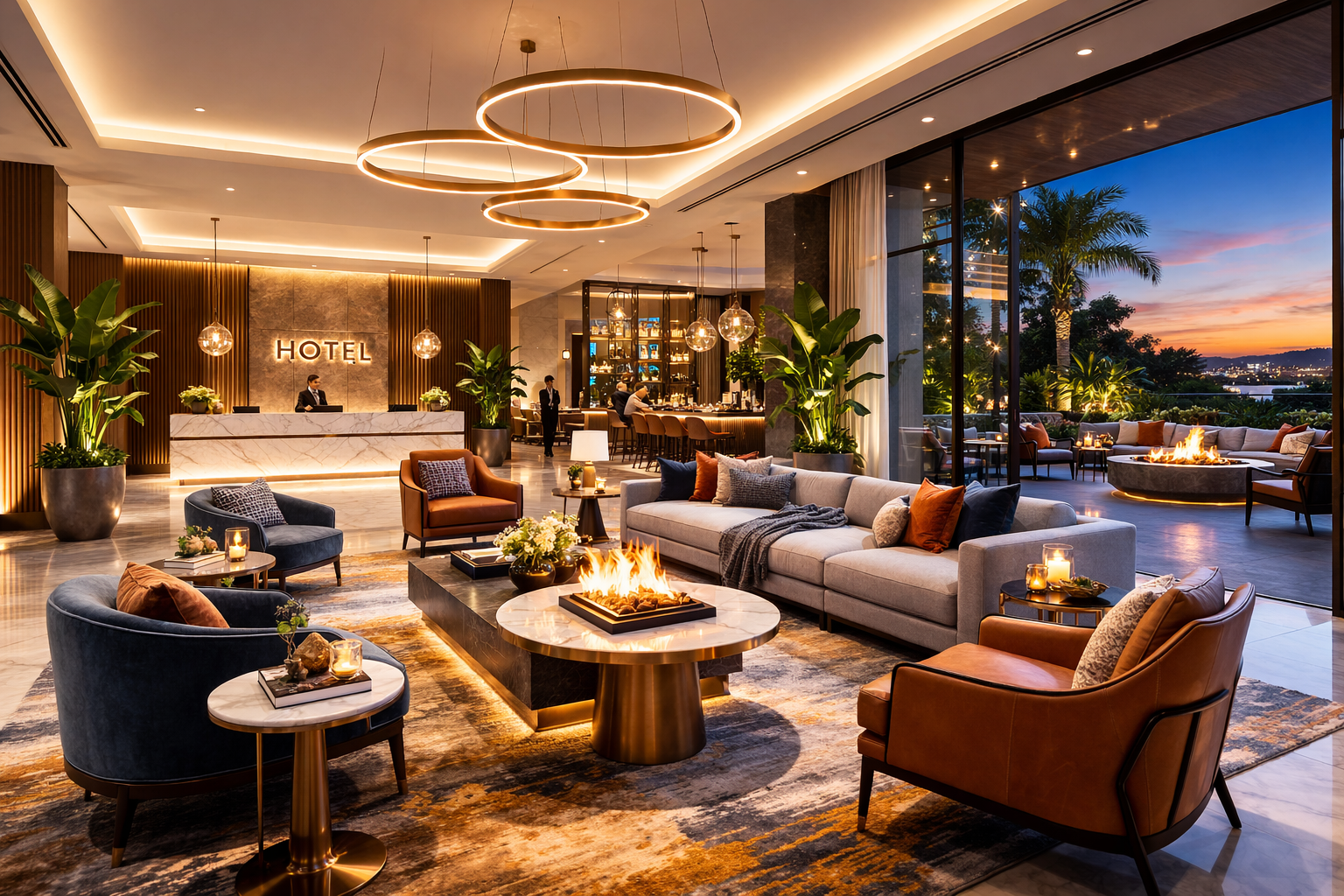
In 2026, hotel lobbies are becoming much more than that — social lounges, coworking hubs, lifestyle spaces, and modern living rooms for travellers who expect comfort and design the moment they walk in.
Today’s guests don’t just arrive, grab their key, and disappear into their rooms. They want spaces where they can relax, work, connect, recharge, and even socialise — all without leaving the property.
That shift is pushing hotels worldwide to rethink their lobby design strategy. Furniture, layout, and ambience are now essential tools for boosting guest satisfaction, brand identity, and even revenue.
Let’s explore the biggest hotel lobby design trends shaping 2026 — and how hospitality businesses can create lobby spaces that feel more like home and less like a hallway.
Why Hotel Lobbies Matter More Than Ever
Hotel lobbies have become the new “third place” — not home, not work, but somewhere in between.
Modern travellers want:
- Comfortable seating like a living room
- Stylish interiors worth photographing
- Flexible zones for working and relaxing
- A welcoming atmosphere that feels personal
- Multi-use spaces that serve more than one purpose
Hotels that invest in lobby design aren’t just upgrading aesthetics — they’re improving guest retention, increasing dwell time, and creating memorable first impressions.
The foundation of all these changes starts with one thing: the right furniture.
A thoughtfully curated space using premium hotel lobby furniture can instantly elevate the guest experience from average to unforgettable.
Trend #1: Lobbies Designed Like Residential Living Rooms
The biggest shift in 2026 is that hotel lobbies no longer feel commercial.
Instead, they feel cosy, warm, and residential — like stepping into someone’s beautifully designed home.
Hotels are using:
- Plush lounge chairs
- Sofas with soft textures
- Layered lighting
- Coffee tables and side tables
- Natural materials like wood and stone
This “living room lobby” concept makes guests feel comfortable immediately, especially after long travel days.
It also encourages them to stay longer, order drinks, or even use the space for informal meetings.
The best results come from investing in durable yet stylish commercial-grade furniture built specifically for high-traffic hospitality spaces.
Trend #2: Lobby Coworking Zones Are Now Standard
Remote work isn’t going away — and hotels are adapting fast.
In 2026, guests expect hotel lobbies to offer coworking-friendly spaces with:
- Charging access
- Quiet seating areas
- Shared community tables
- Comfortable ergonomic lounge chairs
- Flexible layouts
Instead of a business centre hidden in the back, hotels are integrating workspaces into the main lobby area.
This creates a more vibrant environment while also attracting digital nomads, business travellers, and locals.
Furniture plays a major role here — blending comfort with productivity.
Hotels often mix lobby seating with pieces inspired by modern coffee shop furniture, creating a casual yet functional atmosphere.
Trend #3: Boutique Hotel Style Is Influencing Every Brand
Even large hotel chains are borrowing from boutique design trends.
Guests want personality — not generic spaces.
That’s why 2026 lobbies are embracing:
- Unique accent chairs
- Curated art pieces
- Bold textures and colors
- Statement lighting
- Mix-and-match seating styles
Furniture is no longer just functional — it’s part of the brand story.
Design-forward hotels are choosing collections that feel upscale but still welcoming, ensuring guests instantly recognise the hotel’s identity.
Trend #4: Outdoor-Connected Lobby Spaces
Hotels are blurring the line between indoor and outdoor living.
Many modern lobby renovations now include:
- Outdoor patios connected to lobby lounges
- Open-air seating zones
- Indoor-outdoor dining transitions
- Fire lounge areas
This trend is especially popular in resorts, boutique hotels, and lifestyle properties.
Pairing indoor lobby comfort with stylish outdoor seating helps hotels expand usable space while enhancing guest experience.
Hotels upgrading patios often incorporate durable restaurant patio furniture designed for hospitality environments.
For full outdoor hospitality setups, many properties also invest in commercial outdoor dining furniture that can handle weather, heavy traffic, and daily use.
Trend #5: Social Lobby Layouts That Encourage Connection
In the past, lobbies were designed for passing through.
In 2026, they’re designed for staying.
Hotels are creating socially friendly layouts with:
- Conversation clusters
- Lounge seating circles
- Community tables
- Lobby bars integrated into seating zones
This encourages guests to interact, relax, and spend more time in shared spaces — increasing food and beverage revenue as well.
Hotels are also investing in flexible seating that can shift between quiet and social zones.
Trend #6: Fire Pit Lounges for Atmosphere and Luxury
Few things create ambience like fire.
Hotels are increasingly adding fire lounge elements near lobby patios or outdoor extensions.
Commercial fire pit seating areas are becoming signature features because they:
- Create warmth and comfort
- Encourage evening gathering
- Enhance luxury perception
- Improve guest satisfaction
This is especially powerful for resorts, mountain lodges, and upscale boutique hotels.
Many hospitality designers now recommend adding commercial fire pits to create unforgettable guest experiences.
Trend #7: Poolside Lobby Extensions for Resort Living
Resort hotels are expanding lobby design beyond the interior.
The lobby experience now flows naturally into:
- Pool lounges
- Outdoor cabanas
- Resort-style chaise seating
- Relaxation zones
This creates a full lifestyle environment where guests feel like they’re in a luxury retreat from the moment they arrive.
Poolside comfort depends heavily on high-quality commercial seating.
Hotels investing in resort upgrades often choose durable commercial pool lounge chairs designed for heavy outdoor use.
Trend #8: Dining Tables Inside the Lobby for Multi-Use Functionality
Another growing trend: dining furniture inside the lobby.
Hotels are adding:
- Small café-style dining zones
- Shared breakfast seating
- Flexible tables for work or meetings
- Evening wine and dining spaces
This makes the lobby a true multi-functional hub.
The right tables need to be durable, stylish, and built for commercial environments.
That’s why many hotels are selecting commercial outdoor dining tables that blend design with long-term performance.
Trend #9: Flexible Seating for Events and Overflow Guests
Hotel lobbies are now used for:
- Pop-up events
- Wedding guest gatherings
- Seasonal holiday setups
- Business networking sessions
That means hotels need seating options that can expand quickly without compromising design.
Modern commercial folding seating is becoming essential for hotels hosting frequent events.
A smart solution is investing in upscale commercial folding chairs that are easy to store but still look premium.
Trend #10: Experience-Driven Hospitality Design
Ultimately, the biggest trend of 2026 is this:
Hotels are no longer selling rooms.
They are selling experiences.
And the lobby is the first chapter of that experience.
Guests remember how a space made them feel:
- Welcomed
- Comfortable
- Inspired
- Relaxed
- Excited
The right furniture and layout create emotional impact — and emotional impact drives loyalty.
That’s why hotels are turning toward collections built specifically for hospitality spaces, including full-service commercial-grade furniture solutions that support both style and durability.
Final Thoughts: The Lobby Is Now the Heart of the Hotel
Hotel lobbies in 2026 are no longer empty waiting rooms.
They are:
- Living rooms
- Coworking hubs
- Social lounges
- Lifestyle spaces
- Revenue-generating environments
Hotels that invest in thoughtful design and high-quality furniture will stand out in an increasingly competitive hospitality market.
Whether you’re upgrading a boutique lobby, designing a resort lounge, or expanding indoor-outdoor hospitality spaces, choosing the right commercial furniture collections makes all the difference.