High-Performance Cooling Mixers That Use Jacket Technology to Save Energy
By Reliance Mixer 29-04-2026 147
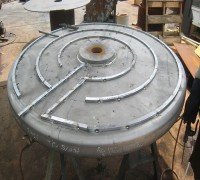
Conventional cooling systems often consume excess energy and extend batch cycle times when processing heat-sensitive pharmaceuticals, food formulations, or regulated chemical compounds. Manufacturers need to use less energy without lowering quality as energy prices go up and environmental rules get stricter.
In response to these challenges, high-performance cooling mixers have advanced significantly. These are designed to manage temperature precisely while reducing energy consumption. Modern jacket technology is changing the way processors handle heat in mixing applications.
How Jacket Technology Controls Temperature in Mixing
Jacketed mixing containers are a reliable technique to keep the temperature exactly where you want it. A jacket is a second layer that goes around the mixing chamber. It enables coolant to circulate and remove heat from the source.
This combined strategy has several benefits:
- Eliminates the need for separate external cooling systems
- Gives you constant, real-time control over the temperature
- Ensures consistent cooling throughout the entire batch cycle
- Improves overall process efficiency
By addressing the limitations of traditional cooling systems, jacket technology improves thermal product consistency.
Horizontal vs Vertical Cooling Mixers
Usually, cooling mixers are built in either a horizontal or vertical layout, depending on what they need to achieve.
Horizontal Jacket Mixers
Horizontal designs are appropriate for situations where heat needs to be removed quickly:
- More surface area for better heat transmission
- Good for reactions that give off heat
- Better cooling for large heat loads
- The cylindrical shape makes the most of thermal exchange.
Vertical Jacket Mixers
Vertical arrangements are beneficial for places that need to save room or make repairs:
- Footprint that saves space
- Cleaning and upkeep are easier to get to
- Perfect for the food, drug, and beauty industries
- Works with systems that use gravity to discharge
Engineering Efficiency: Internal Design Innovations
In addition to configuration, the design of the interior jacket is very important for performance:
Baffled flow systems (horizontal mixers): Prevent coolant short-circuiting and ensure uniform distribution across the vessel surface.
Spiral channel designs (vertical mixers): Reduce pumping energy requirements while improving heat transfer efficiency.
Improved flow paths: Deliver consistent temperature distribution across the entire vessel surface.
These engineering refinements make heat removal more effective while reducing the energy required to achieve it.
Energy Efficiency: Finding the Real Benefit
The initial cost of equipment is vital, but the long-term cost of using energy is even more important.
Modern cooling mixers put temperature control right into the mixing process. This offers many major advantages:
- Removal of separate cooling phases
- Shorter times for each batch cycle
- Prevention of overcooling and associated energy waste
- Lower long-term operating and maintenance costs
Advanced systems are made even better with the help of computational fluid dynamics (CFD). This gives engineers the ability to adjust flow rates, turbulence patterns, and how well heat travels through a system.
For manufacturers running high-volume operations, these efficiencies deliver measurable reductions in cooling time and energy consumption, improving production economics and return on investment.
Reliance Rebuilt Mixers in Texas — A Cost-Effective Performance Solution
Not many companies can afford capital equipment replacement. High-quality reconditioned mixers are a good choice that doesn't impair performance and saves money.
Most of the time, a full rebuilding process includes
- Checking and recertifying pressure vessels
- Jacket integrity testing with repair or replacement as required
- Mixing element reconditioning or upgrading to current design standards
- Seal and bearing replacement
- Control system modernisation for precise temperature management
Environmental Benefits of Rebuilt Equipment
Rebuilt equipment also supports environmental sustainability goals:
- Reduces industrial waste by extending equipment service life
- Decreases demand for new raw materials
- Makes equipment last longer
- Supports circular economy principles in manufacturing operations
But you need to know how to do things well to rebuild. To make sure the system is safe and functions well, effective rebuilding requires technical expertise and rigorous validation, including pressure testing, jacket flow optimisation, and thermal performance certification.
For manufacturers evaluating high-performance cooling mixers with advanced jacket technology, Reliance Mixers offers exactly what you’re looking for. Reliance Cooling Mixers are engineered specifically for temperature-sensitive industrial applications.
Things to Keep in Mind When Choosing a Cooling Mixer
You need to consider what the process needs when you pick the right cooling mixer:
- High heat load applications: horizontal jacket designs provide maximum surface area for rapid heat removal
- Moderate cooling requirements: vertical configurations offer easier access and a smaller footprint
How sensitive the product is
- Temperature-sensitive formulations require precision control systems with jacket flow modulation
- Uniform jacket cooling maintains a consistent temperature throughout.
Limitations of the Facility
- Floor space, ceiling height, and structural load capacity
- Availability of utilities and compatibility with upstream and downstream equipment
Advances in Energy-Efficient Cooling Mixer Technology
Jacket technology keeps getting better, with new features that make it more efficient and good for the environment.
- High-tech materials that improve heat transfer coefficients
- CFD-driven design optimization
- Real-time temperature monitoring systems
- Automated jacket flow control integrated with process monitoring
- Integration with process analytical technology (PAT)
With these new technologies, manufacturers can achieve precise temperature control while reducing energy consumption and environmental impact
Final Thoughts
When it comes to processing that is sensitive to temperature, the question is no longer whether to use jacketed cooling systems, but which setup is optimal for the job.
Effective temperature management is a production-critical requirement across industries handling heat-sensitive materials. Whether choosing a new system or rebuilding existing equipment, the right jacketed cooling mixer configuration, be it horizontal or vertical, directly affects product quality, energy consumption, and long-term operational costs. High Performance Cooling Mixers with advanced jacket technology address all three, delivering the thermal precision and operational efficiency that modern manufacturing demands