Hernia Surgery Recovery Time: What to Expect After Your Procedures
By triage meditech 25-02-2026 135
Hernia surgery is a common and effective treatment used to repair weakened muscle walls where internal tissues or organs protrude. While the procedure itself is usually straightforward, many patients are most concerned about hernia surgery recovery time and how soon they can return to normal life. Recovery varies based on the type of hernia, surgical method, age, and overall health. Understanding the healing timeline and following proper post-operative care can significantly improve outcomes and reduce complications.
This comprehensive guide explains typical recovery periods, factors that influence healing, and practical tips to support a smooth recovery journey.
Understanding Hernia Surgery
Before discussing recovery, it helps to understand what happens during surgery. Hernia repair typically involves repositioning the protruding tissue and strengthening the weakened area with stitches or mesh.
Types of Hernia Surgery
1. Open Hernia Repair
A single incision is made over the hernia site. This approach may require a slightly longer recovery time due to tissue disruption.
2. Laparoscopic Hernia Repair
This minimally invasive technique uses small incisions and a camera. Patients often experience less pain and faster recovery.
3. Robotic-Assisted Repair
A variation of laparoscopic surgery providing enhanced precision, sometimes improving recovery comfort.
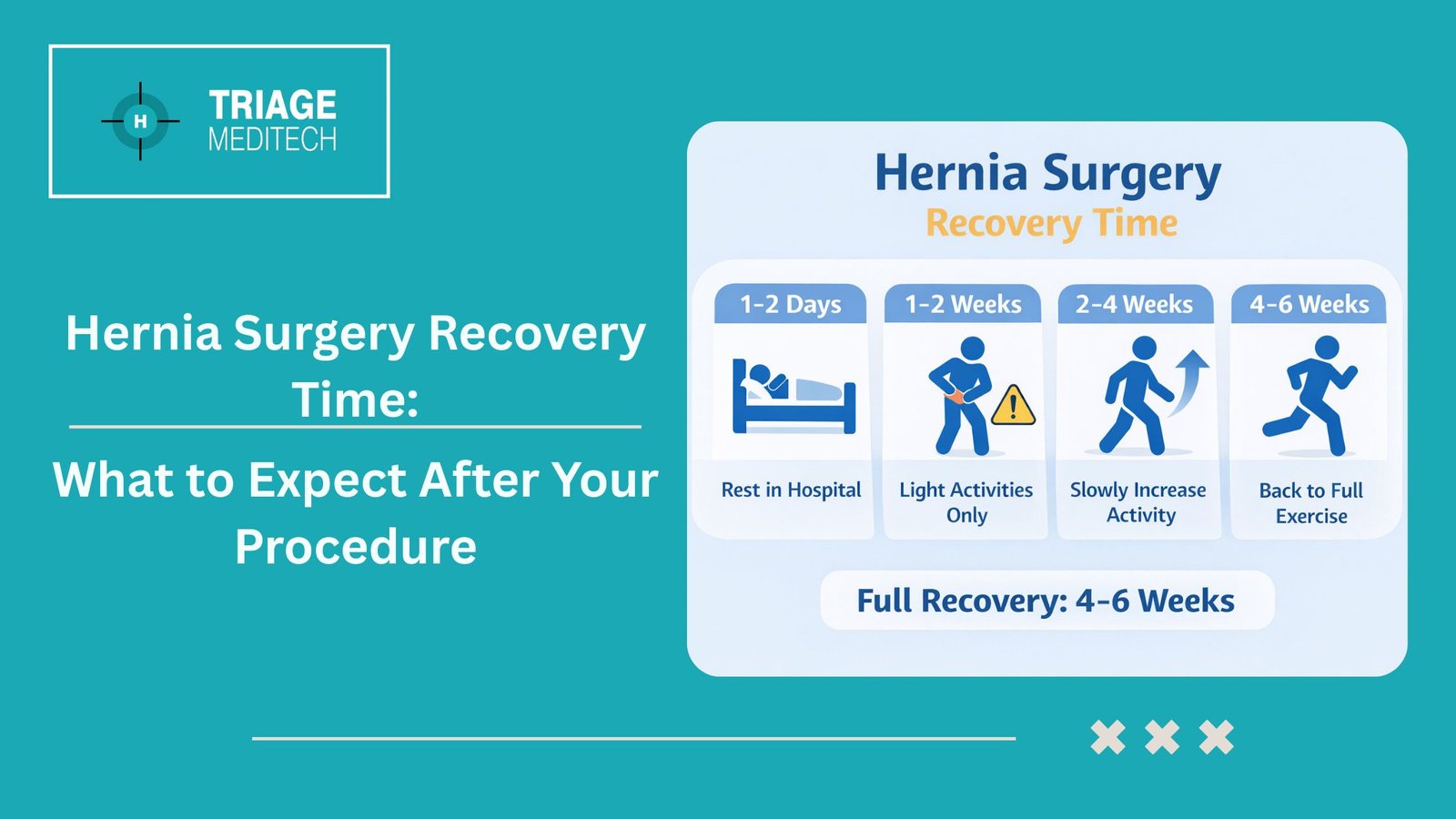
Average Hernia Surgery Recovery Time
Recovery timelines can vary widely, but general expectations include:
Immediate Recovery (First 24–48 Hours)
Mild pain, swelling, and fatigue are common
Patients are encouraged to walk gently
Most laparoscopic patients go home the same day
Short-Term Recovery (1–2 Weeks)
Return to light activities and desk work
Gradual reduction in discomfort
Stitches or dressings may be removed
Intermediate Recovery (3–6 Weeks)
Improved mobility and strength
Light exercise may be allowed
Driving and daily chores become easier
Full Recovery (6–12 Weeks)
Return to heavy lifting and strenuous activities
Tissue healing completes
Normal lifestyle resumes
For many individuals, hernia surgery recovery time averages 2–6 weeks for daily activities and up to 3 months for complete healing.
Factors Affecting Hernia Surgery Recovery Time
Several elements influence how quickly a patient heals.
1. Type and Size of Hernia
Large or complex hernias may require more extensive repair, increasing recovery duration.
2. Surgical Technique
Minimally invasive procedures generally result in faster healing compared to open surgery.
3. Age and General Health
Younger, healthier individuals typically recover more quickly than those with chronic conditions.
4. Weight and Lifestyle
Excess weight, smoking, and sedentary habits can slow tissue repair.
5. Postoperative Care Compliance
Following medical instructions regarding activity restrictions, wound care, and medication greatly affects recovery speed.
Pain and Discomfort During Recovery
Pain levels differ from person to person, but most patients describe discomfort as manageable.
Common Sensations
Tightness at incision site
Mild swelling or bruising
Temporary numbness
Occasional pulling feeling during movement
Pain medication, ice packs, and rest typically control symptoms effectively.
Activity Guidelines After Hernia Surgery
Proper activity progression is essential to prevent recurrence.
Recommended Activities
Gentle walking starting day one
Deep breathing exercises
Light household tasks after one week
Activities to Avoid
Heavy lifting
Intense workouts
Sudden twisting motions
Straining during bowel movements
Your surgeon will provide personalized instructions based on your surgery type.
Diet and Nutrition for Faster Healing
Nutrition plays a crucial role in reducing hernia surgery recovery time.
Healing-Friendly Foods
Protein-rich foods (lentils, eggs, dairy)
Vitamin C sources (citrus fruits, guava)
Zinc-rich foods (nuts, seeds)
Fiber-rich vegetables to prevent constipation
Hydration Importance
Adequate fluid intake helps circulation, digestion, and medication tolerance.
Wound Care Tips
Keeping the surgical site clean and protected prevents infection.
Follow dressing change instructions
Avoid soaking incisions until cleared
Watch for redness, drainage, or fever
Wear loose clothing to reduce irritation
Prompt reporting of unusual symptoms ensures timely intervention.
When to Return to Work
Return-to-work timing depends on job demands.
| Job Type | Typical Return Time |
|---|---|
| Desk work | 1–2 weeks |
| Moderate activity | 2–4 weeks |
| Heavy physical labor | 6–12 weeks |
Always seek clearance from your surgeon before resuming physically demanding tasks.
Warning Signs During Recovery
Although complications are uncommon, patients should seek medical advice if they notice:
Persistent fever
Increasing pain
Excessive swelling
Pus or foul odor from incision
Nausea or vomiting
Bulging at surgical site
Early evaluation helps prevent serious issues.
Tips to Speed Up Hernia Surgery Recovery Time
Practical Recovery Strategies
Follow lifting restrictions strictly
Maintain a healthy diet
Stay hydrated
Use abdominal support garments if recommended
Manage coughing with support pillow
Attend follow-up appointments
Consistency in these practices supports safe healing.
Psychological Recovery and Lifestyle Adjustment
Recovery is not only physical. Temporary activity limitations can cause frustration. Staying mentally prepared, maintaining realistic expectations, and engaging in light daily routines can improve overall well-being during healing.
Many patients find that gradual improvements each week help build confidence and motivation.
Conclusion
Understanding hernia surgery recovery time allows patients to prepare realistically and participate actively in their healing process. While most individuals resume daily activities within a few weeks, complete recovery can take several months depending on surgical technique, personal health, and adherence to postoperative care.
Prioritizing rest, proper nutrition, gentle activity, and wound care significantly enhances recovery outcomes. With appropriate medical guidance and patience, most patients achieve excellent long-term results and return to normal life comfortably.