Hepatocyte Cells: Structure, Function, and Applications in Liver Research
By Kosheeka Primary Cells for Research 22-07-2026 111
Introduction
The liver is one of the hardest-working organs in the body and is involved in metabolic functions. It aids in digestion, metabolism, filtration, toxin elimination, synthesis of essential proteins, and energy storage. The liver is also a key organ responsible for the fate of drugs inside the body. Behind these vital processes are hepatocyte cells, primary functional cells that make up most of the liver. In fact, hepatocyte cells are responsible for undertaking key biological functions of the liver.
Researchers rely on Hepatocyte Cells to understand liver diseases, evaluate drug safety, metabolic disorders investigation, etc. As laboratory models continue to evolve, hepatocytes remain at the heart of efforts to improve both liver research and clinical care.
What Are Hepatocyte Cells?
Hepatocyte cells are considered the key functional cells of the liver. They make up >80% of the organ's mass. The cells are commonly known as Liver Parenchymal Cells, meaning they perform the liver's core physiological functions. Other liver cells, including Kupffer cells, hepatic stellate cells, and liver sinusoidal endothelial cells, support the organ's structure and immune functions. However, hepatocytes handle most of the liver's day-to-day work. The key features of the cells include:
Morphology: Polygonal shape
Key organelles: Abundant mitochondria, endoplasmic reticulum (ER), lysosomes
Function: Nutrient processing, protein production, toxin metabolism, and maintaining the body's metabolic balance.
Other features: Hepatocytes actively interact with both blood and bile. Hepatocytes face one side toward liver sinusoids (the side where nutrients and other molecules are exchanged with the bloodstream). In contrast, the other side forms tiny channels (bile canaliculi that transport bile. This specialised organisation enables hepatocytes to perform multiple functions simultaneously with remarkable efficiency.
Hepatocytes Histology: Morphological Details
Hepatocyte histology is crucial to understanding its efficient function. A microscopic view of the hepatocytes appears as large polygonal cells with round nuclei and abundant cytoplasm. Many hepatocyte cells contain two nuclei. This reflects the liver's extraordinary capacity for growth and regeneration.
Within the liver, hepatocytes are arranged in thin plates known as hepatic cords. These cords extend outward from the central vein and are separated by liver sinusoids—specialised blood vessels that continuously deliver oxygen, nutrients, hormones, and other circulating substances.
The proximity between hepatocytes and blood facilitates rapid molecular exchange. It enables nutritional exchange once they enter the liver. At the same time, adjacent hepatocytes form bile canaliculi, microscopic channels that collect bile before it flows into the bile ducts. The highly organised architecture forms the anatomical features of the hepatocytes that aid in metabolism, detoxification and bile secretion. This facilitates constant cellular communication with the body.
Hepatocyte Function: Keeping the Body in Balance
Hepatocytes are primary cells that make up the liver. The key Hepatocyte Functions include:
Energy regulation or metabolism: With dietary intake, hepatocytes convert excess glucose into glycogen for storage. During fasting, they break glycogen back down into glucose, helping maintain normal blood sugar levels.
Fat metabolism: Hepatocytes synthesise cholesterol, lipoproteins, and fatty acids while also breaking down fats to meet the body's energy demands
Protein metabolism: Hepatocytes enable albumin production, an abundant protein in blood plasma. It also regulates clotting factors and several transport proteins that are essential for normal physiological function.
Detoxification: Hepatocytes detoxify the body by processing and eliminating medications, environmental chemicals, alcohol, and waste material. They consist of enzyme systems, including the cytochrome P450 family, that convert harmful compounds into waste and eliminate them from the body.
Bile Production: Aid in the production of digestive fluid (bile) that helps emulsify fats and supports the absorption of fat-soluble vitamins.
Hepatocyte Cell Culture: Role in Modern Research
Hepatocyte Cell Culture in the laboratory plays a significant role in advanced liver research. Cultured hepatocytes provide researchers with a controlled environment to study liver biology, evaluate new drug candidates, and investigate the mechanisms behind liver diseases.
Primary hepatocytes: Isolated directly from human liver, they remain one of the physiologically relevant models. These cells mimic the physiological condition of the liver. The cells are widely used in drug metabolism, hepatotoxicity, viral infections, and liver function.
However, primary hepatocytes incur certain challenges. They have a limited lifespan and gradually lose their specialised function with passage. The cells reach senescence quickly. To combat such challenges, researchers widely use hepatocyte cell lines. The key advantages of using hepatocyte cell lines include their lower complexity in the laboratory, making them suitable for high-throughput screening of drug candidates, large-scale production, and maintaining some of their specialised functions over time. For this reason, researchers often use immortalised hepatic cell lines for long-term experiments, although these models may not fully replicate the behaviour of normal liver cells.
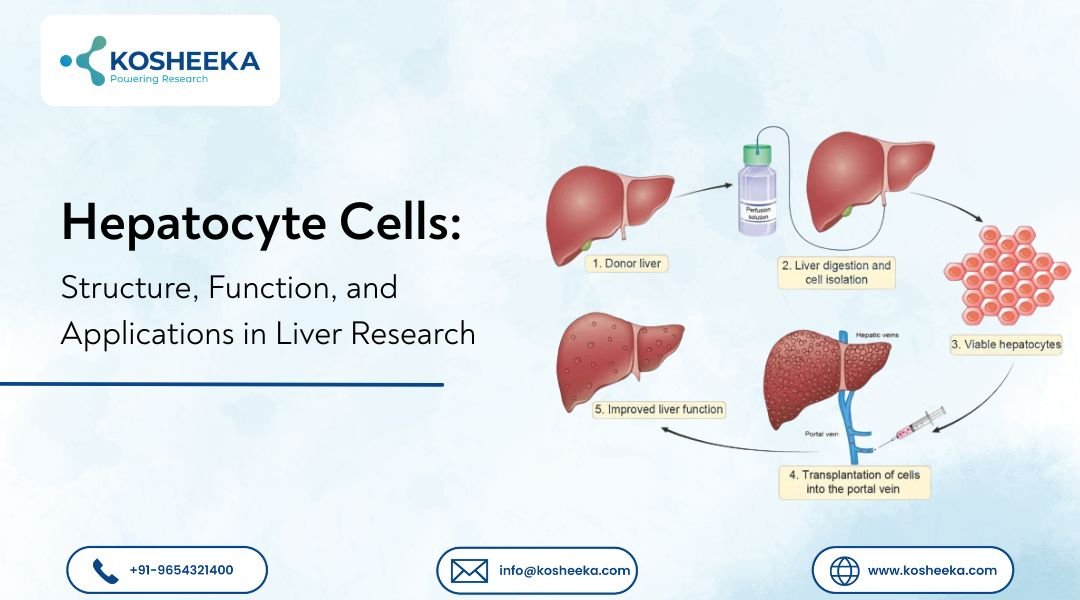
Recent developments have led to sophisticated culture systems, such as 3-D spheroids, liver organoids, and liver-on-a-chip platforms. Currently, hepatocyte-based models are widely used in drug development, chemical safety testing, disease modelling, regenerative medicine, and precision medicine for the development of advanced therapeutic applications
Future Perspective
With a growing body of liver research, scientists are working to develop laboratory models that more closely resemble the complexity of the human liver. Advances in stem cell technology, tissue engineering, and biofabrication are helping overcome many of the limitations associated with traditional hepatocyte cultures. Such innovations are opening up new possibilities to study liver disorders, predict drug responses, and develop personalized medicine.
Conclusion
Hepatocytes are the most abundant liver cells that regulate metabolism and produce vital proteins in the body. They detoxify harmful compounds and support digestion. Liver parenchymal cells facilitate various physiological processes to run smoothly. Hepatocyte cell culture enables researchers to thoroughly investigate drug discovery, understanding liver diseases, and advancing regenerative medicine.