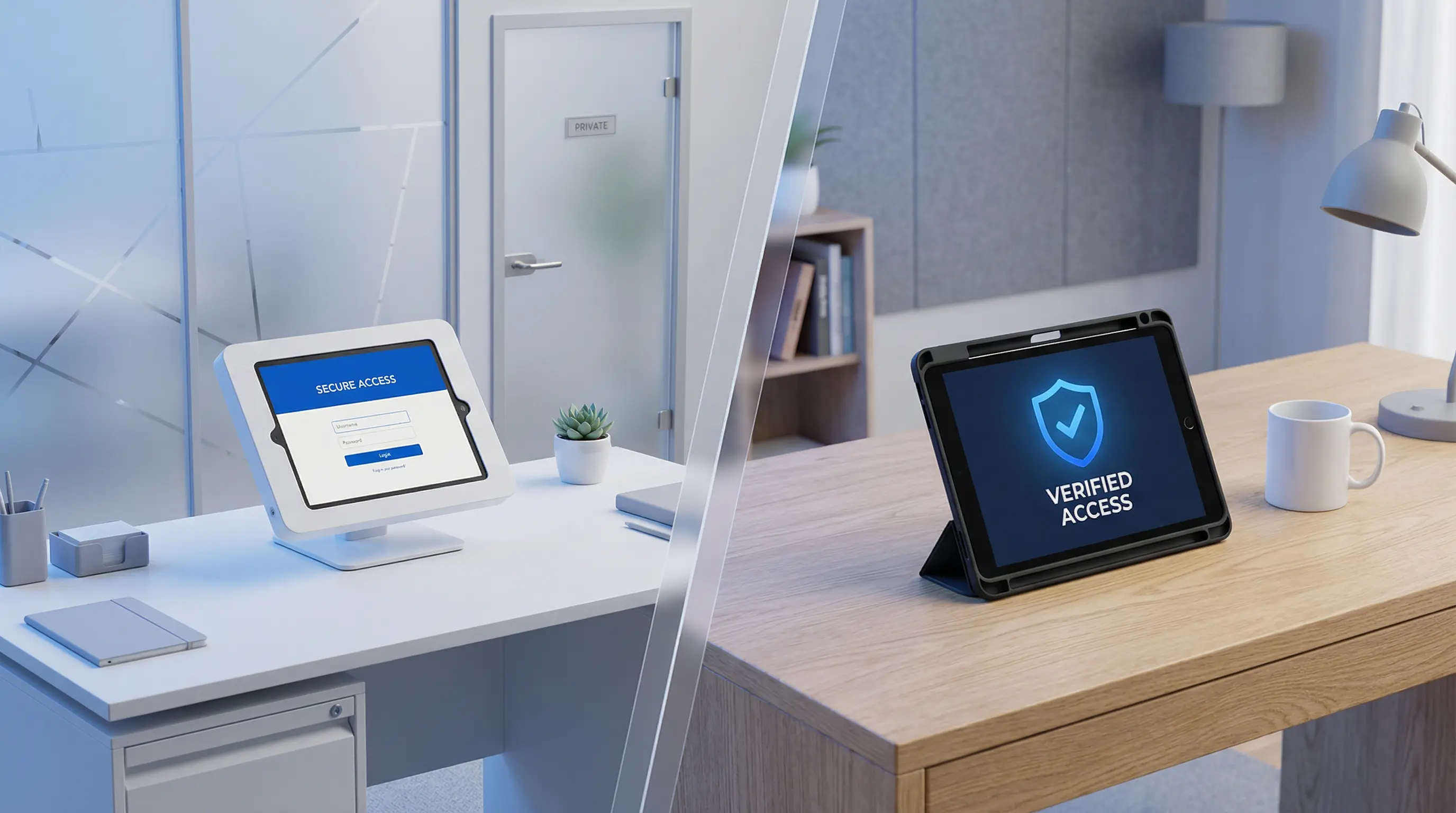
Traditional IAL3 verification calls for physical sessions between an agent and the employee in a secure location, but for modern companies with remote-first cultures this model can become unsustainable and present logistical difficulties.
Trust Swiftly's IAL3 compliant solution solves this challenge by offering remote identity proofing under supervision. We verify a person's claim through secure document (including thousands of global documents), biometric, and dynamic knowledge-based authentication mechanisms.
Verification
NIST has established three levels of identity verification, known as Identity Assurance Level 3 or IAL3, to provide maximum assurance that claimed digital identities match up with those who present them. Proofing at this level must include stringent direct oversight, superior evidence such as government documents validated from authoritative sources and multi-factor authentication with mandatory biometric comparison.
TrustSwiftly IAL3 allows you to establish a self-service kiosk app with document validation, biometrics and dynamic knowledge-based authentication that meets FedRAMP High requirements. It supports various capture modalities including dual iris capture, facial recognition with liveness detection and various fingerprint methods.
At IAL3, our turnkey kit ensures that an authenticator or verifier, such as a YubiKey or biometric profile, is securely associated with each verified identity immediately following an IAL3 session - thus eliminating stand-in fraud where one person gains access with someone else's credentials. Furthermore, it can easily be customized before being shipped back for analysis by your security team and 3PAO auditor as proof of compliance with IAL3.
Identity Proofing
IAL3 identity proofing is the process of verifying digital identities to the real world, usually performed prior or alongside authentication for various purposes such as fraud protection and meeting compliance requirements. Typically it entails various NIST IAL3 verification steps ranging from data sources and documents to biometrics that can be applied at different levels depending on business needs and risk assessments.
Identity proofing can help reduce unauthorized access and fraud that could cost organizations significant financial losses. By offering greater assurance that a claimed digital identity belongs to who it claims it does, identity proofing offers organizations peace of mind against threats found across online platforms.
By leveraging advanced, user-centric technology, trusted identity solutions can minimize the hassle associated with IAL3 verification processes and provide an effortless experience for end users. Face authentication technology, for instance, can help to verify a person's claimed identity by comparing their physical features against an image captured of themselves on the device.
Compliance
In high-risk environments such as healthcare or data access control systems, IAL3 security offers the maximum level of protection. This requires in-person or remote verification of identity evidence and physical biometric comparison. This level's stringency helps prevent fraud and unlawful access while simultaneously safeguarding users' privacy.
Compliance with NIST 800-63A IAL3 requires robust proofing and enrollment processes that balance security, usability, and user trust. Such processes must use advanced document inspection techniques such as facial recognition with liveness detection to confirm claimed identities in real-world settings while providing continuous risk monitoring to safeguard against phishing attacks or other sophisticated threats.
Selecting an identity verification solution that aligns with FedRAMP High implementation is of utmost importance for successful security controls and unauthorised access. Leading IAL3 compliant solution offer advanced document inspection, biometric comparison, and rigorous verification processes that help meet NIST 800-63A IAL3 requirements.
Tags : NIST IAL3 solution identity proofing