Halal Meat: Certification, Traceability, and Changing Consumer Preferences Shape Global Demand
By kyle 12-10-2026 4
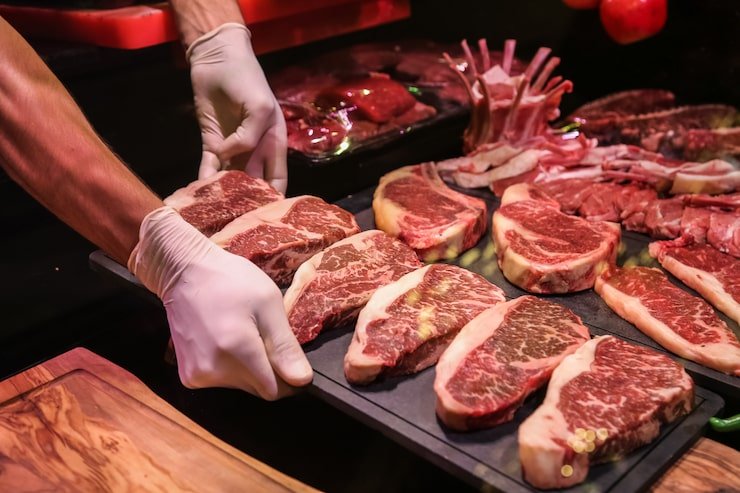
Halal meat is becoming an increasingly important part of the global food supply chain, supported by the expansion of halal food retail infrastructure, international trade, and consumer awareness beyond predominantly Muslim markets. Demand is also evolving toward premium products such as organic halal meat, free-range poultry, and ready-to-eat offerings, reflecting broader preferences for quality, convenience, and sustainable food choices.
According to the study published by Markntel Advisor, the Global Halal Meat Industry is expected to develop during 2025–2030, with Asia-Pacific identified as the leading region and poultry as the leading meat type. Supermarkets and hypermarkets also represent the leading distribution channel, supported by broad accessibility and established relationships with certified suppliers.
Islamic Dietary Practices Remain a Core Demand Driver
Adherence to Islamic dietary requirements remains a fundamental factor supporting halal meat consumption. Halal meat must comply with specific requirements concerning slaughtering, preparation, cleanliness, and prohibited ingredients.
The expanding Muslim population is contributing to demand across established halal-consuming countries while also supporting greater availability in international markets. Government authorities and certification bodies are developing regulatory frameworks and certification systems to improve product authenticity and consumer confidence.
Poultry Leads Meat-Type Demand
Poultry represents the leading meat type in the global halal meat landscape. Its broad availability, affordability, shorter production cycle, and acceptance across diverse consumer groups support its strong position.
The growing popularity of value-added poultry products is also creating additional opportunities. Marinated, ready-to-cook, and other convenient poultry formats can address consumer demand for easier meal preparation while retaining halal certification requirements.
Supermarkets and Hypermarkets Strengthen Accessibility
Supermarkets and hypermarkets account for the leading distribution position, supported by extensive food selections and established supply networks. These retail formats provide consumers with convenient access to certified halal meat while allowing retailers to offer fresh, processed, frozen, and preserved products.
Strong relationships between major retailers and certified suppliers can also help maintain product availability and support consumer confidence regarding halal authenticity.
Premium Products Expand Consumer Choices
Consumer preferences are moving beyond basic halal compliance toward higher-quality and more specialized products. Organic halal meat, free-range poultry, and ready-to-eat halal meals are emerging alongside conventional offerings.
This shift reflects broader interest in healthier, convenient, and more sustainable food choices. For producers, it creates opportunities to differentiate products through sourcing, processing methods, packaging, and certification while maintaining compliance with halal requirements.
Traceability Technology Improves Transparency
Digital traceability is becoming an important trend within the halal meat supply chain. Blockchain and artificial intelligence can help record and analyze information across production and distribution stages, offering greater visibility than traditional paper-based systems.
Traceability solutions can support verification of halal processes, improve supply-chain transparency, and provide consumers and businesses with additional information about product authenticity. The report identifies companies including HalalTrace, Masverse, Scantrust, Intertek Group, and Halal Logistics as providers of traceability-related solutions.
Asia-Pacific Maintains a Leading Position
Asia-Pacific represents the leading regional market for halal meat, supported by its large Muslim population and established halal production and consumption networks. Indonesia and Pakistan are identified among the region's major halal meat-consuming countries, while Malaysia has developed an important role as a halal processing and certification hub.
Certified halal industrial parks and established certification systems are helping support processing, supply-chain management, and international trade across the region.
Certification Challenges Affect International Trade
Different certification requirements across countries remain a significant challenge for international halal meat suppliers. Variations in recognized certification bodies, labeling rules, and slaughter regulations can increase compliance requirements and complicate cross-border trade.
The GCC, for example, requires meat exporters to obtain certification from its recognized accreditation framework, while differences in ritual-slaughter regulations across European countries can create additional operational complexity.
Expanding Applications Support Diversification
Halal meat is available across fresh, processed, frozen, and canned or preserved formats, serving households, foodservice businesses, and institutional buyers. This broad application base allows producers to serve different consumption occasions and distribution models.
Online retail is also becoming part of the distribution landscape, giving consumers additional access to certified products alongside butcher shops, specialty stores, convenience stores, and modern grocery retailers.
Conclusion
The global halal meat landscape is evolving through changing consumer preferences, stronger certification systems, premium product development, and greater use of digital traceability. Poultry, modern retail, and Asia-Pacific remain important components of the industry, while demand is increasingly extending into convenient and higher-quality product formats.
Future development will depend on how producers, certification authorities, retailers, and technology providers address supply-chain transparency, regulatory differences, operational efficiency, and consumer expectations while maintaining the integrity of halal standards.
Tags : Halal Meat


















