In today’s construction world, sustainability is no longer a buzzword—it’s a requirement. Governments are setting aggressive emissions targets, developers are prioritizing green certifications, and clients are demanding cleaner, more responsible building practices.
Yet, while much of the focus in green construction has been on materials, energy-efficient designs, and waste reduction, there's one area that often gets overlooked: the machines we use to build. Elevating Work Platforms (EWPs), used in nearly every phase of construction—from façade installation to electrical work—are traditionally powered by diesel, manually operated, and prone to inefficiencies.
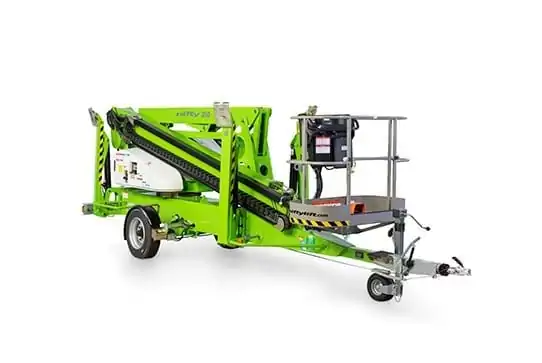
But now, the emergence of Self-Driving EWPs is rewriting that narrative. These intelligent, electric-powered platforms are not just transforming how work is done at height—they’re playing a vital role in reducing the carbon footprint of construction sites around the world.
The Shift Toward Smarter, Greener Machines
Traditional EWPs are functional but flawed when viewed through a sustainability lens. They rely heavily on fossil fuels, require constant operator oversight, and often sit idling for hours between tasks—burning fuel, generating emissions, and wasting energy.
By contrast, Self-Driving EWPs are built with efficiency at their core. These machines are equipped with electric motors, advanced sensors, AI-driven navigation, and remote monitoring capabilities. They can move across job sites autonomously, avoid obstacles, and position themselves precisely without the need for manual control.
But their benefits go far beyond convenience and labor savings. These machines are changing the game when it comes to eco-friendly construction.
Quiet, Clean, and Electric
Perhaps the most obvious environmental advantage of self-driving EWPs is their electric drivetrain. By eliminating the need for diesel or gas, these machines operate with zero on-site emissions. This is especially important in enclosed or urban job sites where air quality regulations are strict.
The electric power also makes these platforms significantly quieter than their traditional counterparts. That may seem like a small detail, but noise pollution is a growing concern on urban construction sites—and quieter operations lead to fewer disturbances and a better working environment.
Best of all, when these electric lifts are charged using renewable energy sources—such as solar charging stations—their entire operation can be nearly carbon-neutral.
No More Wasted Energy
On most job sites, machinery spends a lot of time doing nothing. Whether it’s waiting for the next task, being repositioned, or simply idling while the crew takes a break, traditional lifts often run longer than they need to.
Self-driving EWPs eliminate this waste by working only when needed. Thanks to built-in scheduling tools and autonomous movement, these machines can be programmed to perform tasks at specific times, move directly to their next location, and even power down automatically when idle.
This efficient use of energy translates into significantly lower overall power consumption, helping construction firms reduce both their operating costs and their carbon output.
Smarter Use Through Data
Another powerful feature of self-driving EWPs is their ability to collect and report data. These machines monitor their own battery levels, location, usage patterns, and maintenance needs—sending this information in real-time to project managers.
This allows companies to:
- * Avoid unnecessary equipment usage
- * Identify underutilized machines
- * Schedule maintenance more accurately
- * Reduce downtime and inefficiencies
From a sustainability perspective, this means less waste, fewer backup machines, and smarter, leaner operations. Over time, this data-driven approach leads to a measurable decrease in both emissions and environmental impact.
Less Movement, Fewer Emissions
Because they’re autonomous, Self-Driving EWPs reduce the need for workers to constantly reposition or transport equipment. This lowers the number of support vehicles needed on-site—everything from forklifts to transport trucks.
In many projects, this also reduces the number of personnel commuting to the site just to operate or manage equipment. Fewer people, fewer vehicles, fewer emissions.
And let’s not forget about the long-term effect: when machinery is used more efficiently and breaks down less often, the need to manufacture, ship, or replace units also goes down. That’s a significant environmental win when scaled across large fleets or multiple job sites.
Built to Last, Designed to Reuse
Some manufacturers of self-driving EWPs are now designing their machines with modular components. These parts can be easily removed, repaired, upgraded, or even recycled—further reducing waste and the environmental burden of manufacturing.
Unlike older machines that may be scrapped entirely after failure, these modular EWPs are built with the circular economy in mind. This means less raw material extraction, lower emissions from manufacturing, and a longer overall lifespan.
A Real-World Example: Green in Action
On a sustainable office complex project in Melbourne, a construction company deployed a fleet of 10 self-driving, electric scissor lifts to support high-access tasks.
Instead of using diesel lifts, the electric models were powered by solar-charged batteries. The lifts navigated autonomously around the site, repositioned themselves between tasks, and reported usage statistics back to a centralized dashboard.
The results were impressive:
Project-wide CO₂ emissions dropped by 25%
Energy usage decreased by 30% compared to previous similar builds
The project was completed 12% faster, thanks to fewer delays related to equipment movement or failure
For the project manager, the benefits weren’t just environmental. The data collected by the EWPs also improved planning accuracy, helped reduce labor costs, and contributed to the project's successful green building certification.
The Road Ahead: Smart Equipment, Smart Planet
As climate regulations tighten and green standards become the norm, the use of Self-Driving EWPs will likely shift from novelty to necessity. Construction firms that adopt these machines now will be better prepared for future demands, both from governments and clients.
Beyond that, they’ll be part of a larger movement—one that doesn’t just build structures, but builds a better future.
The technology is already here. The benefits are clear. The only question is: are you ready to make the switch?
Final Thoughts
Green construction is no longer a luxury or a niche—it’s the future of the industry. And Self-Driving EWPs are one of the most effective tools available for reducing emissions, lowering energy consumption, and building smarter.
By investing in autonomous, electric platforms, construction companies can align with global sustainability goals, improve project performance, and lead the way in environmental innovation.
Because in the end, building the future shouldn't come at the expense of the planet