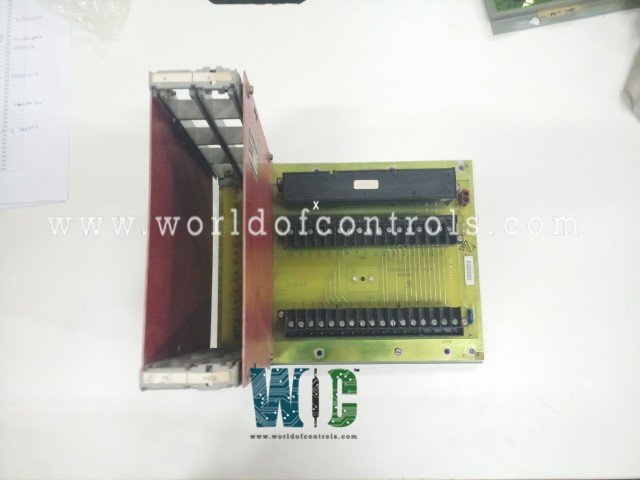
In the world of industrial turbine control, reliability and precision are non-negotiable. That’s why systems like the GE Mark IV Speedtronic control platform have earned a reputation for dependability in gas and steam turbine applications. Among its many components, one piece plays a quiet but crucial role — the backplane card.
This article breaks down what a backplane card is, its function within the GE Mark IV system, and why understanding it is essential for turbine operators and maintenance teams.
What Is a Backplane Card?
A backplane card is essentially the central board within a control system that allows other electronic modules or cards to plug into it. Think of it as a central hub that distributes power, signals, and data between all connected components.
Instead of connecting each module directly to every other module (which would be messy and inefficient), everything connects through the backplane. This streamlined architecture helps keep systems modular, organized, and easier to maintain or upgrade.
An Overview of the GE Mark IV Control System
The GE Mark IV Speedtronic system was developed in the 1980s as a digital control platform for gas and steam turbines. It introduced several improvements over its analog predecessors, including:
Triple-redundant logic for enhanced reliability
Digital diagnostics and better fault detection
Modular design, making component replacement more efficient
At the heart of this modular design is the control cabinet, which houses various plug-in circuit boards responsible for control logic, input/output (I/O), and communication. All of these modules connect through the backplane card.
Why the Backplane Card Matters
Although it doesn’t perform processing tasks on its own, the backplane card plays several critical roles:
1. Signal Routing
It provides communication pathways between the processor boards, I/O modules, and memory. This allows the system to gather data from turbine sensors and execute control commands.
2. Power Distribution
The backplane supplies power from the system’s power module to the individual boards plugged into it.
3. Structural Support
It also serves as a mechanical backbone, holding multiple boards securely in place within the control rack.
4. System Reliability
Because all communication flows through the backplane, its quality and condition directly impact the system’s overall performance.
How It Fits Into Turbine Control
In a GE Mark IV setup, the backplane card acts like an internal communication highway for the entire system. Data from turbine sensors — like temperature, pressure, and speed — enters the system through I/O modules. That data is then passed through the backplane to the control logic boards, where decisions are made based on programmed logic.
The results (e.g., adjusting fuel flow or activating alarms) are then passed back through the backplane to actuators and output devices. This continuous loop of real-time data processing is essential for safe and efficient turbine operation.
Maintenance and Replacement Considerations
Given the age of many GE Mark IV systems still in service today, maintenance of internal components like the backplane card becomes critical.
Operators should monitor for:
Loose connections or corrosion on connectors
Signal degradation, which can affect communication
Physical damage from heat or vibration
Wear over time, especially in high-demand environments
When issues arise, replacing or refurbishing the backplane is often more cost-effective than upgrading the entire control system — especially since many legacy-compatible components remain available through specialized suppliers.
- Conclusion
While often hidden behind the scenes, the backplane card is a foundational element of the GE Mark IV control system. It enables seamless interaction between modules, ensures stable power delivery, and plays a major role in maintaining the overall health of the turbine control environment.
By understanding the function and importance of the backplane, turbine operators can better maintain their systems, plan for future upgrades, and avoid unexpected downtimes — all while getting the most out of a proven legacy platform like the GE Mark IV.
Tags : DS3800XCJB Backplane Card