Gemma runs a mobile dog grooming van around Sunderland. Six days a week, sometimes seven in the run up to Christmas when everyone wants their spaniel looking smart for the photos.
On her fridge there was a calendar. Four dates are circled in red biro. The 3rd for the credit card. The 12th for a store card she opened years ago for a sofa. The 18th for the van finance. And the 26th, which was really just the day her overdraft swallowed whatever survived the other three.
She wasn't reckless. She wasn't behind, not badly. She was simply tired of a month that had four cliff edges in it instead of one.
That feeling, more than any number on a credit file, is what pushes most people to look into a debt consolidation loan for bad credit.
What Actually Happens When Debts Stack Up?
Debt rarely arrives all at once. It arrives politely, in instalments, over about three years.
A card here. A finance agreement there. A boiler that packs in during the coldest week of February.
1. The Hidden Cost of Juggling Payment Dates
The interest gets the headlines. The admin quietly does the damage. Here is what juggling several agreements actually costs people:
• Missed payment fees when a date slips by two days
• Higher interest on cards where the minimum payment barely dents the balance
• Overdraft charges that appear in the gap between payday and the last direct debit
• Time spent checking balances, moving money about, and worrying at eleven at night
Gemma worked out she was paying roughly £41 a month in fees alone. Not interest. Fees. Money that bought her nothing.
2. Why Poor Credit Happens to Sensible People
There is a stubborn myth that a low score means someone has been careless with money.
The reality tends to be duller and far more human.
• Self-employed income that dips in a quiet quarter
• A relationship ending, and a joint account ending with it
• Illness, reduced hours, statutory sick pay that doesn't stretch
• One forgotten mobile contract from a house move in 2019
Any of those can leave marks on a credit file. None of them make somebody a bad borrower.
3. The Moment Most People Start Looking for Options
It is almost never a dramatic moment. It is usually a small one.
For Gemma it was standing in a supermarket aisle, doing sums on her phone to work out whether she could afford the shop before the 12th.
She got home, sat down, and started reading about bad credit consolidation borrowing properly for the first time.
How Does a Debt Consolidation Loan for Bad Credit Work in Practice?
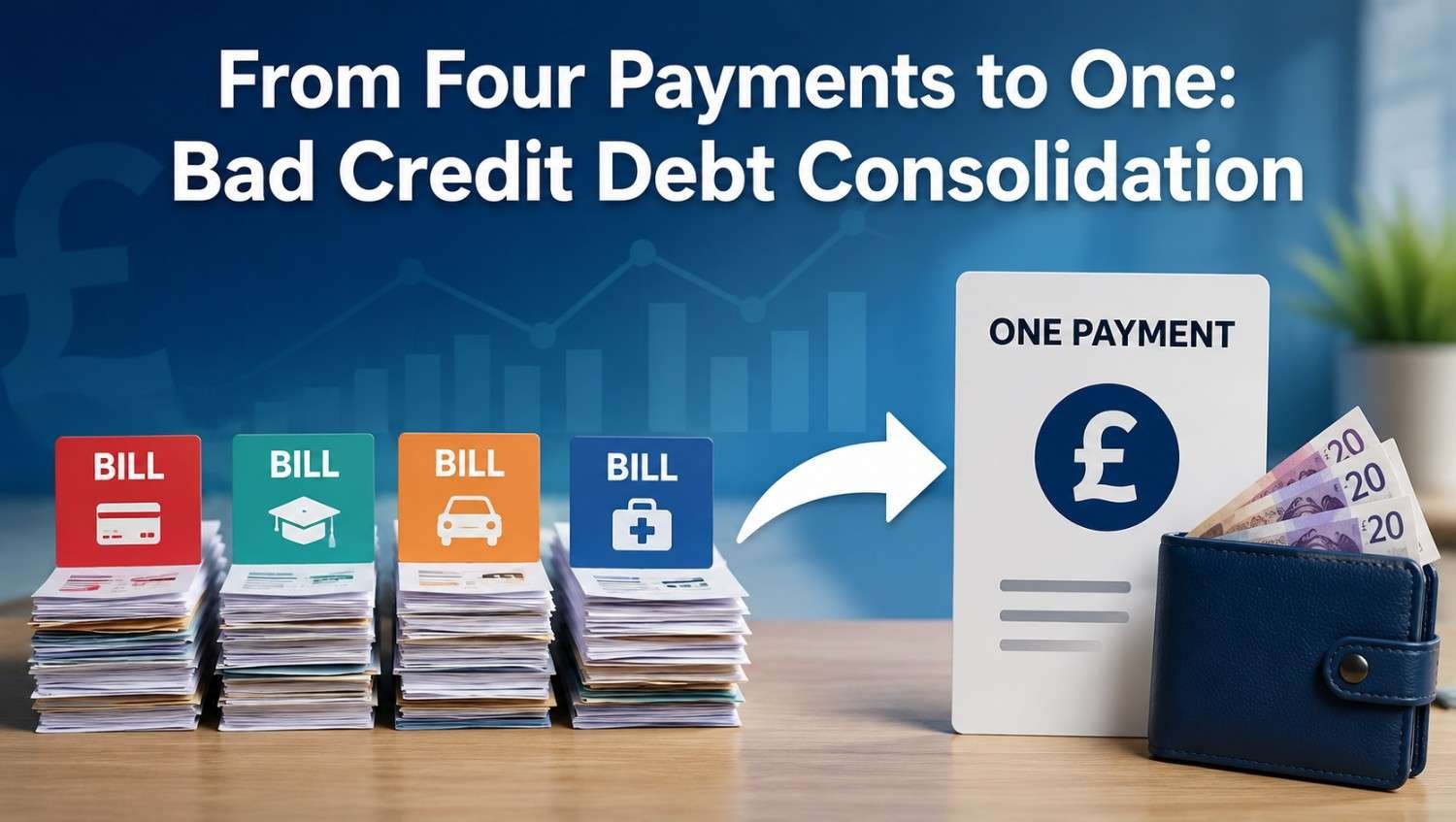
The idea is simple enough that it almost sounds too easy. You borrow one sum, clear the individual balances with it, and repay a single amount each month.
One date. One figure. One end point you can actually see.
Lenders such as AnnuityLoans work with applicants whose credit history is imperfect, which is why a debt consolidation loan for bad credit exists at all for people the high street tends to turn away.
1. The Application Journey, Step by Step
Most applications follow a similar shape.
• You submit income, employment details and a rough total of what you owe
• A soft search runs first, which does not leave a footprint on your file
• You receive a quotation showing amount, rate and term before committing
• If you accept, funds either reach your account or go straight to creditors
That soft search stage matters more than people realise. It lets you see real numbers without adding another hard check to a file that has already had a few.
2. What Lenders Weigh Up Besides the Score?
A credit score is a summary, not a verdict. Responsible lenders look wider.
• Current income and how steady it has been
• Existing commitments and what is left after they are paid
• Recent conduct, meaning the last six to twelve months rather than 2019
• Whether the new payment genuinely leaves you better off
Affordability is the part that decides it. A lender who approves a payment you cannot sustain has helped nobody.
3. The Sums Worth Running Before You Sign Anything
This is where consolidating debt with poor credit either works brilliantly or quietly costs you more.
Ask three questions:
• What is the total repayable, not just the monthly figure?
• How long is the term compared with how long your current debts would take?
• Are there early settlement charges if things pick up and you want to clear it sooner?
A longer term almost always lowers the monthly payment. It can also raise what you hand over across the whole agreement.
Gemma's arithmetic came out well. Her four payments totalled £487 a month. The single loan came to £352, with a defined finish date in month 36. But she checked the total first, and she checked it twice.
Making the Loan Work Once the Money Lands!
Getting approved is the easy half. What happens in the following twelve weeks decides whether the whole thing was worth it.
1. Closing the Doors You Have Just Paid Off
The cleared credit card is the trap. It sits there, balance zero, looking like a safety net.
Within six months it often looks like a second debt sitting on top of the first.
• Cut up the plastic or freeze the card, literally, in a tub of water if that helps
• Ask the provider to reduce the limit rather than cancelling everything at once
• Keep the oldest account open with a small managed balance, since account age supports your file
• Set one card aside for genuine emergencies only, and define what an emergency is
Gemma kept one card. She defined an emergency as the van and nothing else. That rule held.
2. Rebuilding Your Credit File, Month by Month
Consistency does the work here. Nothing flashy.
• Set the repayment to leave your account the day after payday
• Check your statutory credit report and correct anything that looks wrong
• Keep card balances under roughly a third of the limit where you can
• Register on the electoral roll if you have moved recently
Improvement shows up gradually. Six months of clean payments looks considerably better than six months of nothing at all.
3. When Is Free Debt Advice the Better Route?
Borrowing is not always the answer, and any honest article should say so plainly.
If repayments are already unaffordable, or you are missing essentials to cover them, speak to a free service before applying anywhere.
• StepChange offers free debt advice and managed repayment plans
• MoneyHelper provides impartial guidance backed by government
• Citizens Advice can help with creditor negotiation locally
None of them charge. All of them will tell you honestly if consolidation is the wrong move for your circumstances.
Where Did Gemma Get To?
Eighteen months on, the fridge calendar has one date circled instead of four. She still works six days. The van still needs a new clutch at some point. Money has not become effortless.
But the eleven at night arithmetic has stopped, and that turned out to be the thing she actually wanted back.
A debt consolidation loan for bad credit does not erase what you owe. It reshapes how you carry it, and for plenty of people that shift is enough to get moving again.
Run your own numbers. Compare the total, not the headline. And if the sums do not work, ask for free advice before you sign anything.