From Desalination to Smart Irrigation: How Pumps Support the UAE’s Water Priorities
By Adam Williamson 10-08-2026 166
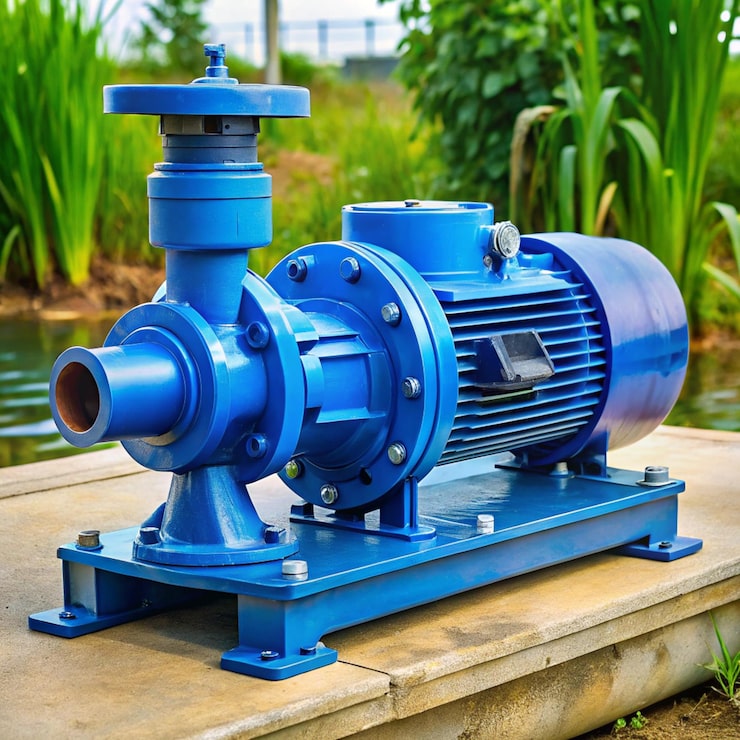
Spain’s water infrastructure depends on pumping equipment across irrigation, municipal water services, wastewater treatment, buildings, industrial facilities, and energy applications. As water management becomes more technically demanding, pump selection is increasingly connected with efficiency, reliability, digital monitoring, and precise flow control. Modern systems must move water effectively while helping operators manage resources, reduce operational disruption, and maintain dependable performance across different applications.
According to a Vyansa Intelligence report, Spain’s water pump sector was valued at USD 1.01 billion in 2025 and is projected to reach USD 1.16 billion by 2032, representing a 2% CAGR during 2026–2032. The Spain water pump market analysis connects this progression with agricultural requirements, municipal water infrastructure, digital water management, and renewable-energy applications.
Irrigation Places Pump Performance at the Heart of Water Management
Agriculture creates demanding operating conditions for pumping equipment because irrigation systems must transfer and distribute water reliably across varied locations. Pumps used in these environments need to balance flow requirements, operating efficiency, durability, and compatibility with wider irrigation infrastructure. These considerations make pumping technology an important part of efforts to manage water more effectively.
In this report, agricultural requirements are identified as an important driver for pumping solutions in Spain. Equipment capable of supporting irrigation networks efficiently can become increasingly relevant as water availability requires careful management. Rather than considering pumps as isolated mechanical components, operators can assess how they contribute to the performance of the complete water-distribution system.
Ageing Networks Turn Replacement Into an Operational Priority
Existing water and wastewater infrastructure creates another important consideration for pump suppliers and operators. Older systems can face reliability challenges and require equipment replacement, refurbishment, or integration with newer technologies. Pumping equipment therefore plays a role not only in new infrastructure but also in maintaining and modernising established networks.
The latest market analysis highlights ageing infrastructure as a continuing challenge for Spain’s water sector. Modernisation provides an opportunity to examine pump efficiency, system compatibility, maintenance requirements, and monitoring capabilities together. Selecting equipment based on whole-system performance can help infrastructure operators address operational weaknesses without treating individual components independently.
Digital Tools Give Operators a Clearer View of Pump Health
Digitalisation is changing how pumping systems can be managed. Sensors, connected monitoring, digital twins, and predictive-maintenance technologies can provide operators with better visibility into equipment condition and system performance. Instead of relying entirely on scheduled inspections, connected systems can help identify unusual operating behaviour earlier.
The Spain water pump industry report identifies smart water management as an important development within the sector. Digital capabilities can be particularly useful when pumps operate as part of geographically dispersed water networks. Better operational information can support maintenance planning, system optimisation, and more informed decisions about when equipment needs attention or replacement.
Energy Efficiency Becomes a Design Requirement, Not an Extra
Pump efficiency has implications beyond equipment performance because pumping systems consume energy throughout their operating life. The European Commission’s water pump ecodesign requirements establish energy-efficiency and product-information requirements for specified rotodynamic pumps used for clean water. This regulatory framework makes efficiency a formal consideration for relevant products placed on the European Union market.
This regulatory context strengthens the wider industry analysis surrounding Spanish pumping equipment. Manufacturers and system designers need to consider hydraulic efficiency alongside reliability and application requirements. For end users, equipment selection can therefore involve examining how effectively a pump performs across expected operating conditions rather than focusing solely on its initial mechanical capability.
Centrifugal and Positive Displacement Designs Serve Different Tasks
Spain’s water infrastructure involves applications with different flow, pressure, and precision requirements. Centrifugal pumps can serve water supply, irrigation, wastewater, and other applications where continuous fluid movement is required, while positive displacement designs can be suited to situations requiring more controlled movement of fluid.
Detailed market insights show why pump technology cannot be evaluated through a single performance criterion. The appropriate design depends on the fluid, operating environment, required flow characteristics, maintenance considerations, and system configuration. Matching equipment to its intended application remains fundamental to dependable operation.
Renewable Energy Adds New Complexity to Water Movement
Pumping technology also has relevance beyond conventional municipal and agricultural water management. Energy infrastructure can require specialised pumping solutions for applications where water must be transferred under demanding operating conditions. Spain’s wider transition toward renewable energy therefore creates another context in which pump reliability and engineering capability matter.
A market research report examining water pumps can consequently consider the relationship between fluid handling and evolving energy infrastructure. Applications connected with pumped storage and newer energy processes can require carefully engineered pumping systems, making technical suitability increasingly important as water and energy management become more interconnected.
European Ecodesign Rules Encourage Whole-System Thinking
European regulation defines efficiency requirements for covered clean-water pump categories and provides a common technical framework for evaluating relevant products. The rules cover specified rotodynamic designs and establish requirements relating to pump efficiency and product information.
This framework encourages buyers and designers to consider operating efficiency alongside hydraulic requirements. A pump that is technically capable of moving water still needs to be appropriately selected for its operating environment. Correct sizing, system design, maintenance, and monitoring can therefore remain important alongside the efficiency characteristics of the equipment itself.
Spain’s Pumping Infrastructure Moves Toward Smarter Operation
Spain’s water pump landscape is increasingly influenced by the intersection of irrigation requirements, infrastructure modernisation, digitalisation, energy efficiency, and specialised applications. Pumps remain fundamental mechanical assets, but the way they are selected and managed is becoming more sophisticated as operators gain access to connected monitoring and system-level information.
According to this water pump industry report, the supplied figures indicate continued development through 2032. The wider direction suggests that equipment capable of combining reliable hydraulic performance with efficiency, monitoring compatibility, and application-specific engineering can remain important as Spain modernises the infrastructure responsible for moving and managing water.