From Desalination Plants to Irrigation Networks: How Pumps Are Powering Water Security Across the Middle East and Africa
By Adam Williamson 30-09-2026 34
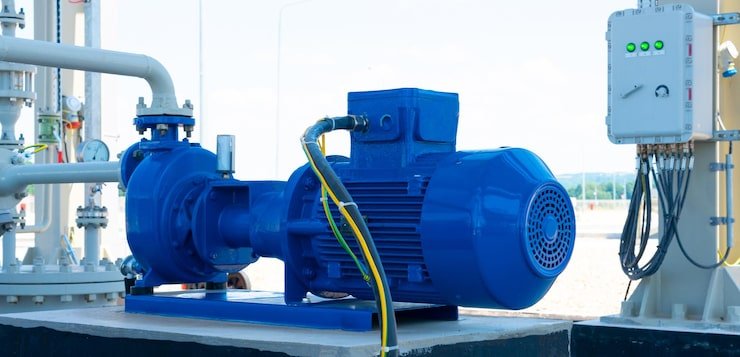
Water management across the Middle East and Africa presents two contrasting but interconnected challenges. Many Middle Eastern countries operate in extremely water-scarce environments and depend increasingly on desalination, groundwater extraction, and wastewater reuse. Across Africa, expanding access to reliable drinking water, sanitation, and irrigation remains a major infrastructure priority. Water pumps connect these systems by enabling abstraction, treatment, transfer, distribution, drainage, and agricultural irrigation.
According to a Vyansa Intelligence report, the Middle East & Africa water pump market was valued at USD 4.75 billion in 2025 and is projected to reach USD 5.56 billion by 2032, representing a 2.27% CAGR during 2026–2032.
Severe Water Scarcity Is Reshaping Regional Infrastructure
Water scarcity is particularly acute across the Middle East and North Africa. The World Bank reports that by 2030, annual water availability per person in MENA is expected to fall below the absolute water-scarcity threshold of 500 cubic metres.
This pressure is encouraging governments and utilities to diversify their water sources. Groundwater abstraction, desalination, treated-water reuse, long-distance transmission, and improved distribution all depend on reliable pumping infrastructure.
For a Middle East & Africa water pump market analysis, water scarcity therefore represents more than an environmental challenge. It directly influences infrastructure design, equipment specifications, operating efficiency, and investment priorities.
Desalination Creates High-Performance Pump Requirements
Desalination has become particularly important in countries where conventional freshwater supplies cannot satisfy municipal and industrial requirements. The World Bank notes that investment in desalination and water-reclamation infrastructure is increasing as water stress intensifies.
Desalination facilities require several types of pumping equipment. Pumps can support seawater intake, pretreatment, high-pressure membrane processes, chemical handling, and finished-water transfer.
These detailed industry insights highlight the importance of corrosion resistance and energy efficiency because equipment may operate continuously while handling saline water under demanding conditions.
Africa’s Infrastructure Gap Creates Different Opportunities
Sub-Saharan Africa presents a different water infrastructure environment. Many communities still require expansion of basic drinking-water and sanitation services.
The African Development Bank states that inadequate water infrastructure continues to restrict access to water and constrain wider socioeconomic development. It identifies substantial investment in integrated water development and management as essential for water, food, and energy security.
Water pumps can support boreholes, municipal distribution, treatment facilities, rural supply systems, and agricultural projects, creating requirements ranging from small decentralized units to major pumping stations.
Irrigation Modernization Broadens Pump Applications
Agriculture represents a particularly important water user across Africa. The African Development Bank notes that agriculture accounts for around 70% of total water consumption on the continent.
Pumps are essential where irrigation systems draw water from rivers, reservoirs, groundwater, or storage facilities. Agricultural applications may require borehole pumps, centrifugal pumps, submersible systems, and high-capacity transfer equipment.
For a water pump industry report, irrigation therefore represents an important application alongside municipal and industrial infrastructure.
Wastewater Reuse Offers an Alternative Supply
Water reuse is becoming increasingly relevant in water-stressed Middle Eastern countries. The World Bank has previously estimated that 82% of wastewater in the MENA region was not recycled, highlighting considerable potential to use treated wastewater more productively.
Reclaimed water can support agriculture, landscaping, industrial applications, and other non-potable uses.
Reuse also creates additional pump requirements because treated water needs to move from wastewater facilities toward storage systems and end users. Instead of ending at treatment, the water cycle gains another transfer and distribution stage.
Energy Efficiency Is Crucial for High-Volume Pumping
Pumping large quantities of water can require substantial electricity, particularly where equipment operates continuously or water needs to overcome considerable elevation and pressure.
This makes lifecycle efficiency important. Correctly sized pumps, high-efficiency motors, variable-frequency drives, and optimized hydraulic systems can help operators control electricity consumption.
The latest industry analysis increasingly needs to consider the full operating life of pumping equipment rather than purchase cost alone.
Climate Resilience Is Creating New Equipment Needs
Climate change is increasing pressure on water systems across both regions. Drought can increase reliance on groundwater, irrigation, desalination, and water transfer, while extreme rainfall can create requirements for drainage and dewatering equipment.
The African Water Facility’s 2026–2030 strategy specifically prioritizes water and sanitation projects that strengthen climate resilience through adaptation and mitigation measures.
This creates diverse equipment requirements. A pump designed for continuous municipal distribution faces very different operating conditions from equipment deployed for emergency flood drainage.
Digital Monitoring Can Improve Reliability
Modern pumping systems increasingly incorporate sensors and automated controls. Operators can monitor flow, pressure, vibration, temperature, and energy consumption to understand equipment condition.
Remote monitoring is especially valuable where pumping infrastructure is geographically dispersed or located in difficult-to-access areas.
Predictive maintenance can identify developing problems before equipment failure, improving service continuity while helping utilities prioritize limited technical resources.
Solar Pumping Can Support Decentralized Applications
Energy availability can be a constraint in remote areas without dependable grid connections. Solar-powered pumping offers an alternative for appropriate borehole, community-water, and agricultural applications.
Such systems can reduce dependence on fuel deliveries while extending pumping capabilities to locations where conventional electricity infrastructure is limited.
For a water pump market research report, decentralized pumping is particularly relevant because Africa’s water-access challenge cannot always be addressed solely through large centralized networks.
Water Investment Will Keep Pumping Infrastructure Essential
The African Development Bank’s Africa Water Vision 2063 and Policy, published in 2026, establishes a long-term blueprint for sustainable water availability and safe sanitation systems across the continent.
Across the Middle East, the emphasis is increasingly on maximizing scarce supplies through desalination, reuse, efficient distribution, and better resource management. Across Africa, expanding infrastructure access while strengthening irrigation and climate resilience remains equally important.
Pump suppliers capable of delivering energy efficiency, reliable operation, corrosion resistance, intelligent monitoring, and equipment suitable for decentralized installations can respond to these diverse requirements. From desalination facilities and urban networks to boreholes and irrigation schemes, pumping technology will remain fundamental to improving water security across the region.