Getting attention and getting results are two things that performance marketing connects. It's where creative campaigns and numbers come together, and every click is a chance to get someone to buy something, sign up, or do something else. This article shows you how to turn traffic into clear business results by giving you clear steps, useful tips, and language that anyone can understand.
Set a goal that you can measure
Before you start any campaign, think about what "conversion" means to you. Is it a subscription to a newsletter, a lead form, a sale, or a trial signup? Make that goal clear and easy to see. For instance, "Get 150 qualified leads in 60 days for less than ₹500 per lead." A specific goal helps you stay focused and lets you know if you've reached it.
If you're working with a local or specialized provider, look for partners who know both creativity and numbers. For example, a Digital Marketing company in Chennai that can connect local market data with technical setup and reporting.
Know the funnel: clicks don't always lead to conversions
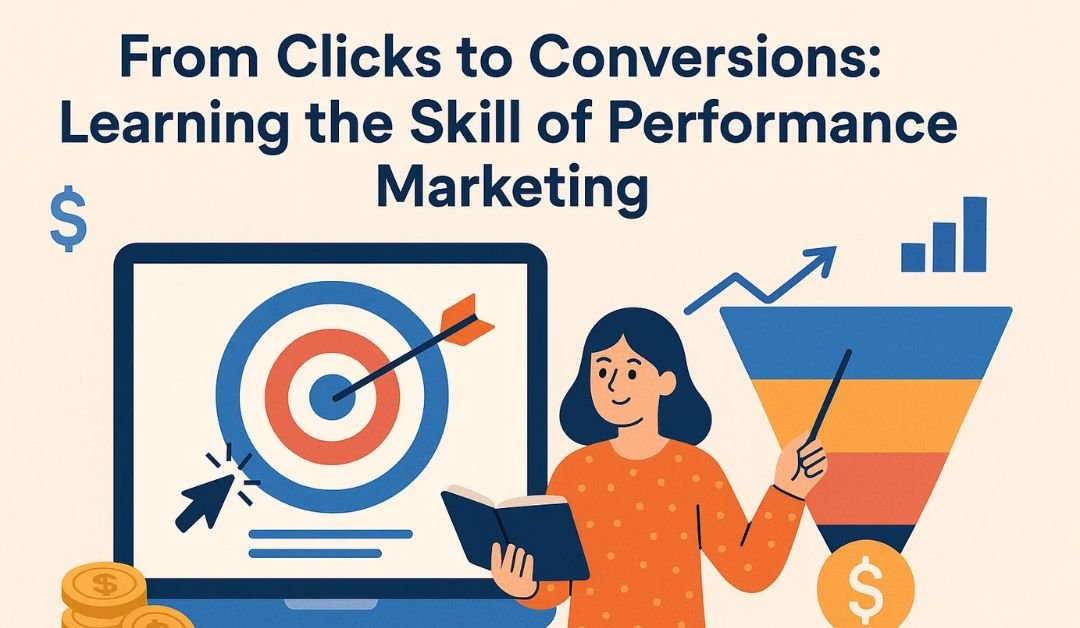
Clicks mean people are paying attention, and conversions mean people are doing something. A lot of campaigns get a lot of clicks but not many conversions because they don't connect the message, the audience, and the landing page. There are three parts to the funnel:
- Awareness: People find out about your brand through ads and social media posts.
- Consideration: Visitors who are interested look at their options (content, reviews).
- Conversion: Visitors do what you want them to do, like buy something or sign up.
Every step needs its own messages and ways to measure them. Creative that raises awareness won't always lead to sales; conversion creatives usually focus on benefits, trust signals, and a clear call to action.
Keep an eye on the right metrics
Don't go after metrics that make you look good. Keep an eye on numbers that are connected to business results:
- Cost Per Click (CPC): The amount you pay for each click.
- Click-Through Rate (CTR): Tells you how interesting your ad is.
- Conversion Rate (CVR): The number of clicks that lead to a sale.
- Cost Per Acquisition (CPA): The amount of money it costs to get each conversion.
- Return on Ad Spend (ROAS): The amount of money made for every rupee spent.
Set benchmark ranges for each metric and check them every day while the campaigns are running. If your conversion rate goes down but your clicks go up, don't just raise your budget; look at your landing pages and audience targeting.
Make sure the creative, offer, and landing page are all in sync
Three things need to be able to talk to each other:
- The headline and ad creative should be the same as the landing page headline.
- The ad must have a clear and easy way to claim the offer (discount, trial, demo).
- The landing page needs to be easy to use, with clear form fields, a quick load time, and trust signals that are easy to see (like testimonials, certifications, and a secure checkout).
To find out what works, try A/B testing one thing at a time, like headline A vs. headline B or form length vs. form length + images. Small wins add up: a 10% increase in conversion rate lowers CPA and often gives you a better ROAS than doubling your ad spend.
Use audience segmentation and signals of intent
Not all clicks are the same. Group your audiences by what they want and how they act:
- High intent: Search queries that show a clear desire to buy something or visitors who were retargeted and added to their cart.
- Mid-intent: People who downloaded a resource or looked at pricing pages.
- Low intent: Cold prospecting people who are interested in a lot of different things.
Make sure your messages and bids are right for each group. High-intent audiences should get better deals and higher bids, while low-intent audiences should get soft-sell content or campaigns to raise awareness.
Tracking and attributing nails
Attribution decides which touchpoints get credit for conversions, which directly affects how you value channels. Use a variety of tools:
- Tracking pixels (ads pixels) for last-click and view-through data.
- Server-side tracking or analytics for more accurate event capture.
- UTM tags for tracking campaigns in analytics tools.
Know what each method can and can't do. Cross-device journeys and changes to privacy make it impossible to get perfect attribution. Instead, focus on practical methods like multi-touch models and incremental lift tests to see what really works.
Make landing pages work better for conversions
Optimizing your landing page is often the fastest way to boost performance. Things to check and make better:
- Page speed: On mobile, try to load pages in less than three seconds.
- Clear value proposition: The headline needs to say, “What's in it for me?”
- One main action: Get rid of anything that might distract from the CTA.
- Social proof and risk reversal: Reviews, testimonials, and money-back guarantees.
- Layout that works best on mobile devices: Most of your traffic comes from mobile devices. Test forms and buttons for thumbs.
Use session recordings and heatmaps to find out where visitors are having trouble. Then put fixes that make things easier and clearer at the top of your list.
Test carefully and learn quickly
Iterative performance marketing works. Make a calendar for testing that includes your hypotheses, how long the tests will last, and what success looks like. Some common experiments are:
- Creative: Picture, short video, or carousel.
- Copy: A headline that focuses on benefits vs. a headline that focuses on features.
- Offer: A free trial, a discount, or a bundle of value.
- Landing page: Short-form vs. long-form pages.
Keep tests separate so you can figure out what caused a change. Use tools that show statistical significance, but don't let perfect data get in the way of making decisions that are useful. Speed and learning are important.
Scale with smart use of money
Scaling doesn't just mean "spend more." Protect your profits while putting money back into what works:
- Find the best-performing segments and slowly double down on them.
- Watch CPA and ROAS as spending goes up; costs can go up as well.
- Don't rely too much on one platform; use a variety of channels.
- Once you have reliable conversion data, you can use automated bidding strategies.
Keep some money in your budget for trying new things. New audiences or creative ideas often lead to new ideas.
Use automation when it helps, but don't forget about people
Automation (like smart bidding and dynamic creatives) saves time and makes things better for certain signals. But people give context, strategy, and creative judgment. Let people handle strategy, creative direction, and complicated troubleshooting, and let automation handle routine changes.
Stay away from common mistakes
- Too many clicks: clicks that don't lead to sales are money wasted.
- Not paying attention to analytics problems: tracking that doesn't match up can lead to bad decisions.
- Testing too many things at once: tests that are too loud can be confusing.
- Not paying attention to the experience after conversion: onboarding and retention are also part of performance.
A good campaign looks at more than just the first conversion; it also looks at lifetime value (LTV) and retention.
Create a culture that focuses on conversions
Performance marketing works across departments. Set conversion goals for marketing, product, sales, and customer success to work toward. Share dashboards, celebrate wins, and do joint retrospectives to learn from your mistakes. When teams focus on conversion, the whole customer journey gets better.
Important tools and tech stack
A basic stack for performance marketing has the following:
- Ad networks for reach (search, social, and display).
- Analytics for tracking behavior and journeys.
- Set up tags and pixels to track events.
- A/B testing tools for landing pages or CMS.
- CRM to get leads and figure out LTV.
Pick tools that work well together. Good data hygiene and easy-to-understand names for campaigns and UTMs keep things clear in the future.
A useful list of things to do to turn clicks into sales
- Set a conversion goal that you can measure.
- Make sure the ad's message matches the landing page's content.
- Divide audiences based on their goals.
- Set up reliable UTMs and tracking.
- Do focused A/B tests.
- Make the page load faster and make it easier to fill out forms.
- Check CPA, CVR, and ROAS every day.
- Weigh the winners, stop the losers, and keep testing.
Local knowledge can make results better
Working with partners who know your local market can help you learn faster. Pick a provider with a proven track record in your area if you need both on-the-ground knowledge and technical execution. For businesses in Chennai and the surrounding areas, working with a well-known SEO company in Chennai can improve organic funnels and help paid campaigns by making landing pages better and making it easier for people to find them in local search results.
In conclusion, conversions are not an event but a system
To get from clicks to conversions, you need a system that includes clear goals, consistent messaging, strong tracking, systematic testing, and teamwork across teams. When small changes are measured and scaled, the results get better. If you pay attention to the whole journey, from the first impression to the follow-up after the conversion, your performance marketing will lead to steady, profitable growth.
To be good at performance marketing, you need to think of every click as data, every conversion as feedback, and every test as progress. When you build the path from curiosity to customer with care, you can follow it over and over again. Start small, be honest about your measurements, and keep making changes.