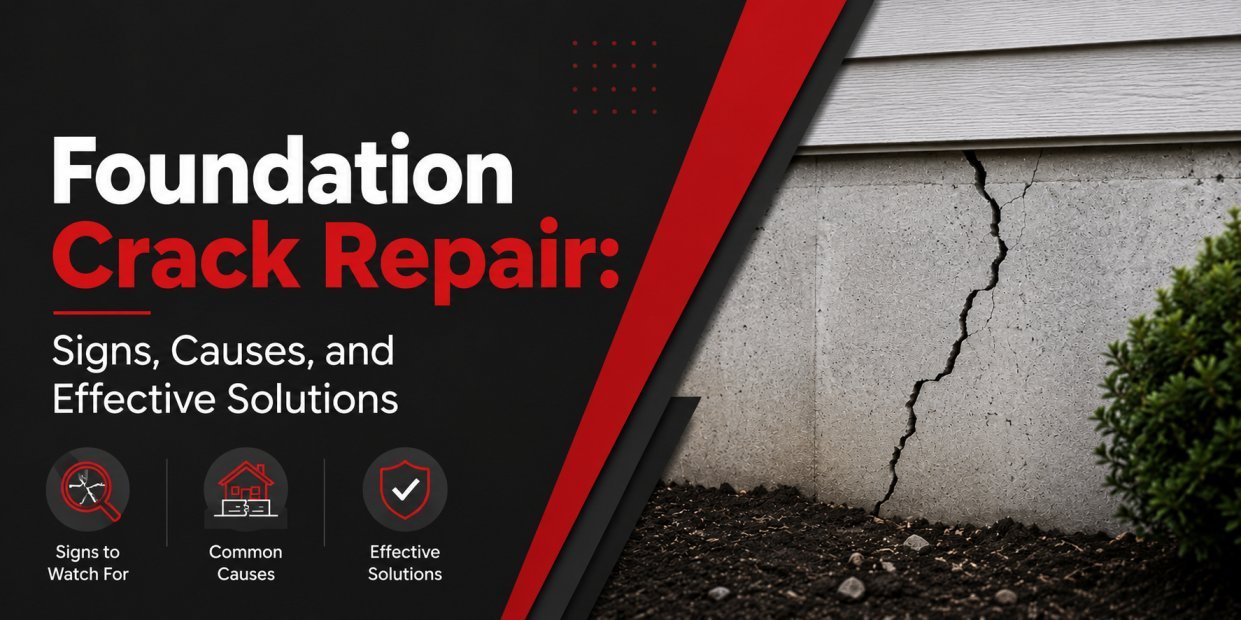
A small crack in your foundation may not seem like a serious issue at first. Many homeowners ignore minor cracks, assuming they are a normal part of a home's aging process. However, what begins as a small crack can quickly grow into a larger structural problem that affects the safety, stability, and value of your property.
Understanding the warning signs, common causes, and available repair options can help you act before the damage becomes more expensive. This guide explains everything you need to know about foundation crack repair and how professional solutions can protect your home for years to come.
Why Foundation Cracks Should Never Be Ignored
Your home's foundation supports the entire structure above it. When cracks develop, they can allow water intrusion, create uneven floors, damage walls, and weaken structural integrity.
While some hairline cracks are harmless, others indicate movement beneath the foundation that requires immediate attention. Identifying the difference early can save thousands of dollars in future repairs.
Professional foundation crack repair helps stop damage from spreading while restoring the strength and stability of the foundation.
Common Signs Your Foundation Needs Repair
Knowing what to look for can help you address problems before they worsen.
Watch for these warning signs:
- Visible cracks in foundation walls
- Stair-step cracks in brick or masonry
- Uneven or sloping floors
- Doors and windows that stick or do not close properly
- Gaps between walls and ceilings
- Water leaks in basements or crawl spaces
- Cracks in interior drywall
- Exterior concrete surfaces are sinking or shifting.
If you notice one or more of these symptoms, it is a good idea to schedule a professional inspection as soon as possible.
What Causes Foundation Cracks?
Foundation cracks can develop for several reasons. Understanding the cause is essential for choosing the right repair solution.
Soil Movement
The soil beneath a home naturally expands when wet and shrinks during dry conditions. Repeated expansion and contraction create pressure that can cause foundation movement and cracking.
Poor Drainage
Water collecting around the foundation can weaken supporting soil and increase hydrostatic pressure against foundation walls.
Settlement
Over time, some foundations settle into the ground. Uneven settlement often leads to visible cracks and structural issues.
Tree Roots
Large trees located close to a home can absorb significant amounts of moisture from the soil, causing soil shrinkage and foundation movement.
Freeze and Thaw Cycles
In colder climates, freezing temperatures can expand moisture within the soil. As the soil freezes and thaws repeatedly, pressure builds around the foundation.
Aging Concrete
Even durable concrete can develop cracks over time due to natural wear, weather exposure, and environmental conditions.
Types of Foundation Cracks
Not all cracks indicate the same problem. Understanding the type of crack can provide clues about its severity.
Vertical Cracks
Vertical cracks are often caused by normal settlement. While some are minor, they should still be monitored for changes.
Horizontal Cracks
Horizontal cracks are more concerning because they often result from excessive pressure against foundation walls.
Diagonal Cracks
Diagonal cracks typically indicate uneven settlement and should be evaluated by a professional.
Stair Step Cracks
These cracks usually appear in brick or block foundations and often signal foundation movement.
Professional foundation crack repair specialists can determine the underlying cause and recommend the best solution.
Effective Solutions for Foundation Crack Repair
The right repair method depends on the size, location, and cause of the crack.
Common repair solutions include:
- Epoxy crack injection to restore structural strength
- Polyurethane injection to stop water infiltration
- Foundation stabilization systems
- Drainage improvements around the property
- Soil stabilization techniques
- Concrete lifting and leveling services
- Structural reinforcement for severely damaged areas
Addressing the root cause is just as important as repairing the visible crack. Long-term solutions focus on preventing future movement and damage.
The Role of Concrete Repair in Foundation Stability
Many foundation issues extend beyond the foundation itself. Driveways, sidewalks, patios, and other concrete surfaces may show signs of settlement and movement.
Professional concrete repair services can help restore these surfaces while improving overall property safety and appearance.
Common signs you may need concrete repair include the following:
- Uneven sidewalks
- Sunken driveways
- Cracked patios
- Pool deck settlement
- Trip hazards around the property
Repairing these surfaces early helps prevent additional stress on nearby structures and improves curb appeal.
When Cracked Cement Repair Becomes Necessary
Concrete surfaces naturally develop minor imperfections over time. However, larger cracks can create safety concerns and allow water to penetrate beneath the slab.
Professional cracked cement repair is recommended when:
- Cracks continue to widen.
- Sections of concrete become uneven.
- Water collects around damaged areas.
- Trip hazards develop
- Surface deterioration accelerates
Timely cracked cement repair can extend the lifespan of concrete surfaces and reduce the need for costly replacement.
Why Homeowners Trust Lift It Pro
Choosing the right contractor is critical when dealing with structural issues. Lift It Pro provides reliable solutions designed to restore safety and stability while minimizing disruption to your property.
Homeowners choose Lift It Pro because they offer the following:
- Experienced concrete and foundation specialists
- Advanced lifting and leveling technology
- Long-lasting repair solutions
- Cost-effective alternatives to replacement
- Fast project completion
- Professional inspections and recommendations
- Commitment to customer satisfaction
Their team carefully evaluates each project to determine the most effective approach for foundation crack repair, concrete repair, and cracked cement repair needs.
Tips to Prevent Future Foundation Problems
While some factors are beyond your control, these steps can help reduce the risk of foundation damage:
- Keep gutters clean and functioning properly.
- Direct downspouts away from the foundation
- Maintain consistent soil moisture around your home.
- Address drainage issues promptly
- Repair small cracks before they worsen.
- Schedule regular inspections of your foundation and concrete surfaces.
Preventive maintenance often costs far less than major structural repairs.
Conclusion
Foundation problems rarely improve on their own. Small cracks can quickly develop into larger structural concerns that affect your home's safety, appearance, and value. Understanding the signs, causes, and available repair methods allows homeowners to take action before damage becomes severe.
Whether you need foundation crack repair, concrete repair, or cracked cement repair, addressing issues early is the best way to protect your investment and avoid costly future repairs.
Get Your Free Quote Today
If you have noticed cracks, uneven concrete, or signs of foundation movement, contact Lift It Pro for a professional evaluation. Their experienced team provides trusted foundation crack repair solutions that restore stability and peace of mind.
Visit their website today to request your free quote and check out their Google Business Profile to see reviews from satisfied customers and learn more about their services.