Extraction Forceps in Dentistry – The Essential Tool for Precision and Comfort
By CYNAMED 12-11-2025 69
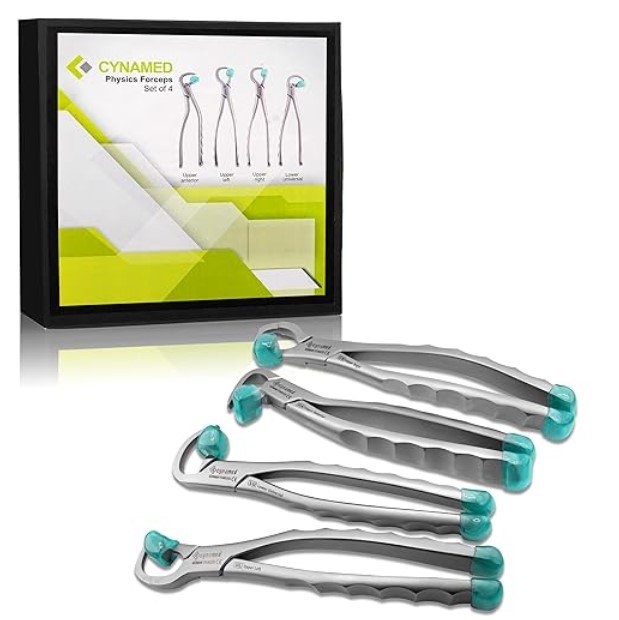
Extraction forceps in dentistry are mechanical levers that enable dentists to apply a controlled force during the removal of a tooth. By their very nature, these instruments help to maintain precision while the surrounding bone and gum structures remain unscathed.
Different anatomical considerations and variations in angle have been taken into account for the forceps sets designed for different teeth, from anterior to molars. As an example:
Upper anterior forceps are made to be narrower and straighter in order to adapt to the front teeth.
Lower molar forceps are equipped with beaks that are able to curve inward, which allows for better access.
Root tip forceps are gentler, made to remove fragments without causing damage to the areas beside them.
Why Quality Matters in Forceps Dental Instruments for Extraction
The proper use of high-quality extraction forceps dental signals surgical results in a spectacular way. Instruments made of high-grade stainless steel are able to keep their shape and resistivity even after repeated sterilization cycles, which in turn contributes to their durability and constant functionality.
To start using high-quality instruments from reliable brands like Cynamedical, here is what you need to know:
Precision and Control – The sharp, properly aligned beaks facilitate the holding of the teeth in a firm but at the same time gentle way, thus instances of the beaks slipping off the teeth during operations will be minimal.
Durability – The best stainless steel used in the manufacturing of the instrument stack helps in preventing the instrument`s surface from getting rust, deformation, or pitting, even in cases of frequent sterilization.
Ergonomic Design – Good-looking, perfectly balanced handles will not only make the dentists' hands comfortable but will also reduce the tiredness of the hands during lengthy and smooth operations.
Patient Comfort – Accurate work tool leads to the least amount of unneeded force being used, which eventually lowers the possibility of pain, and also the healing time will be more rapid.
Types of Forceps for Tooth Extraction
The field of dentistry is expansive in terms of procedures, and there are different sets of forceps that are used in distinct tooth extractions. The major categories are as follows:
1. Maxillary Extraction Forceps
These pieces of equipment are specifically made for the upper jaw. The shape of the handle is usually straight, while the beaks have a slight curve, which is to imitate the form of the roots of the upper jaw. Some common examples are:
Upper central and canine forceps
Upper molar forceps (right and left)
Upper third molar forceps
2. Mandibular Extraction Forceps
Mandibular forceps are designed for use in the lower jaw and they have a very distinct downward curve that is in line with the grip of the surgeon. Some of the variations are:
Lower incisor and premolar forceps
Lower molar forceps (Cowhorn and standard types)
3. Root and Fragment Forceps
Such delicate instruments as these are made with one primary goal in mind – that is the safe removal of broken roots or fragments of teeth without causing any damage to the bone structure. The reason behind this is that the fine tips of these tools allow them to be used for careful and precise navigation deep into the small spaces.
Final Thoughts
Extraction forceps are the core components of every dental surgery setup. The extent to which these instruments are accurate is, thus, the main factor that determines both the efficiency and the patients' comfort, not only in the case of simple tooth removals but also in that of complicated extractions.
Extraction forceps in dentistry, when obtained from a reliable provider such as Cynamedical, are more than mere instruments – they are a guarantee of quality, safety, and professional reliability.
Performance, as well, durability, are what clinics, hospitals, and dental practitioners look for when deciding on the right extraction forceps dental instruments. The act of making a choice is not just a purchase — it's a long-term investment in superior care.